Category: Travel

  • Day 2 in Rio

    [Editor’s note:  Second in a series of posts from my brother Marcus as he visits Rio de Janeiro — Mike]

    Greetings from Marcus in Rio!

    Tonight is the last major soccer match before the World Cup begins in 3 weeks. We had an opportunity to go to the game at the huge modern soccer stadium here, but only 2 of our 14 chose to go. Most of us arrived this morning after at least 10, and in some cases 20, hours of travel, so we mostly wanted to get finished with the day and get back to our hotel.
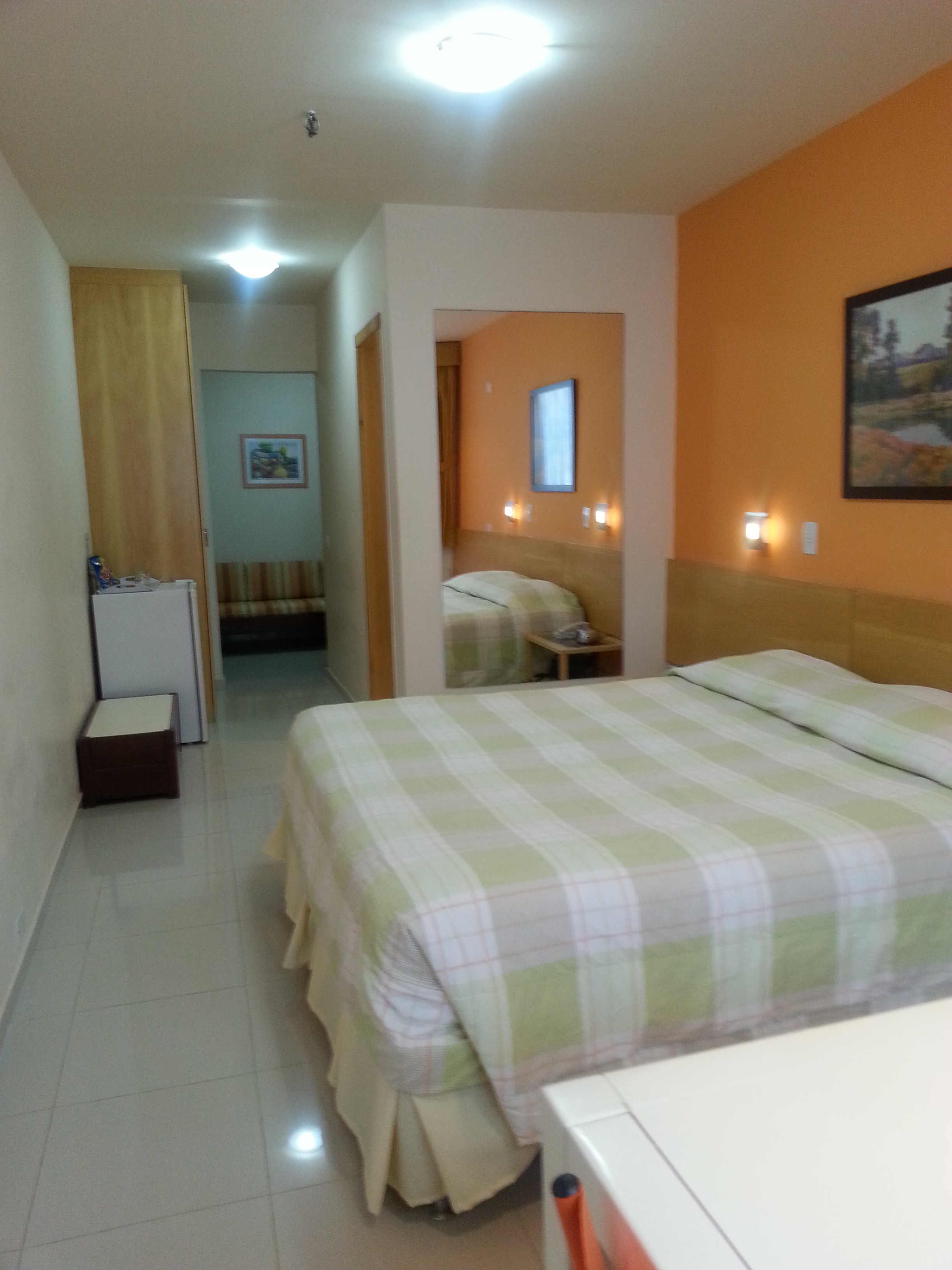
    Hotel Room
    Hotel Room

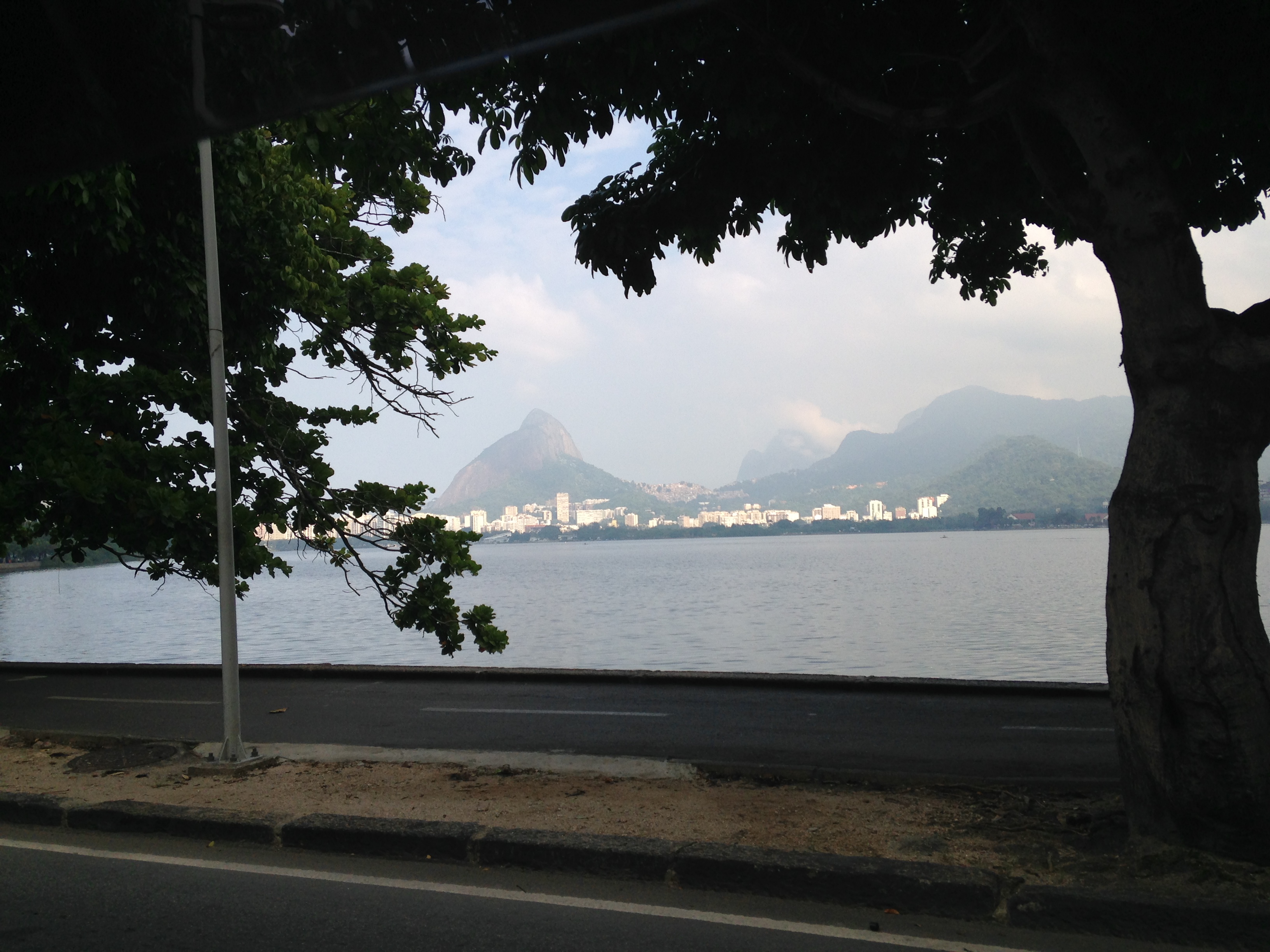
    Besides me, one other participant arrived yesterday, and she called my room this morning to see if I wanted to meet. We walked 3.5 miles along Copacabana beach, stopping half-way to grab a cold beverage and shade. By the time we returned 2 hours had passed and the rest of our group was here.

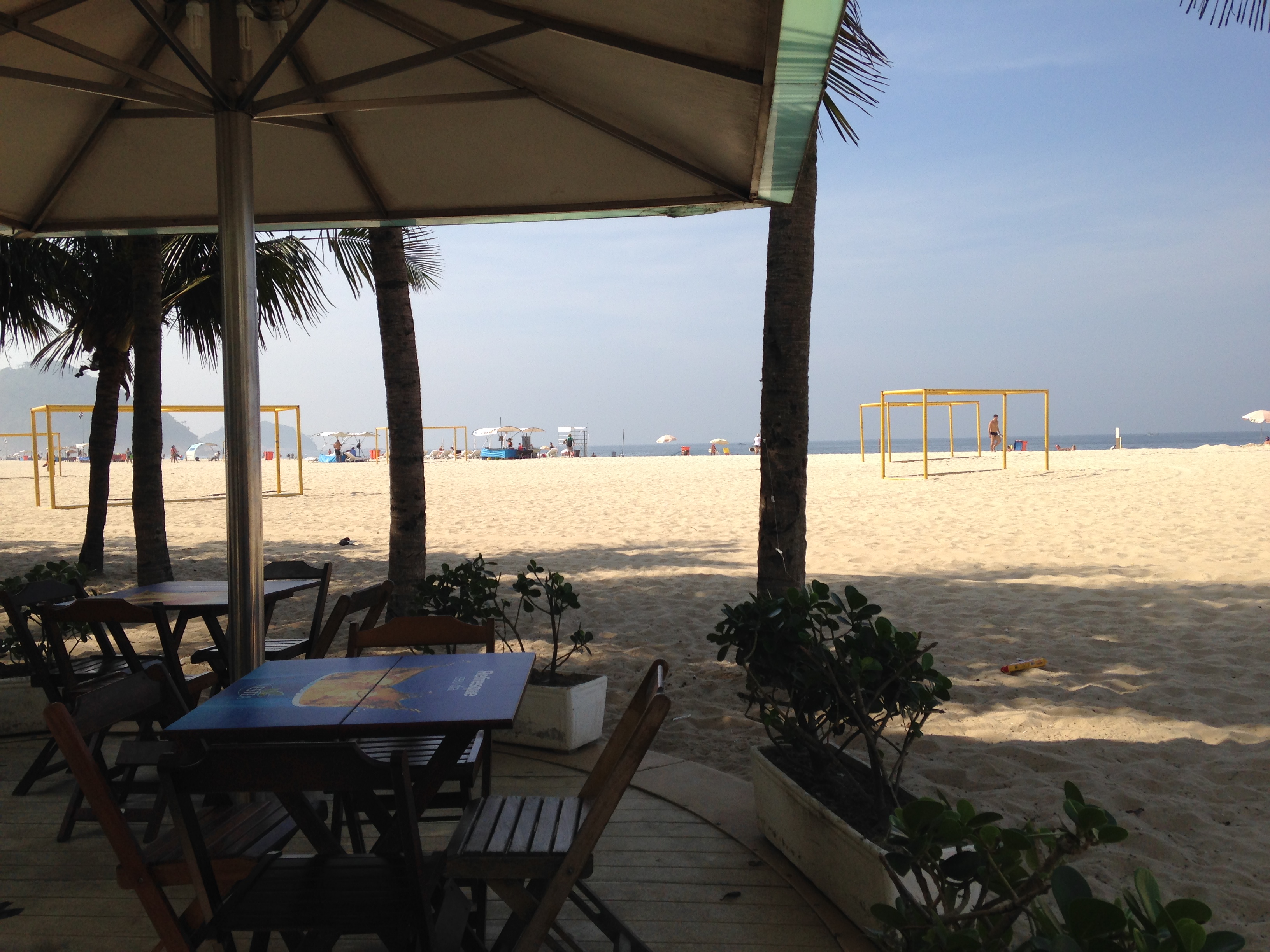
     

    Views of Copacabana where we stopped for a beverage
    Views of Copacabana where we stopped for a beverage
    Cobacabana
    Cobacabana

    We had lunch at a “kilo” restaurant, part of a popular chain. You go in, grab a plate, and move down a very complete buffet line. At the end, your plate is weighed, and you pay by the kg. Our hosts picked up everyone’s tab, so I don’t know how much my plate cost or weighed, but I left a lot behind. Not recognizing the dishes, and unable to understand the signage, I grabbed a lot of different things, but many of them tasted odd to my palate. Plus, we have a very substantial “Continental plus” breakfast here at the hotel every morning. Also, they are very generous with food here, but very stingy with beverages, and ice is more precious than silver. I was much more thirsty than hungry, and this afternoon I went to the mercado (market) and loaded up on bottled water. I think I may still have been dehydrated after yesterday’s travel and all the walking in the heat. I also bought an ice tray to make ice in the little freezer in my mini-fridge. I think that will be the best $2 I spend all week!

    We had our orientation session this afternoon, met our group leaders and went over the week’s agenda. I was very interested to hear a little about Rio’s history – it got it’s start as the largest South American port for the African slave trade in the 18th century. In 1900, a majority of Rio’s population was black African, and the favelas we will visit this week were established by freed slaves. Also, it turns out that much of what we think of as authentic Brazilian culture, samba dancing and bossa nova music, for example, started in the favelas.
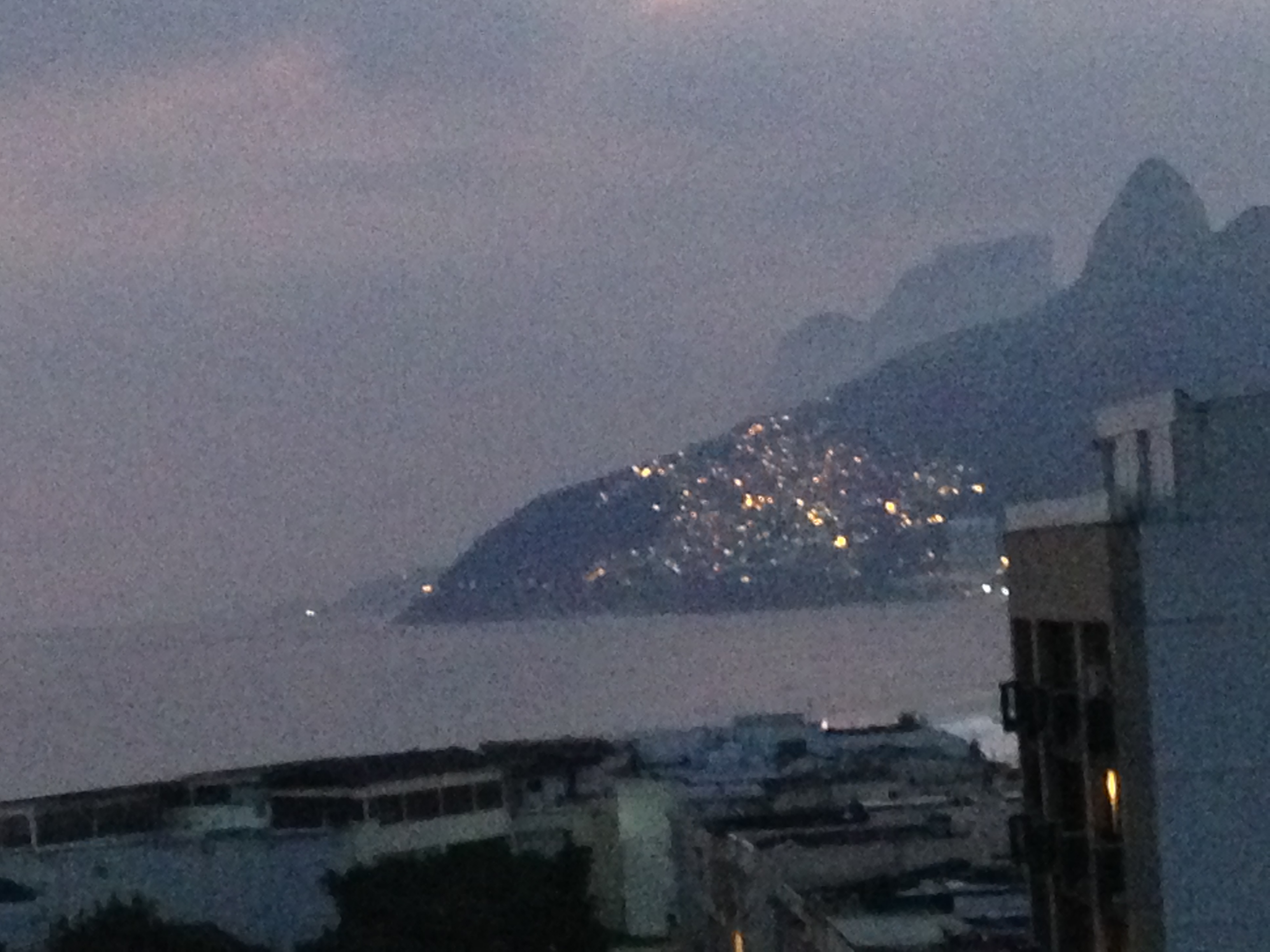
    A favela seen at nightfall; this one is right by the beach at Ipanema
    A favela seen at nightfall; this one is right by the beach at Ipanema

    Tonight we went to a churrasco-style restaurant. This food tasted great to me! We had an incredible buffet with every kind of salad, vegetable, seafood, and even sushi. Then, once you are nearly full, they come to your table with at least a dozen different types and cuts of meats (beef, chicken, pork, unknown), and slice your choices onto your plate. This goes on with more trips for side dishes, and more spits of meat, until finally you flip over this marker at your place from green to red to indicate you surrender. Then they come around with the dessert tray. Then the after-dinner drinks. I think if we’d stayed there would have been more courses, but we gave up and left then.

    Tomorrow we learn a little Portuguese, we get some history lessons on Brazil and Rio, and then we tour downtown and “little Africa”. We’ll view sunset from the Sugarloaf mountain nearby. Hopefully, I’ll post some great pictures tomorrow.

    marcus


  • Tuesday, Rio de Janeiro

    NOTE: I am on a 10-day, university faculty seminar conducted by the Council on International Exchange Education (ciee.org). I will be joined by about a dozen US-based faculty tomorrow.

    Ola!

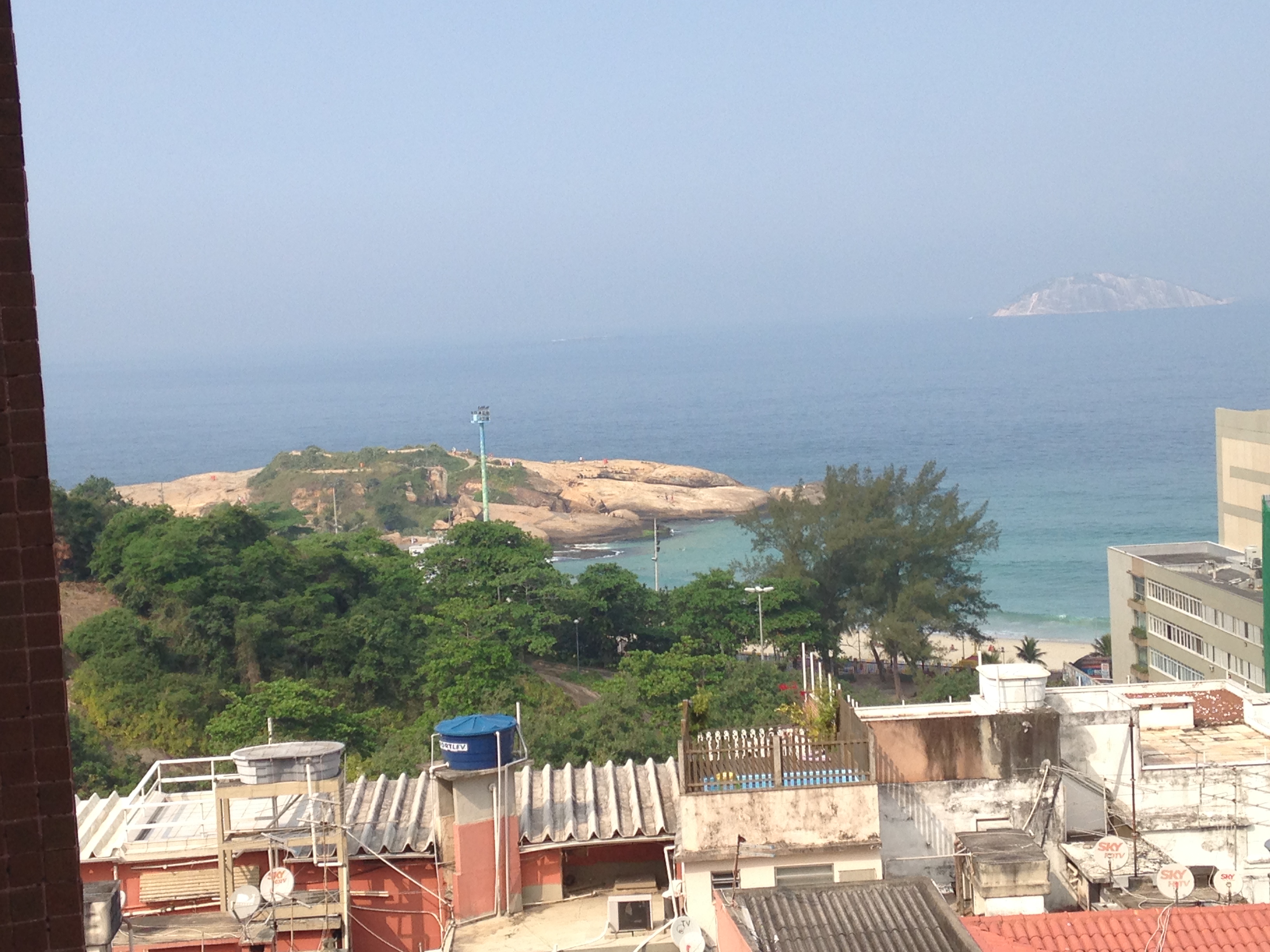
    I arrived Rio airport (GIG) about 0845 today (Tuesday); immigration, customs very quick, taxi queue very long and slow traffic. I had to find my own way to the hotel as my seminar does not actually start until tomorrow. I got to the Atlantis Copacabana about 11 am. Nice older hotel in the Ipanema area. Despite its name, the hotel is closer to that beach than to the Copa; about ¼ mile to the Ipanema, about ½ mile to the Copa. There is an outcropping of rock that separates the two by a few hundred yards (see photo). Today I walked down most of the Ipanema – it’s about 2 miles from here to the end. Tomorrow I’ll walk the Copa; it is a least twice as big.

    IMG_4992

    IMG_4974

    Very few English speakers here; I’m working hard day and night to learn passable Portugese. I was able to shop and have lunch today, but sometimes had to ask passers-by for help. The neighborhood I’m in looks sort of poor at first glance, but, every building is surrounded by a steep metal fence, full security, etc. and I noticed the cars coming and going are very $$.  So just a few blocks from the beach, this must be a very expensive place to live. But the trash, traffic, and general run-down nature of the infrastructure would not give that away.

    A big part of my seminar here is to study and understand the nature of persistent urban poverty, especially the type of poverty that seems to capture generations and leads to deep social divisions, protests and violence. I expect the favelas (ghettos) we will study and visit this week will be eye-opening.

    I’m posting all my comments on my brother’s blog: “Epic Mikey”.  Thanks, Mike, for helping out, and thanks to everyone who reads and/or comments on these posts.

    IMG_4973

    soli Jesu gloria,

    marcus

  • Finding Inspiration

    In my last post, I talked about the Baseball Scorecard app that never made it to launch.   That was in 2009, and ever since then, I’ve had it in the back of my mind that doing an iPhone app was going to happen — I just needed to find the right project.

    Maybe “in the back of my mind” isn’t quite right.   It was really a bucket list item for me … not something I thought about daily, but something that was more than just an idle thought.   I really did plan to act on it, but the ideas just weren’t coming.

    As a long-time Disney fan, doing something Disney related certainly had an appeal, so more than once I tried to think of a Disney-related app idea.  But there are already various tour guides, line estimating guides, etc. for all the parks — I didn’t really want to do a “me, too” app, I wanted to do something new — or at least something I felt like I could do better than anyone else was doing it.    Nothing came to me,  but I continued to believe it would eventually.

    During a WDW trip in September 2012 for the Tower of Terror race, I first played the game Sorcerers of the Magic Kingdom (which had launched in February 2012).    It’s a neat little game and one which I was sure I’d play again on future visits to the park — but somehow the synapses didn’t fire, nothing connected telling me there was an app there waiting to be written.

    When I went back in January 2013 for the half marathon, I played again, and this time I did more than just play — I talked to other players, traded cards, and started to hear that there was more complexity to the game than first meets the eye.     The reason this is not readily apparent  is because if you play on the “Easy” difficulty (as I was doing), there is really no strategy required to win — it’s just a pleasant diversion and a chance to walk around the park and watch some entertaining videos, and follow along with the story line.   But if you play on medium and hard levels — then what you do matters.     You can’t just randomly play any cards and hope to defeat the villains trying to take over the Magic Kingdom.

    The game strategy has to be discovered, and it’s really something that one person is not likely to figure out on their own.   So online communities have developed, both for trading the SotMK (as the game is abbreviated) cards and for sharing strategy tips — what’s the best card combination to beat Cruella de Vil?   What cards should you absolutely avoid playing against Maleficient when she appears in dragon form?   How can you handle multiple cards at the portal without dropping your Dole Whip?

    After playing in the parks during each day of my trip, I was checking on the online forums at night for better strategies to use the next day.   Yep, they had hooked me and reeled me in — I needed to beat the game.

    It wasn’t until I was home from the trip that the light bulb went on.   There were too many card combinations for anyone to ever find the completely optimal strategy working alone.   What was needed was a crowdsourced solution.   And while this was happening online via blog postings and Facebook groups, the way to really kick that into high gear would be with an iPhone app.    I’d discovered the app that needed to be written.

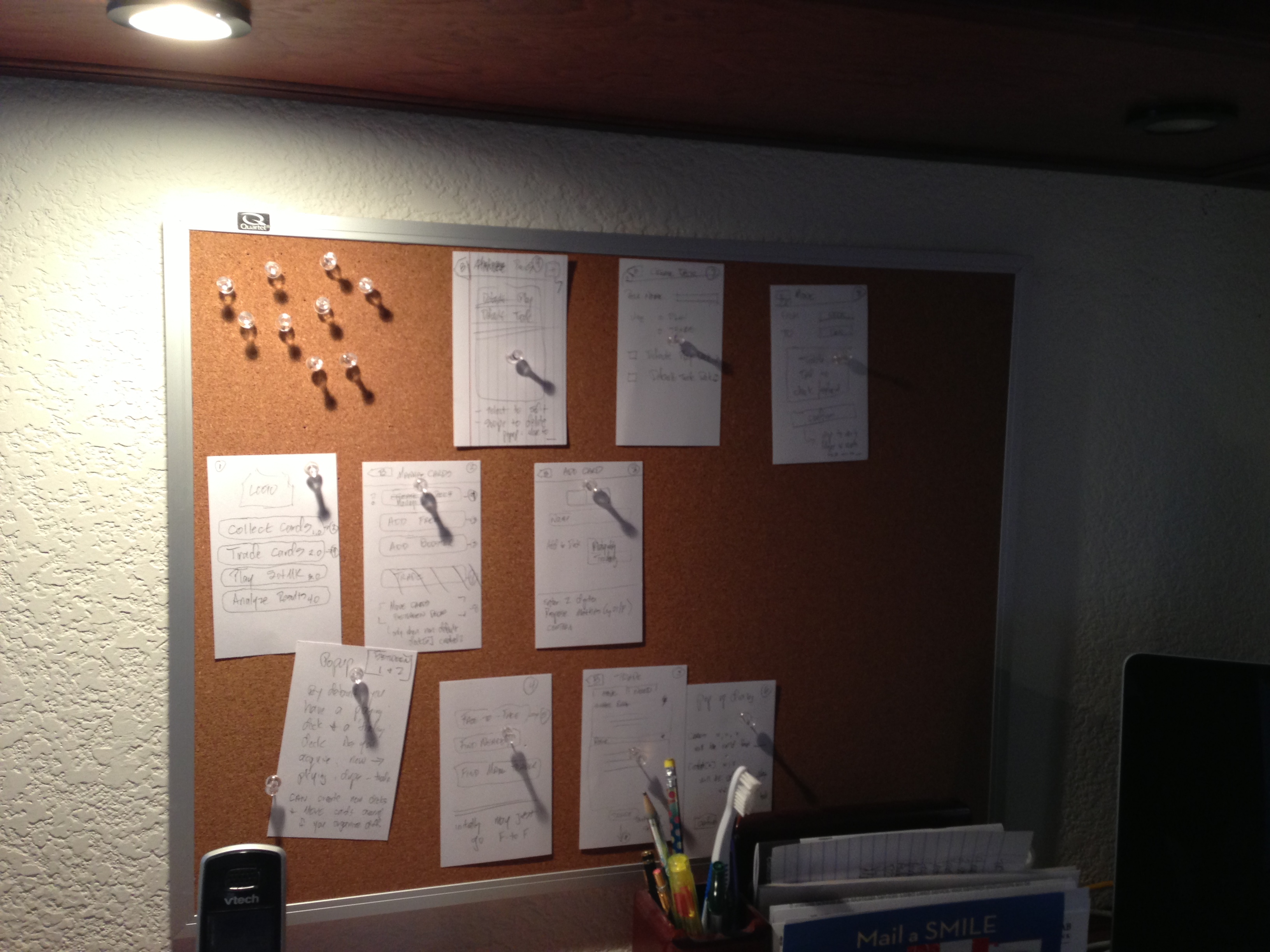
    From this idea, I was quickly beginning to mock up what such an app might look like — drawing out the various screens on index cards and pinning them to a cork board to get the flow.    It really seemed to hit the sweet spot I was looking for — here was an app with enough to it that it wasn’t trivial or worthless, but not so large and complex that it was more than a one-person job.   The app could be compartmentalized nicely, meaning that it didn’t have to be done all at once — I could easily visual several versions of the app, each adding in a few new features.    (That was a big downside to the baseball app — you couldn’t do it in pieces.   You can’t release a version 1 that only does balls and strikes, and then a version 2 that handles other batter actions, and then a version 3 that handles baserunning — until you can do it all, you don’t have anything usable).

    Inspiration had finally come along; the idea was there.   Now it was just a mere matter of programming to take the idea and make it a reality.

    Index cards being  used to mock up application screens
    Index cards being used to mock up application screens
  • A New App and a New Blog

    Yesterday my first-ever iPhone app launched in the App Store for Apple’s iOS devices (iPhone, iPad, iPod Touch).    The link to download the app is at right and also below.

    I have also created a new blog specifically for the app — I didn’t want to post a bunch of stuff here that would only be of interest to users of the app, so if you’re interested in the app, please follow The Sorcerer’s App blog to get the latest news about the app.

    But I thought it would be appropriate to post more of a personal story here of how the idea for the app came to me, and some of the fun and challenges along the way.   So stay tuned over the coming days and I’ll share some of the backstory of creating the app.    In the meantime, if you’re a player of Sorcerers of the Magic Kingdom, please check out the app.    If you aren’t yet a player but are planning a visit to the Magic Kingdom in the future, take a look and see if it’s something you want to include as part of your next trip to Walt Disney World.

    Download the Sorcerer’s Apprentice

  • The Reagan Presidential Library

    While I was in Southern California to visit Disneyland, I took advantage of a friend’s offer to drive out to the Reagan Presidential Library in Simi Valley. The immediate rationale for the trip was to see the limited engagement exhibit, Treasures of the Walt Disney archives. But the library was so interesting in its own right that I didn’t want to just tack on a few sentences about the library to my post on the Disney exhibit; I felt that it deserved a dedicated post.

    This is the first time I’ve visited any Presidential library, so comparisons aren’t possible. It was laid out much as I would have expected — the overall organization is chronological, starting with Reagan’s youth and with the final gallery containing items related to Reagan’s funeral.

    The earlier exhibits — covering things like Reagan’s childhood home or high school and collegiate athletics — were well done but, as something of a political junkie, not as interesting to me as the sections starting where Reagan became Governor of California. There was some coverage of Reagan’s acting career, but it was not extensive, which suited me fine as it meant getting to the interesting stuff that much sooner.

    Reagan as Governor

    After covering the governorship, we then move on to the Presidential Campaign for the 1980 election.

    There are a number of interactive exhibits throughout the gallery. Here I am reading one of Reagan’s speeches off the teleprompter.

    IMG_2721

    Several of the exhibits were extremely moving; one of these was the gallery covering the attempted assassination early in Reagan’s first term. Items from that day were on display, most notably the suit jacket that Reagan had worn with the bullet hole clearly visible. News footage from the day plays on TV screens along with a filmed recreation of the first few minutes after his arrival at the hospital.

    Suit Jacket
    Suit Jacket

    From this somber gallery we then proceed to one of the signature exhibits of the library — a full size replica of the Oval Office. The office is recreated just as it was during the Reagan administration. Some of the items, such as the Resolute desk, are reproductions, while others, like the Frederic Remington sculpture, are the actual furnishings from the office.

    IMG_2724 IMG_2728 IMG_2729

    After the Oval Office we see more exhibits covering the Reagan White House, and then proceed into a cavernous display space for what is unquestionably the most impressive artifact of the library — Air Force One, Boeing 707 #27000. This aircraft flew all U.S presidents from Nixon through Clinton. and is beautifully presented. It is in front of a floor-to-ceiling wall of glass overlooking the scenic valley — on most days this would probably be a beautiful backdrop (frontdrop?) to the aircraft. On this particular day we were completely fogged in so the effect was, I suppose, that of flying through a cloud bank.

    IMG_2731 IMG_2732

    You can board Air Force One and see it much as it appeared during the time it was in service. Unfortunately, photography is not allowed inside the plane, so this shot of me standing in the doorway is as far as I can take you along.

    Boarding Air Force One

    Inside the space is incredibly spacious compared to any commercial airliner, but at the same time appears small and cramped compared to what we’ve seen portrayed as the interior space of the current generation Air Force One, the much larger 747s. We get to see working areas for the President and high-level staff, the communication and command center (including the nuclear code ‘football’), and seating for press and not-quite-as-high-level staff. The air circulation for the aircraft is in use (rather than just hooking it up to external environmental systems) which creates a bit of vibration and hum which helps, along with the slightly inclined attitude of the plane (2%), to create the illusion that the aircraft is in flight.

    After exiting Air Force One, the rest of the exhibit space downstairs includes a Marine One helicopter and a motorcade limousine.

    IMG_2749 IMG_2745

    After leaving this impressive space we retrace our steps back to the main museum building and continue with more exhibits. All too soon we are coming to the end of the story with two moving exhibits. First the handwritten farewell letter that Reagan wrote after his Alzheimer’s diagnosis, marking the end of his life as a public figure. And then a selection of items from the President’s funeral.

    IMG_2759 IMG_2760

    After the last exhibit has been lingered over, we head outside to make our way to the grave site. Along the way we pass a large section of the Berlin “Mr. Gorbachev, tear down this” Wall. And then we make our final stop to pay respects at the grave site.

    IMG_2833

    IMG_1060

    This was a place I truly enjoyed visiting, and being of an age that I remember the events of the Reagan administration well, it was very moving to go back and revisit the highs and lows of that period in our nation’s history. Highly recommended.