Tag: it’s a small world

  • D23 Expo 2013: Highlights from the Imagineering Panels

    Sunday at the D23 Expo was Imagineering day.    Early on, when schedule details were first being announced, it was revealed that there would be five Imagineering sessions on Sunday, but it wasn’t until the last week or so before the Expo kicked off that attendees were given any information about the sessions.

    The sessions were similar in that each one was a panel, and the panels were somewhat more free-form than other panels and presentations.    As a result, there was some overlap, and in reviewing my notes, I felt it would be better to just combine my notes and create a single blog post for the three panels I was able to attend  (attending the Disney Infinity presentation required me to miss the other two Imagineering panels.   I’ve also included a few items from Marty Sklar’s solo presentation on Friday, which I had not previously written up.

    The Panels

    The three panels I attended on Sunday were:

    Working with Walt, with panelists

    • Marty Sklar.  Disney Legend; Currently International Ambassador for Walt Disney Imagineering; previously VP of Concepts and Planning, Vice Chairman and Principal Creative Executive.   Among many other things, guided the creative development of Epcot.
    • X Atencio.   Disney Legend.   Wrote the story for attractions such as the Haunted Mansion and Pirates of the Caribbean; also wrote the songs “A Pirate’s Life for Me” and “Grim Grinning Ghosts”.
    • Alice Davis.   Disney Legend.   A costume designer for attractions such as it’s a small world and Pirates of the Caribbean, as well as Disney films and television.   Widow of Disney Legend Marc Davis.
    • Bob Gurr.  Disney Legend.   Designer of ride vehicles including Autopia cars, the OmniMover system (Doom Buggies and similar), Matterhorn Bobsleds, Submarine Voyage submarines, and the Disneyland Monorail.

    Leading a Legacy, with panelists

    • Marty Sklar.   See above
    • Bruce Vaughn, Chief Creative Executive, Walt Disney Imagineering

    Leave Em Laughing, with panelists

    • Dave Fisher, show writer
    • Kevin Rafferty, story development, senior concept writer
    • George Scribner, story development, director
    • Joe Lanzisero, Creative VP for Tokyo Disneyland
    • Jason Surrell, show writer and producer

    The Content

    Here are some of the things that I thought worth jotting down notes about during these presentations

    (Marty)  The last time Walt appeared on film (October 1966) was in the much-shown introduction to “the Florida Project”, where Walt introduced the plans for what would become Walt Disney World, including EPCOT.   Marty was the writer for this.

    (Alice)  The first time she met Walt was when she was having dinner with her husband Marc at the Tam.   (Tam O’Shanter, a restaurant near the studios popular with studio personnel).   Walt asked about her work.   She was in the garment industry — making girdles and brassieres.   Walt was fascinated (and as far as I can tell she was relating this entirely seriously) by her expertise with elastic.   Two years later, Walt called and asked her to do costumes for it’s a small world.

    (Bob) Asked about first time meeting Walt, he said he was doing sketches for the Autopia cars.   Someone came through the office and took a look, and it wasn’t until he was on his way out and someone said “bye, Walt” that Bob realized who it was.   He thought maybe it was a night watchman or something, so I guess it must have happened after hours.

    (Marty)  His first job at Disney was to produce a tabloid-style newspaper that would be sold on Main Street for ten cents.    It showed how, for Walt, Main Street was a real place, not just a mock-up.   No real small town of that era would be without a newspaper, so there had to be one or the story wouldn’t be right.

    (Bob)  When doing the Lincoln animatronic, Walt had an actor do the speech, and filmed it as a reference.   Bob felt the first take done by the actor was excellent.   But Walt kept making him do it over, and over.  He knew what he wanted and kept pushing (but wasn’t giving any direction to the actor, just having him do it again).   The last take was the one Walt wanted.  The actor was clearly exhausted by that point, and Walt felt that was the way Lincoln would have been at Gettysburg.   That was the kind of authenticity that Walt looked for.

    (Alice)  Making the dolls for it’s a small world, at some point she told Walt that no one had told her how much she could spend on each costume for fabric, buttons, etc.   Walt told her he had a building full of people to do “pencil work”, that she was to design the best costume that anyone from 1 to 100 would love to wear, and they (the pencil people) would figure out how to pay for it.   “People will know the difference; give them your best and they’ll be back.  Cheat them and you’ll never see hide nor hair of them again”.

    (X)  After 20+ years in animation, Walt brought him over to do the script for Pirates.   Marty asked, having never done a script, why did Walt trust you to do that?   X: it was a direct command performance from the man himself.

    (Bob) Walt was never interested in what you had done, but only in what you were going to do next.

    (Alice) Walt would give you something you didn’t think you were capable of doing.  And you’d find a way to do it, because you didn’t want to disappoint Walt.

    (Bob)  Walt remembered almost everything he ever heard, if you told him something, and came back with a different story later, he’d call you on it.

    (Alice)  A young man came to Walt with a drawing and asked him “what do you think of this”?   After looking for a moment, Walt said “It’s very difficult to choose between one”.   He always wanted options.

    (Marty)  The job of leading Imagineering is largely a job as a casting director.   For example, Marc Davis and Claude Coats were very different – they wouldn’t be caught dead going to lunch together.    (Not anything negative, they were just very different).   But putting them together created a really complementary team.

    With the Haunted Mansion, Claude felt it should be scary, and Marc thought it should be funny.    The back and forth between them gave us the ride we have today, probably better than if we had gotten just Marc’s version or Claude’s version.

    (Marty) asked about how to train for a job in Imagineering, Marty suggested learning as much as you can about as many things as you can.   Imagineering comprises 140 different disciplines (but Marty acknowledges they don’t really know how many, that’s just the number they use).   Cross-disciplinary skills are a must.

    (Marty)  leading Imagineering is about casting, motivation, and gently helping someone understand when they have the wrong idea (“a bit of an art form”)

    (Marty or Bruce — didn’t note)  An interesting thing with Hong Kong Disneyland (Shanghai will be similar) is that because of the one child law, the kid-to-adult ratio is inverted from other worldwide parks; influences a lot of what you do in park design.

    (Bruce)  told a funny story about World of Color.   After investing millions in this very advanced fountain system, they decided to create new versions of many classic Disney songs.  So they had the London Symphony Orchestra record a brand new score for the show.   And when they first tried it out, it just wasn’t working.   Someone even said “what if fountains are just boring?” after they had invested tremendous time and money in the show.   Then, they dropped in the classic music (the arrangements we all know)  — and immediately it worked.   We are just really wired to respond to that music the way we know it.

    Someone from the audience asked about Harry Potter at Universal; Bruce didn’t really rise to the us vs. them challenge, but used the question to re-affirm that it’s all about story — that ride, that area of the park is so powerful because it starts with a great story.

    (not sure who told this one)  When Disneyland was about 6 years old, Walt sent Marc Davis over since he was between projects.   Walt asked what he thought, and Marc said what was missing was humor.   So Marc added things like the men climbing the tree to get away from the rhino in the Jungle Cruise.   (and apparently the original Jungle Cruise script was not funny;  it appears from history that the script got punched up at about the same time Marc began working in the parks).

    (Kevin)  The version of one of the songs at Mater’s Junkyard Jamboree where Mater forgets the words to the song was completely intentional  (which is different than the story I’d heard about it previously).    The story is, when Kevin was demoing the song for Larry the Cable Guy (voice of Mater), he actually did forget some words and filled in with a “something something something”   — Larry said “we have to do that!” and did it in one take.

    (Kevin)  Mater’s Junkyard Jamboree also is the first ride to have a “Joke” button; when the ride is loading, if it is taking a little longer than ideal, the operator can hit a “joke” button on the console and Mater tells a joke.    He played a number of the recorded jokes for the audience.   I don’t remember any or I’d share.

    There was obviously a lot more in all of these panels, but those were the highlights as I saw them.    The biggest thrill was just being able to see so many Disney Legends and hear their stories.
  • A Walk in Walt’s Disneyland Footsteps

    During the D23 Expo, I made many new friends, and there was a lot of sharing of what we were doing around the parks before and after the Expo.     One thing that was mentioned more than once was the Walk in Walt’s Disneyland Footsteps guided tour at Disneyland.    A version of this tour has been offered for some time, but it has been recently upgraded and revamped, and everyone who had taken it spoke of it very highly.    Since I was going to be in town for a while after the Expo, I called the Disneyland Tour number ( 714-781-TOUR ) and reserved a spot for myself.

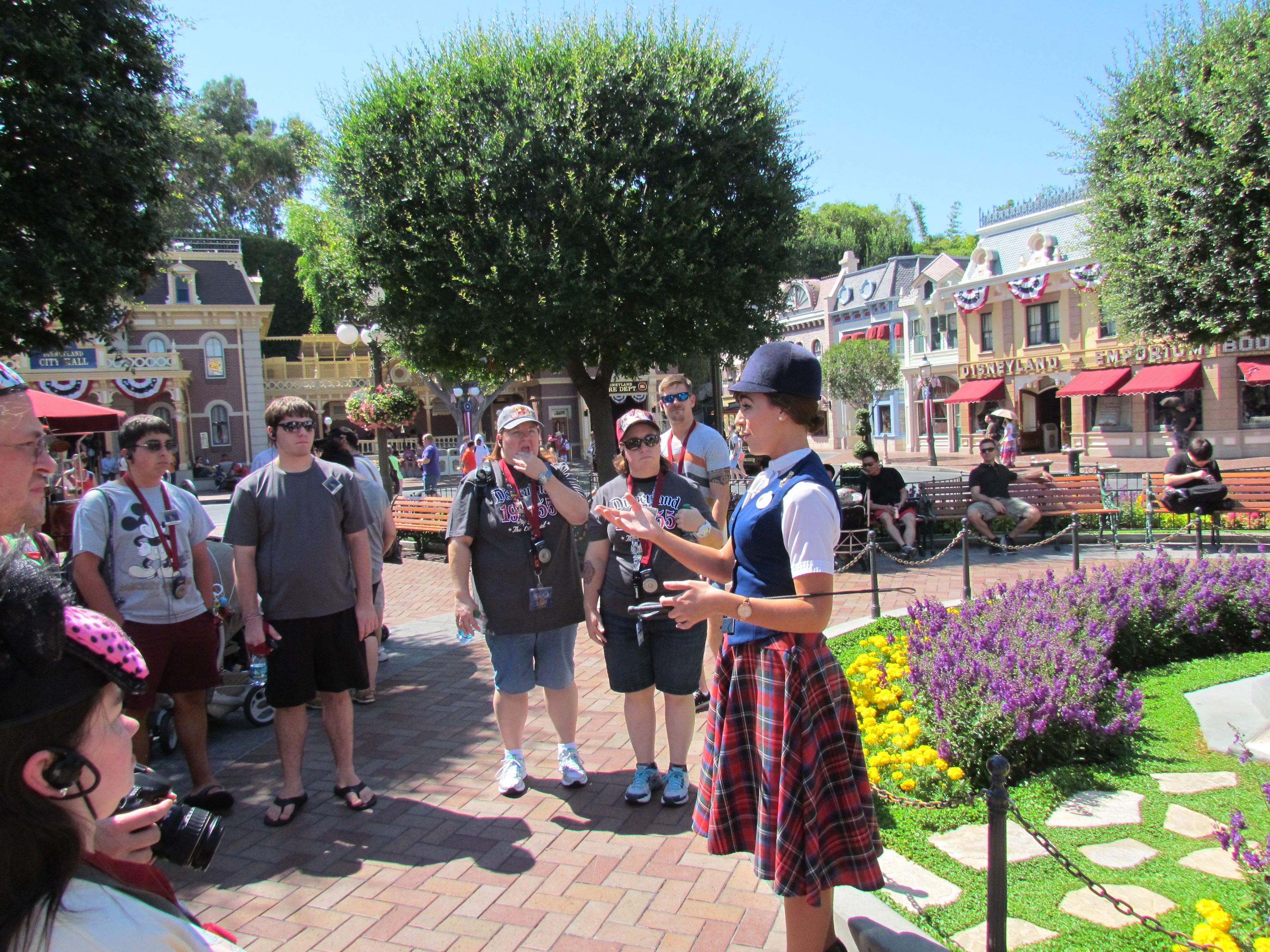
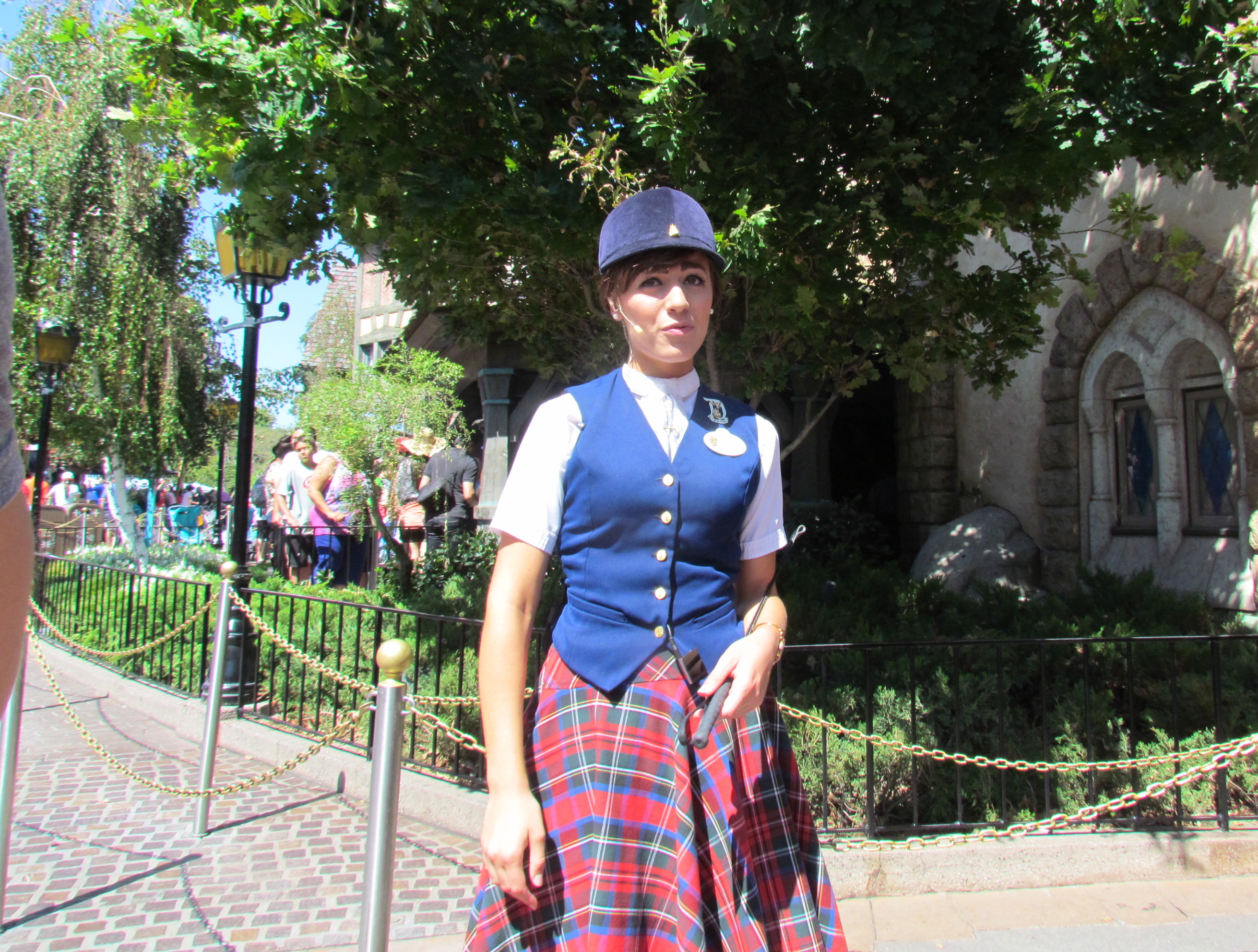
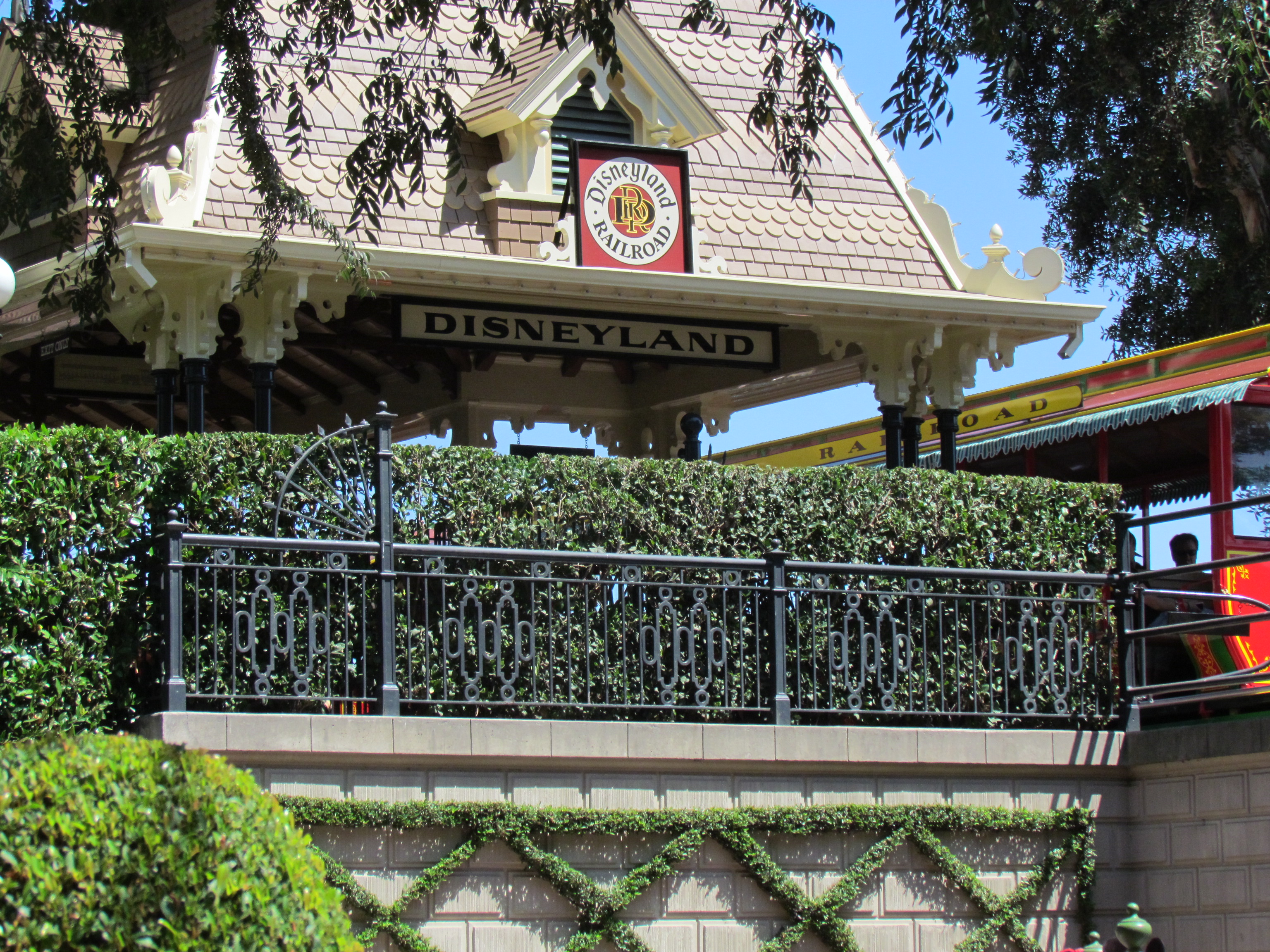
    The tour meets at the Guided Tour garden, across from the Main Street train station and adjacent to City Hall.    Upon check-in I was asked to make a meal selection from the Jolly Holiday Bakery menu, as we would be served a meal at the tour conclusion  (since I was on the afternoon tour, this was essentially dinner even though the tour description referred to it as lunch).      We were given bottles of water while we waited — nice since it was a warm day.    A few minutes before our 2:30 tour was scheduled to begin, our tour guide, Mia, began introducing herself to the guests and handing out the audio devices we would use to hear Mia and also to listen to pre-recorded portions of the tour.     (The pre-recorded portions were almost entirely snippets of Walt Disney talking about whatever we were currently seeing on the tour, and occasionally a bit of music).

    The tour starts across from the Disneyland Train Station
    The tour starts across from the Disneyland Train Station

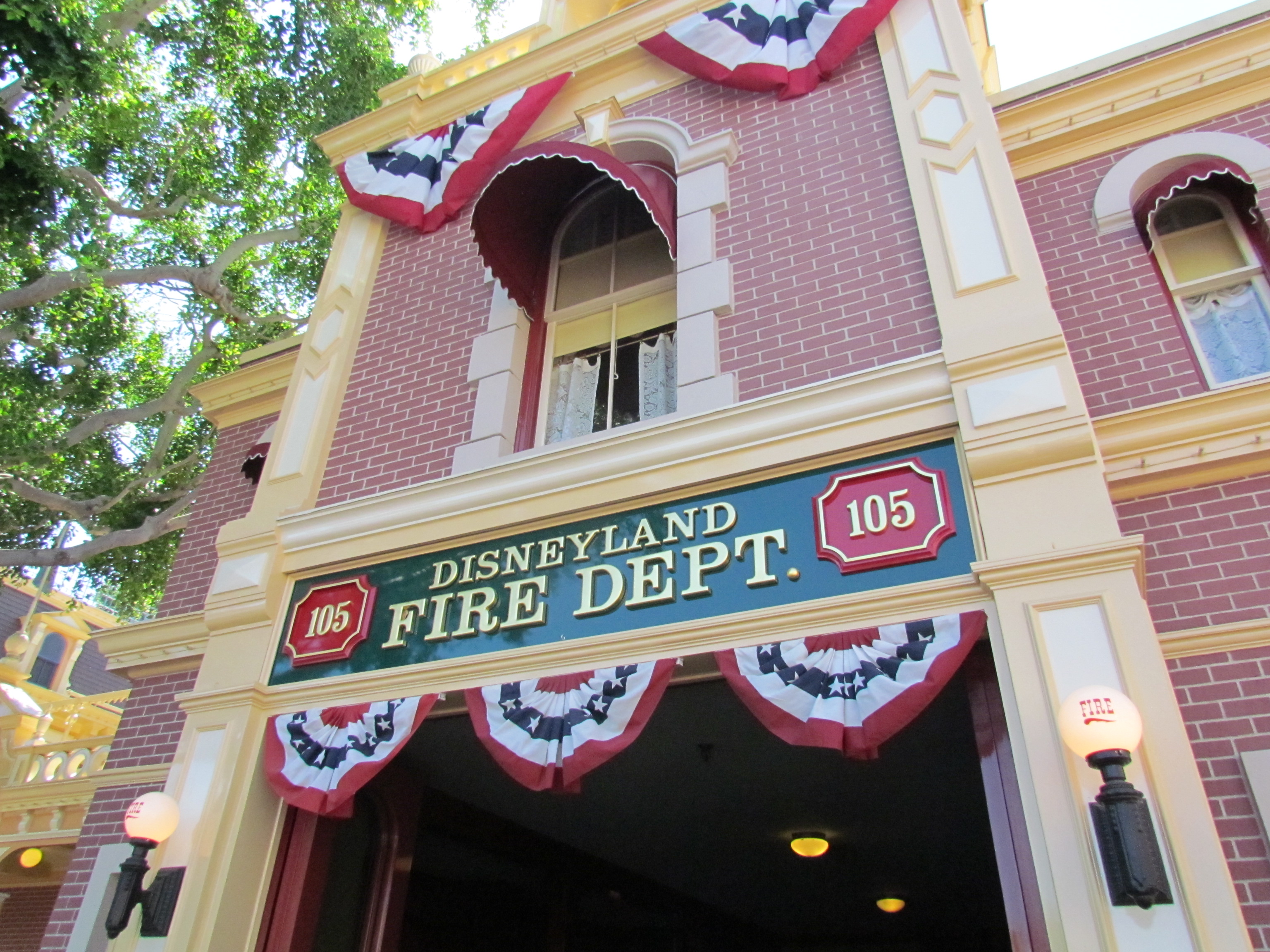
    Once everyone was wired up and name badged, we headed over to our first stop, which was the Main Street Fire Station.    Mia told us a bit about the overall design of Main Street — that while it pulls some elements from Walt’s home town of Marceline, MO, it was really not intended to be any specific place.  Every visitor is supposed to see a bit of their own home town in it.    The train station and city hall are largely based on ones in Fort Collins, CO, the home town of Imagineer Harper Goff, who designed those buildings for Main Street.

    First stop:  The Fire Department.   Walt's private apartment, above, is where we will conclude the tour.
    First stop: The Fire Department. Walt’s private apartment, above, is where we will conclude the tour.

    From there, we made the short walk over to the Town Square.    We stood in front of the flagpole, right about at the spot where Walt delivered his opening day dedication.   We listened to a recording of that speech.   Mia shared several stories about the park’s opening day, which was not practically perfect in every way.

    Hearing about Walt's opening day dedication
    Hearing about Walt’s opening day dedication

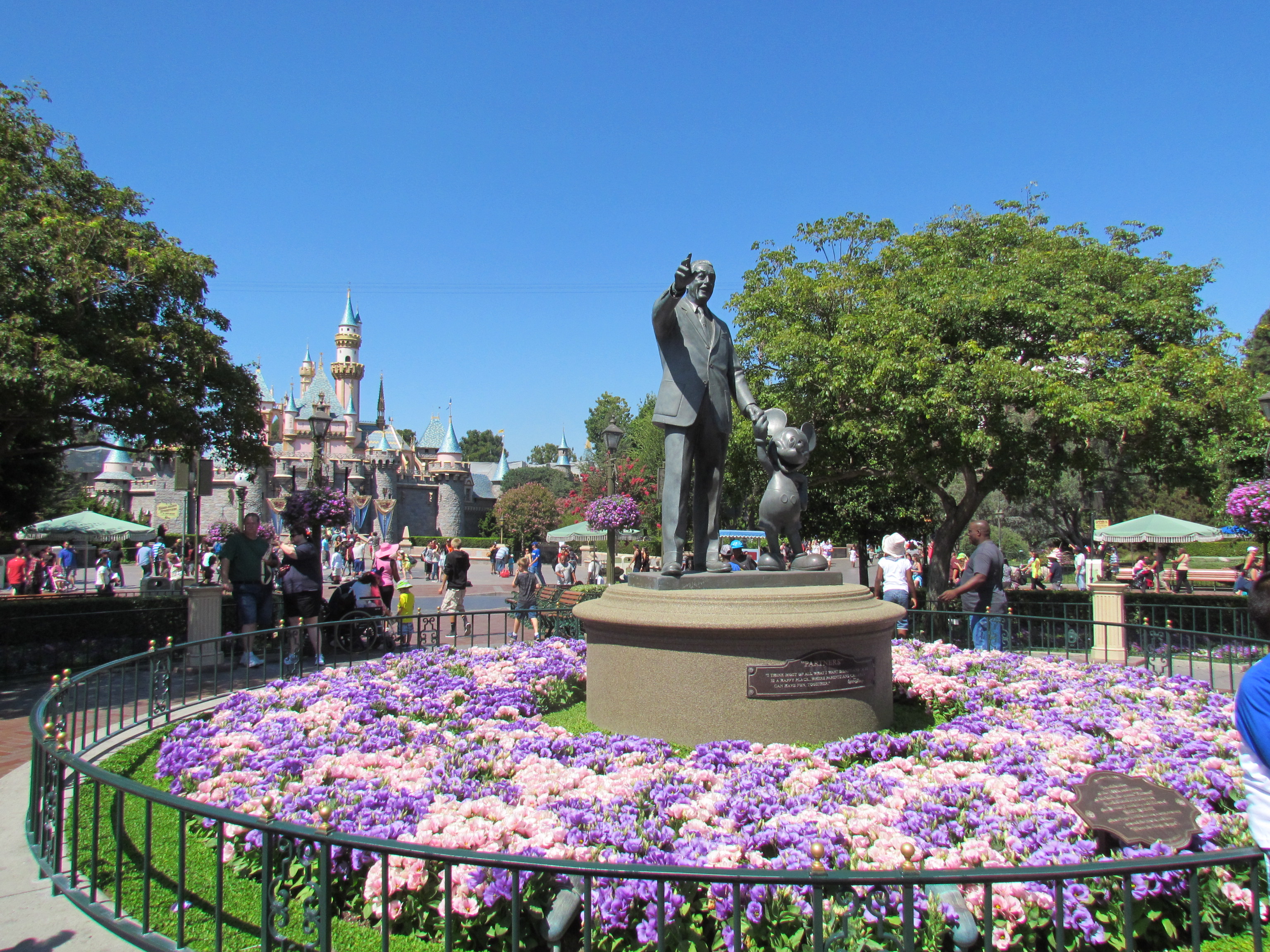
    We proceeded down Main Street, making particular note of the many windows in the upper floors of the buildings which are dedicated to particular figures in Disney history that made lasting contributions.    I saw Imagineer Rolly Crump’s window; I was actually looking for the Sherman Brothers but missed it, so I’ll have to go back and look more carefully.    At the end of Main Street we paused at the Hub, to the side of the Partners statue,  while Mia discussed the overall hub-and-spoke design of the park and the use of “weinies” to pull the guest along from one area to another.

    At the Hub
    At the Hub

    We moved on to the castle forecourt, and learned that the castle drawbridge is actually operational, and how opening the drawbridge was a dramatic flourish on opening day.     We made our way across the drawbridge, through the castle, and into Fantasyland.

    In Fantasyland we rode Peter Pan’s Flight, one of the original opening day attractions, and still one of the more popular attractions in the park.

    In Fantasyland, about to ride Peter Pans Flight
    In Fantasyland, about to ride Peter Pans Flight

    From Peter Pan, we made our way over to New Orleans Square.   Here Mia told us about some of the non-public areas that were designed for Walt’s personal use and to entertain important visitors:  an expanded apartment over Pirates of the Caribbean (that Walt never got to use), Club 33, and a planned but never completed Jazz club.

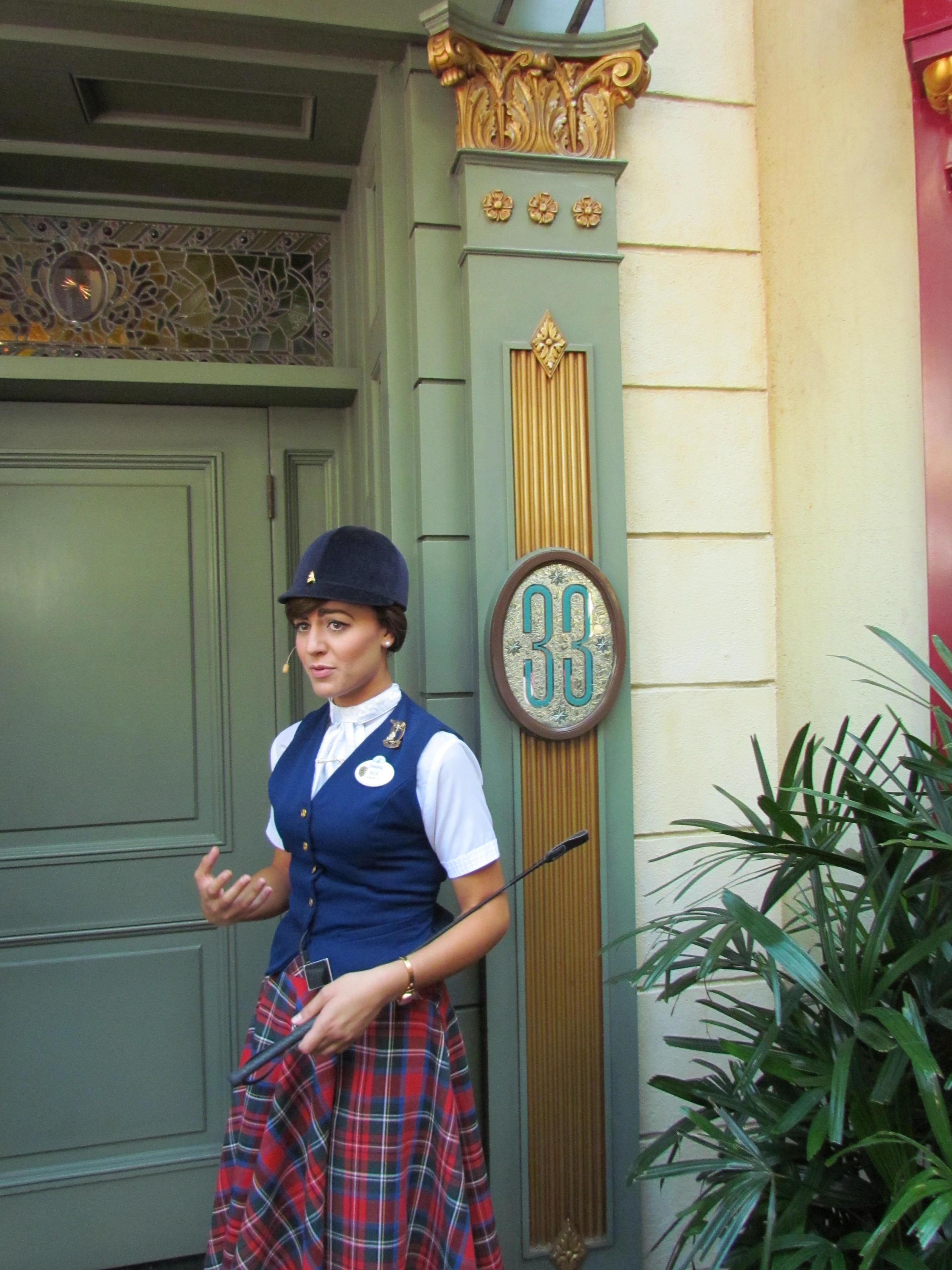
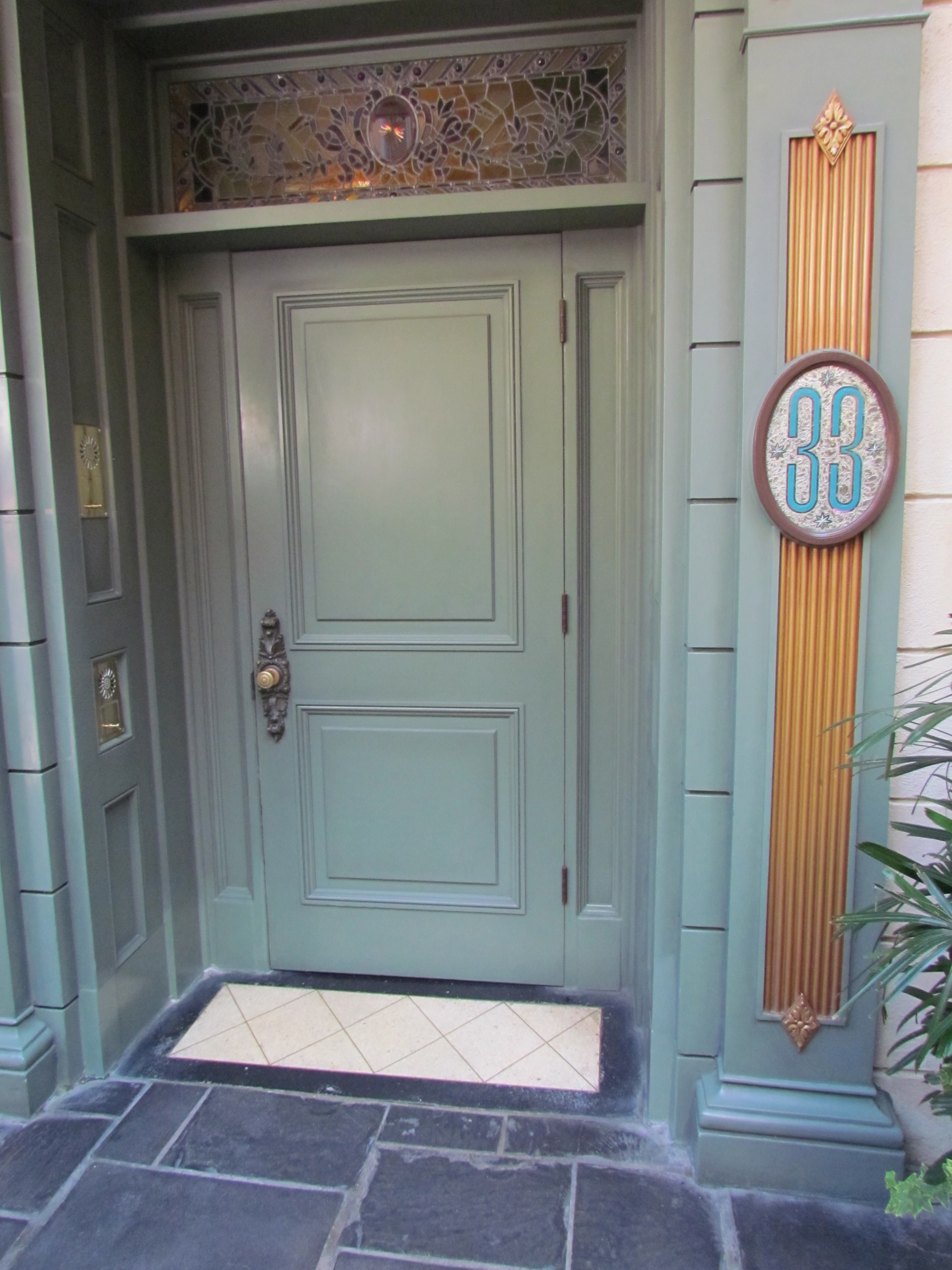
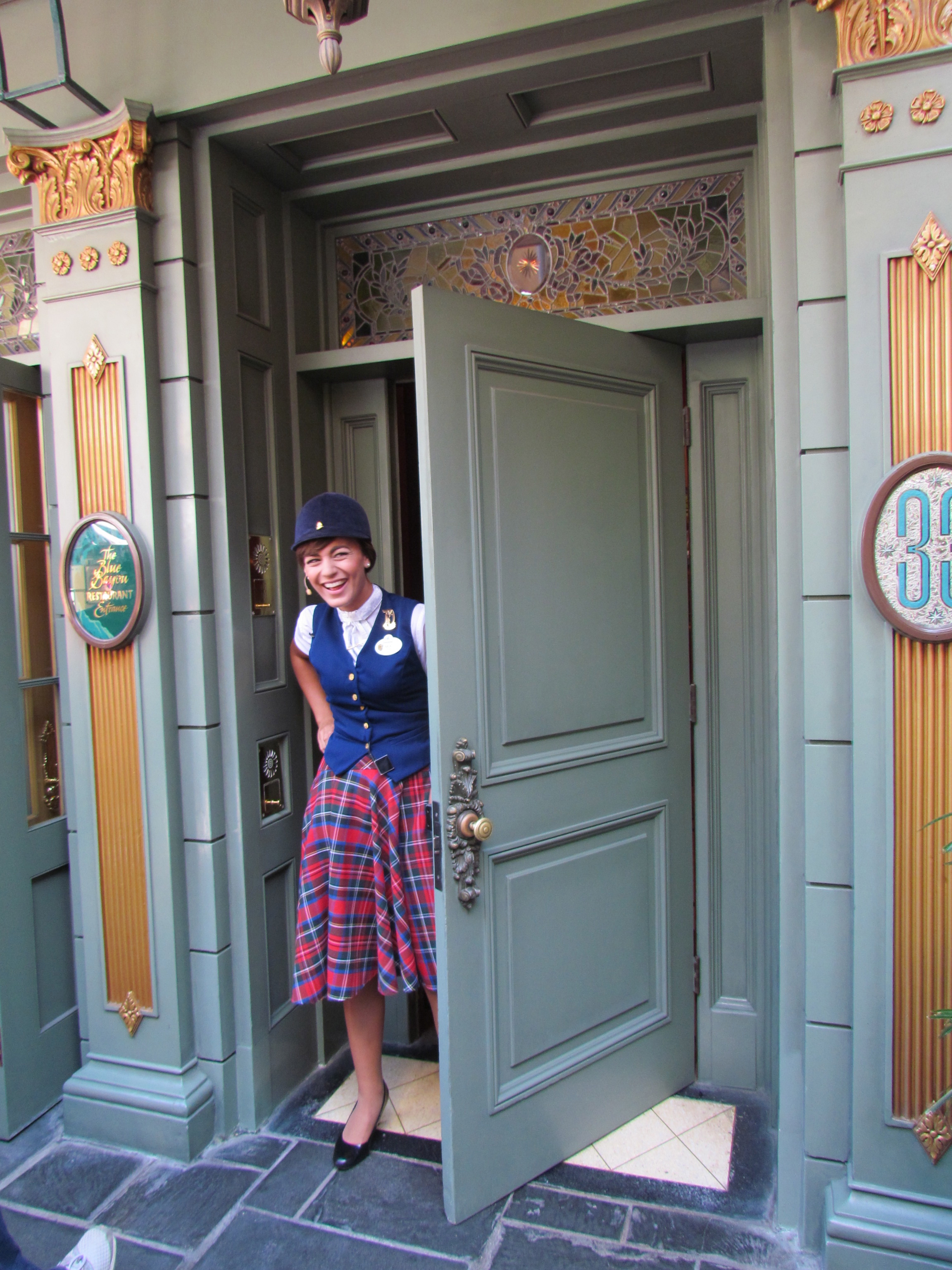
    We proceeded to the entrance to Club 33 — a very exclusive dining establishment for members only.    The waiting list for membership is quite long, and the membership cost is quite extravagant.    It’s on my bucket list to dine there someday, but for now, we were able to enter the lobby, which is not open to the public.   So while it’s not lunch or dinner at the Club, it’s still a very special opportunity, and I think one that everyone there really appreciated.

    In front of Club 33
    In front of Club 33
    We wait by the door while Mia bribes some guards, or something
    We wait by the door while Mia bribes some guards, or something
    It appears to have worked, we're in!
    It appears to have worked, we’re in!
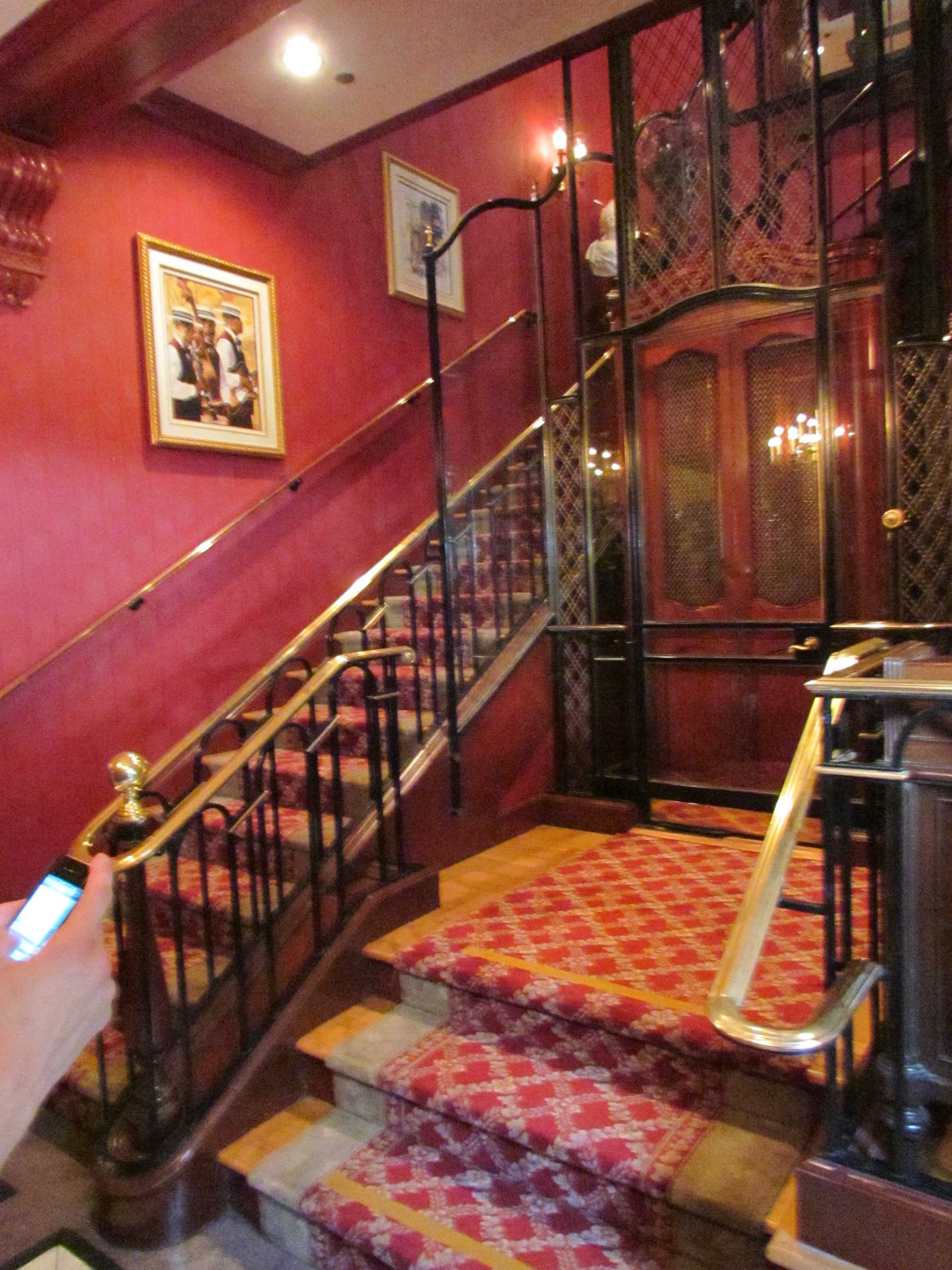
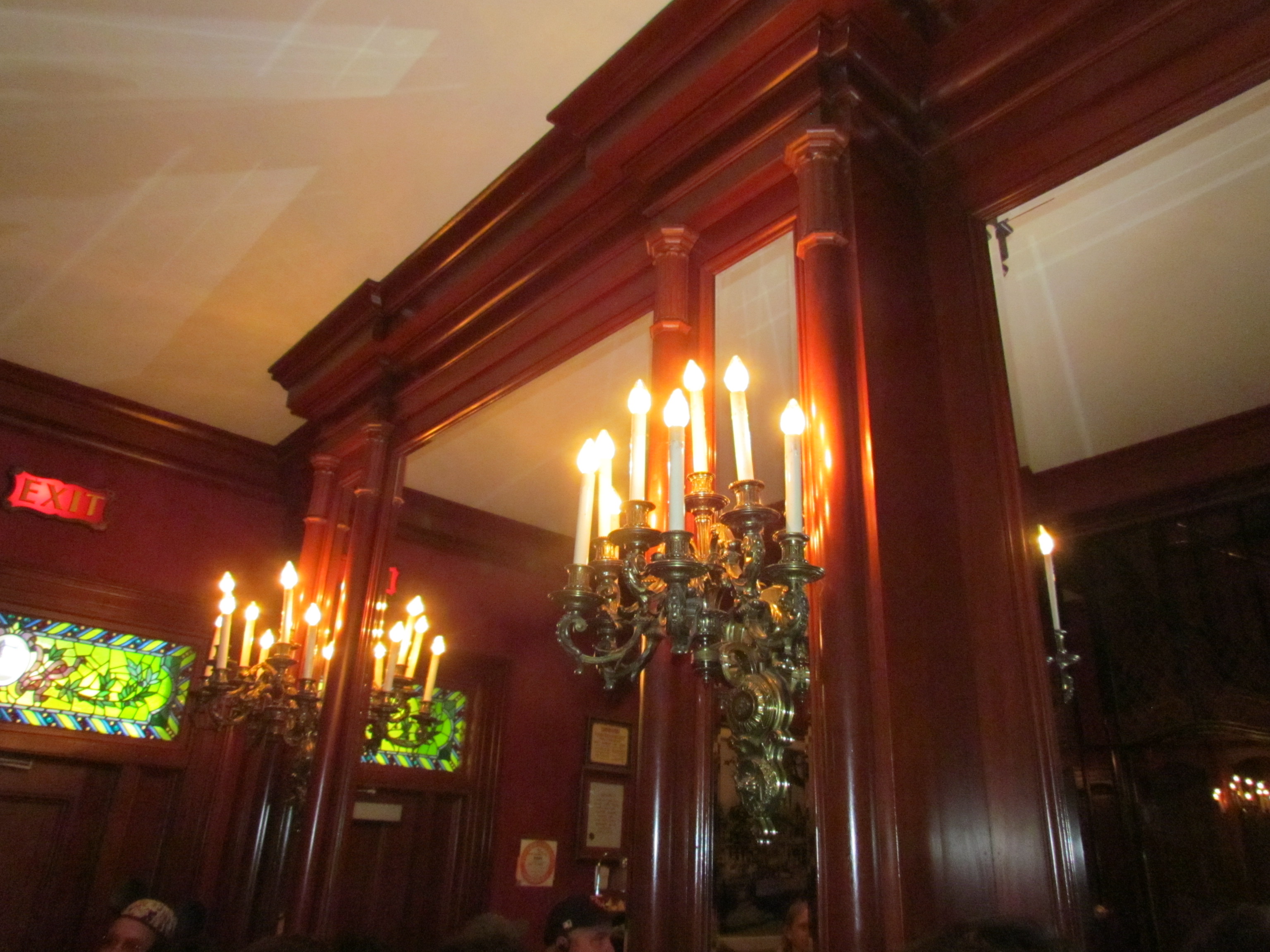
    The small, but very elegant, lobby area
    The small, but very elegant, lobby area
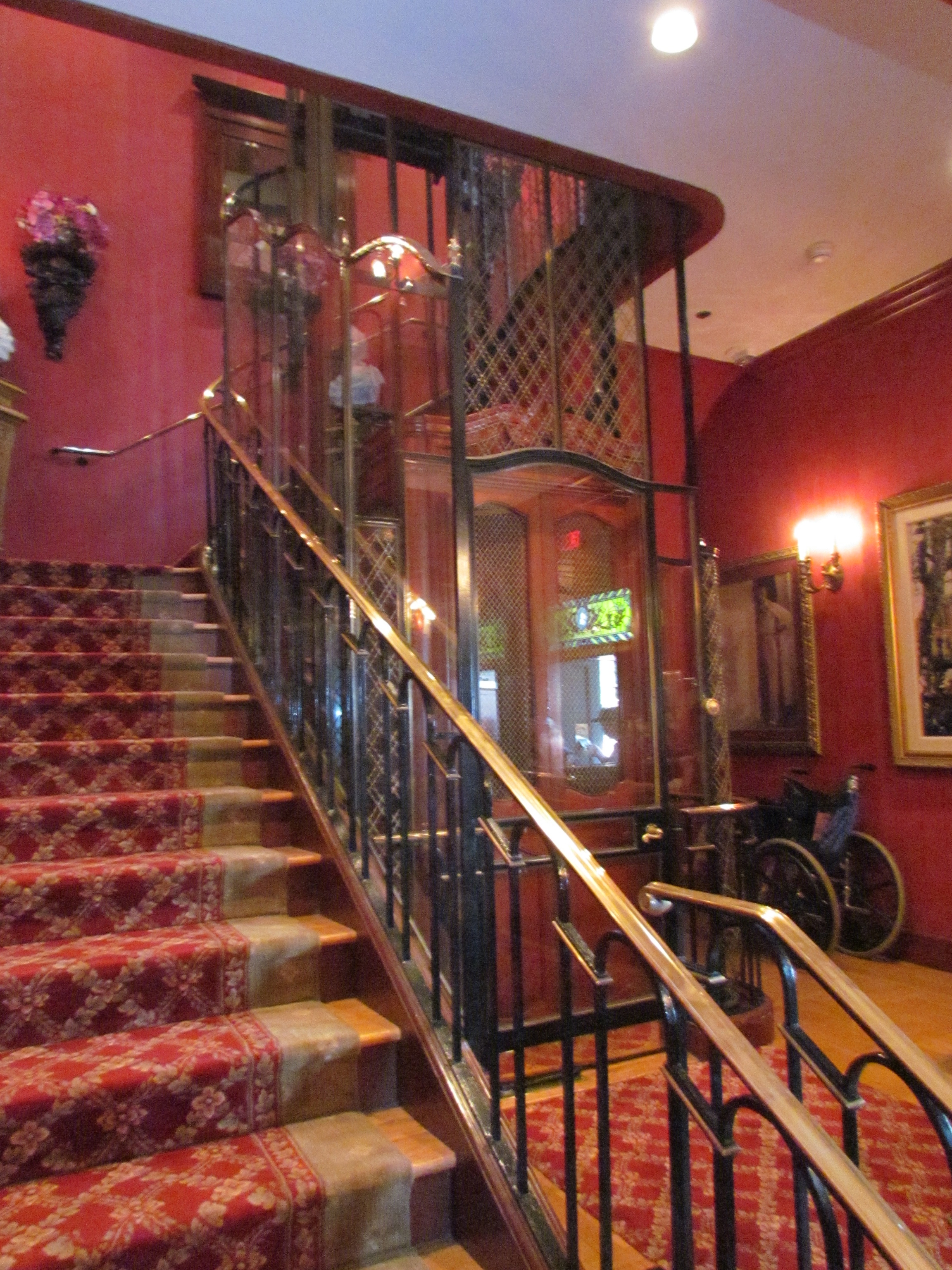
    Stairs or an old-fashioned lift provide access to the dining areas upstairs
    Stairs or an old-fashioned lift provide access to the dining areas upstairs

    IMG_3992 IMG_3994

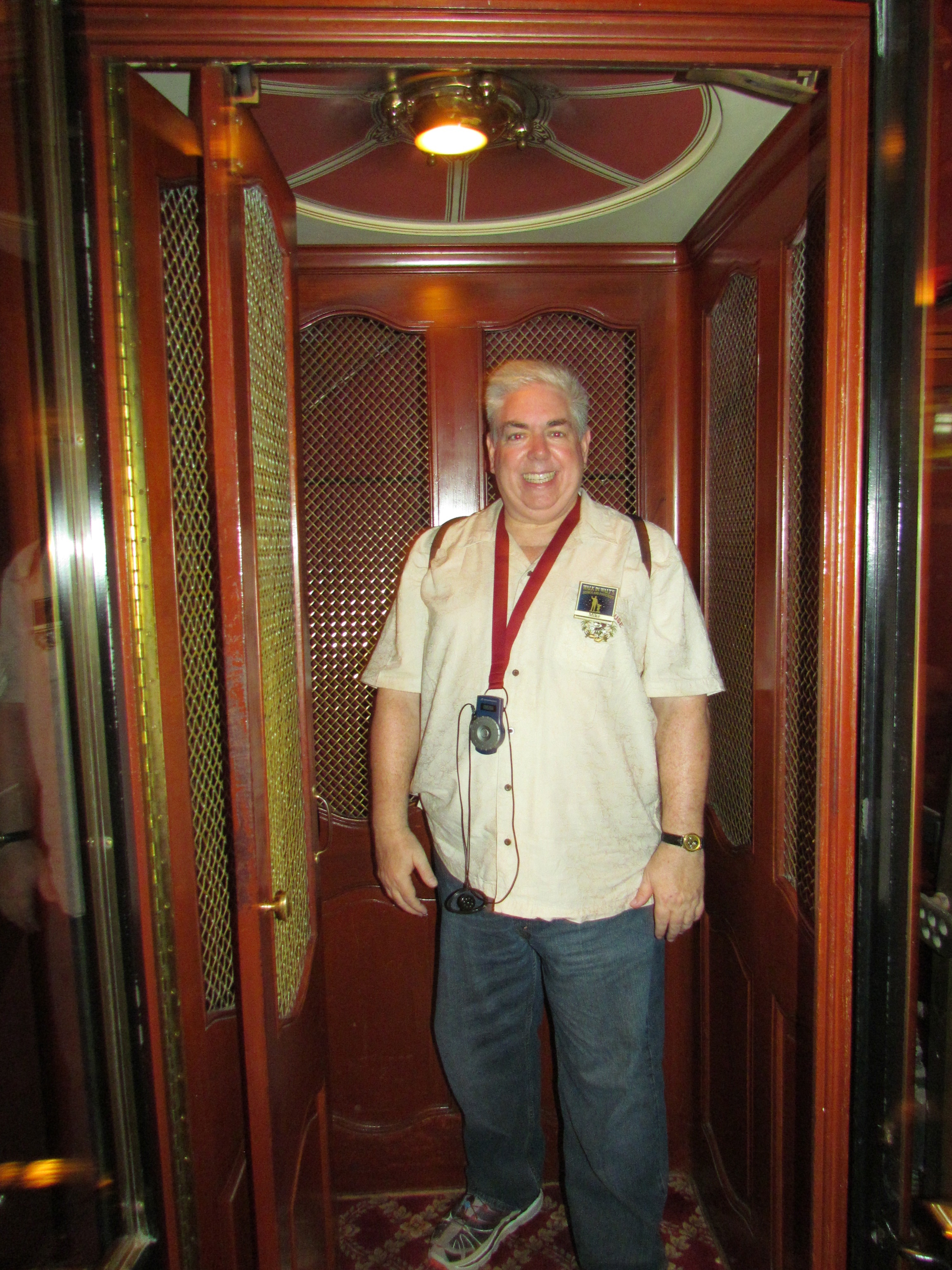
    In the lift -- should I just push '2' and go for it?
    In the lift — should I just push ‘2’ and go for it?

    After spending a nice amount of time in the Club 33 lobby — it’s very nice that we didn’t feel rushed through here and everyone got to take pictures in the lift — we made our way over to an area next to the Haunted Mansion, where we learned a little about the various early concepts for both the Mansion (or The Museum of the Weird) and Pirates of the Caribbean (or Blue Bayou Lagoon).   Here we listened to more audio of Walt, along with Imagineer Claude Coats, describing the concepts of the attractions as they were envisioned at the time.    We’ll hear more about these attractions later, but the interesting bit at this point was that both of these rides were originally conceived as walk-though attractions.

    At this point, roughly the midpoint of our tour, we paused for a restroom break.   When we resumed, we crossed the park into Tomorrowland, taking up a spot in front of the Carousel of Progress.    (Yes, it’s Innoventions now, and if you’re a bit younger than me perhaps to you it’s America Sings.)     While standing here Mia told us some stories about the various incarnations of the Fantasyland and Tomorrowland Autopias that have existed over the years.   (I can’t share all the great stories, as then there’d be less reason to take the tour)

    From here we moved over to a location between the Finding Nemo submarine voyage lagoon and the Matterhorn.   We heard about the major expansion of Tomorrowland in the late 1950s that brought the Matternhorn and Monorail attractions to the park, and how innovative the steel tube, block dispatch system for the Matterhorn was.

    We moved over to it’s a small world to hear stories about what a turning point the 1964-65 New York World’s Fair proved to be for Disneyland.    Creating rides and attractions for a theme park like Disneyland is an expensive proposition … but with the World’s Fair, Disney was actually paid by sponsors to develop attractions that would later find their way back to the parks.    The attractions that were designed this way included Great Moments with Mr. Lincoln, The Carousel of Progress, it’s a small world, and Ford’s Magic Skyway (which morphed into the PeopleMover System).   The Primeval World diorama seen along the Disneyland Railroad also came from the Magic Skyway exhibit.

    I was aware of these attractions, and their World’s Fair heritage, prior to the tour.   But I didn’t realize that the Magic Skyway ride system was also the precursor to the Haunted Mansion’s OmniMover system (also used on a number of later rides),  and the small world boat system was similarly served as a prototype for the Pirates of the Caribbean flume.    So we can also credit the Worlds Fair experience of the Disney Imagineers for giving us those attractions in their current forms.

    Now we crossed the park again, making our way to the Enchanted Tiki Room.    While this is an attraction many guests love to hate, I’ve always enjoyed it.    We experienced the show after hearing about Walt’s early work with audio animatronics.

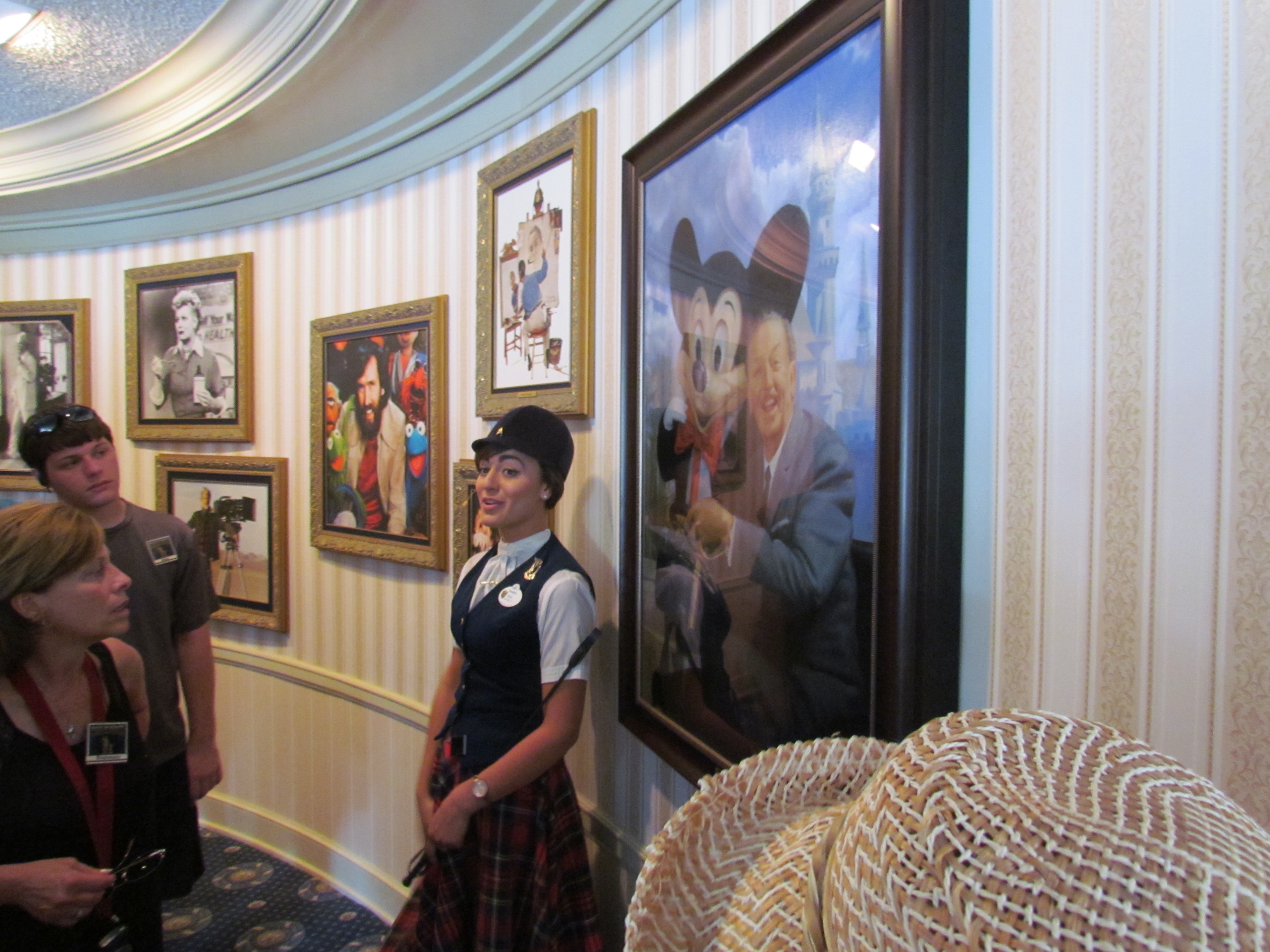
    Now our tour is almost at an end.   We make our way back up Main Street and stop in the gallery outside Great Moments with Mr. Lincoln.   Here, standing in front of the last picture of Walt Disney taken inside his park, we hear about his illness and death in 1966.

    IMG_3996

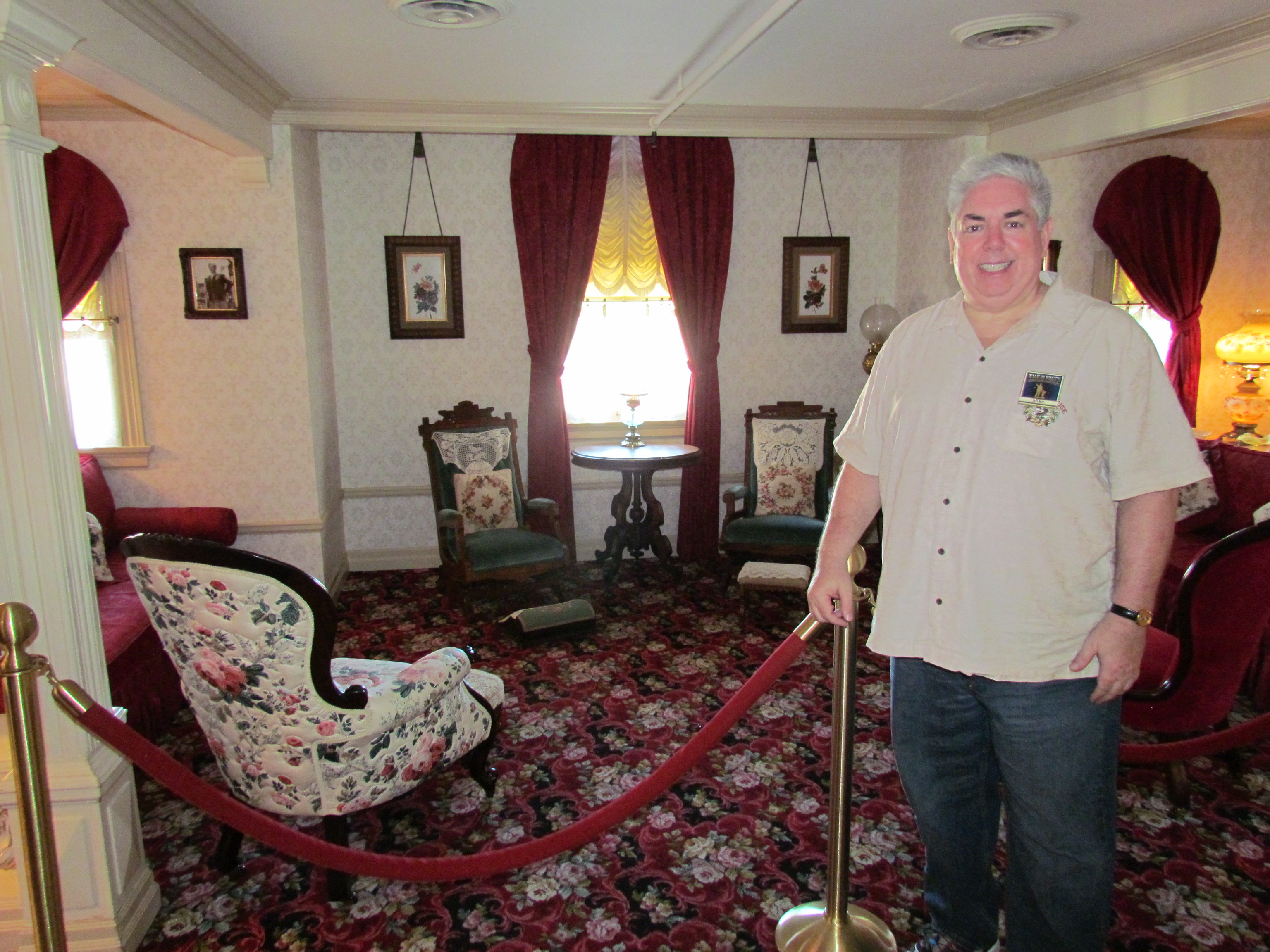
    We then cross back over to the tour garden, where we are divided into smaller groups to go upstairs over the Firehouse and view Walt’s apartment.    Although we aren’t allowed to take photos in the apartment, our tour guide will take a picture of each of us, using our cameras, so I get a picture in front of the lamp that is always lit to signify Walt’s ongoing presence in the park.

    In Walt's apartment above the Fire Dept.
    In Walt’s apartment above the Fire Dept.

    The tour was a wonderful experience — the access to Club 33 and Walt’s apartment are two very special experiences that by themselves justify taking the tour.    Hearing Walt talk about the park — the only Disney park in the world that he personally visited — while standing in the places he stood, or in front of the attractions he was talking about on his show, is just a really special way to experience these stories, even if you’ve heard them before.

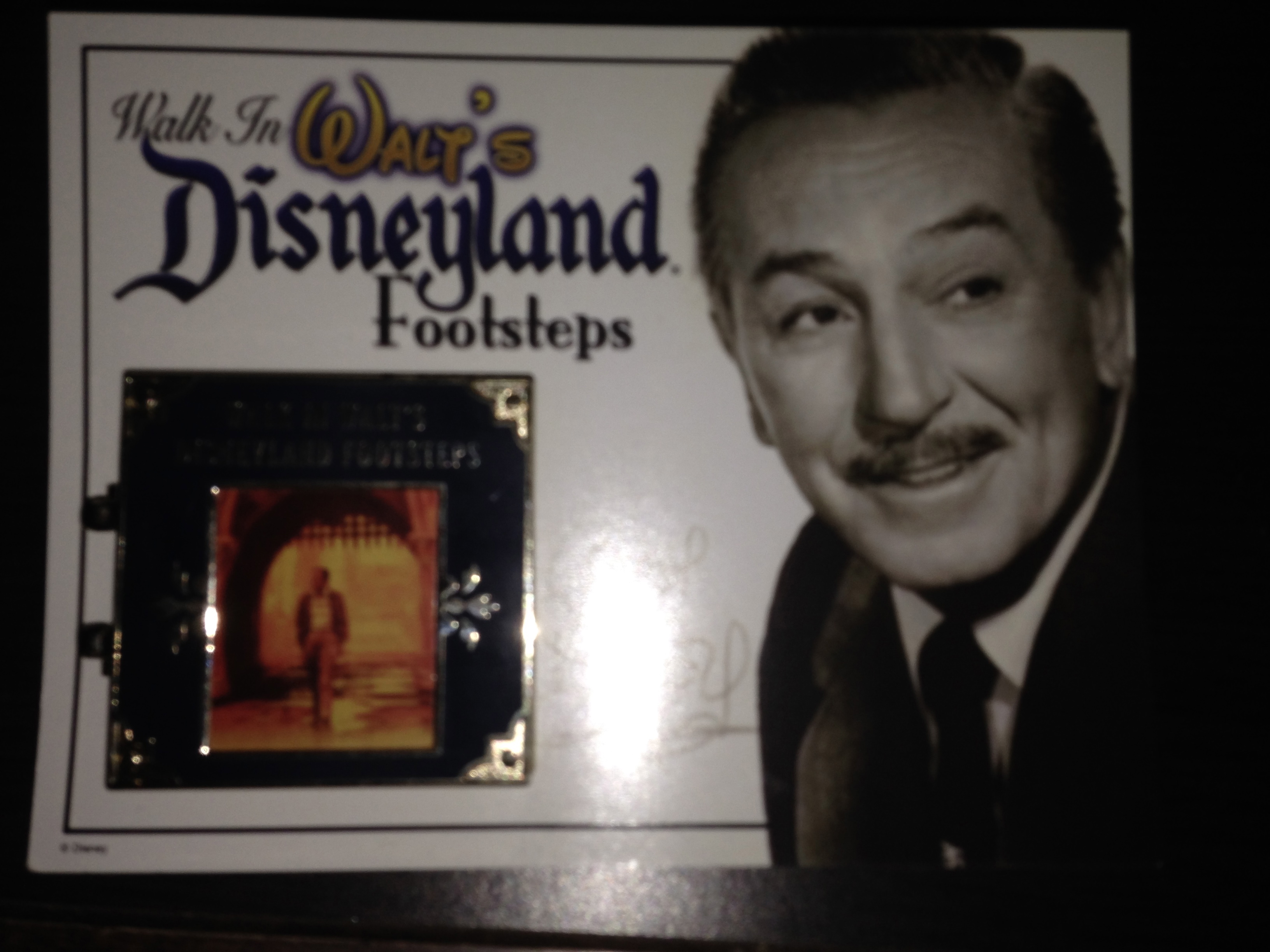
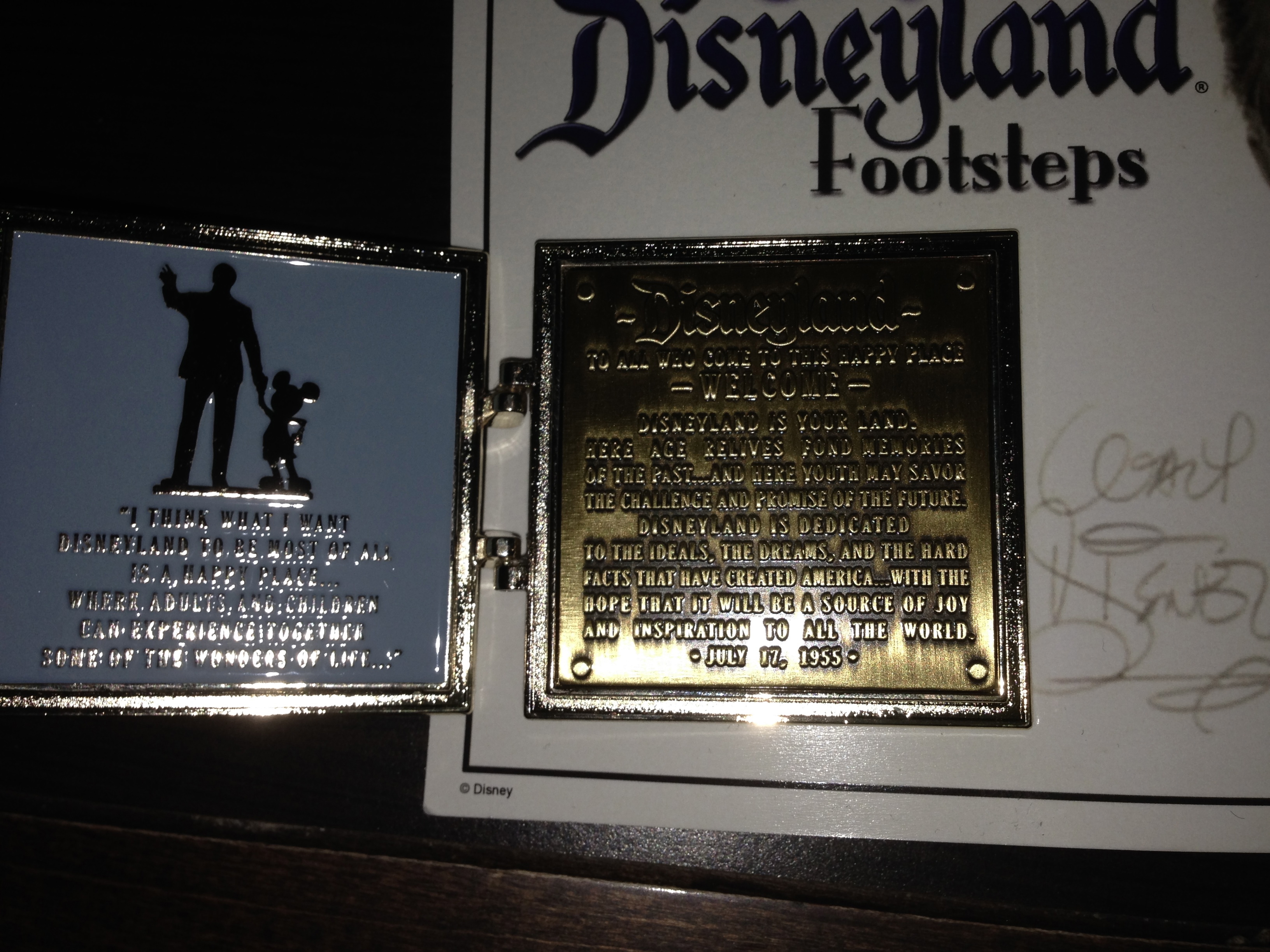
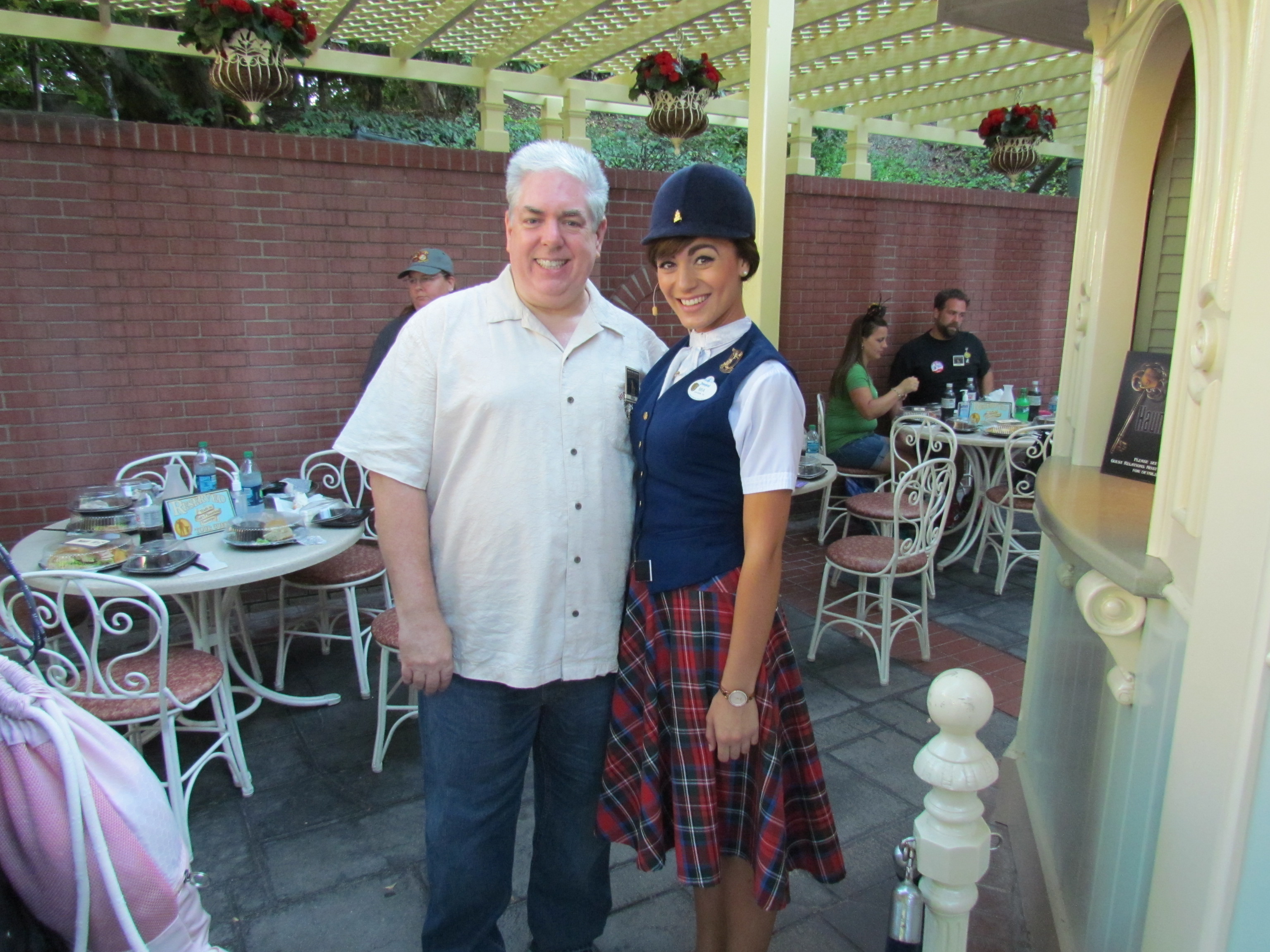
    At the conclusion of the tour, we came back to the Guided Tour area for the final time, and sat at the shaded tables there to eat the meals we had ordered at check-in.    Mia circulated around the tables, continuing to answer questions or share stories, or pose for pictures with the guests.    We all received the Walk in Walt’s Disneyland Footsteps pin, featuring a well-known photograph of Walt on the front and a reproduction of the park dedication plaque inside, along with a silhouette of the Partners statue.    Even though I don’t collect many pins this one is a very nice keepsake from the experience.

    IMG_1426 IMG_1427

    I had to get a picture with Mia after the tour
    I had to get a picture with Mia after the tour

    The Walk in Walt’s Footsteps Tour is currently offered twice daily, at 9:30 a.m  and 2:30 p.m.   For more information and reservations visit the official tour page.