Tag: Rio

  • May 31/June 1 – Homeward bound

    Saturday morning the sun rose into a clear sky over the beaches of Rio. Packing day. I’ve done some shopping while here, and most of what I purchased is somewhat fragile, and mostly too large and/or too heavy to put in my carry-on, so it took me a long time to get everything packed away safely. Then down to breakfast about 0800. Next, up to the rooftop for some sunshine and final pictures of Rio.

    Copacabana sunrise
    Copacabana sunrise
    Rooftop View
    Rooftop View

    Most of us are leaving today. One left Friday, two leave later this week, and one of our group is staying 2 more weeks for the World Cup, in a town well South of Rio where the winter weather can be really cold. The tournament begins June 12 and lasts for a month. Brazilians are very passionate about soccer and their national team, but as I pointed out a few days ago, people are more reserved usual, or even downright hostile towards the event, due to the corruption and wasted opportunities I have written about previously. On the sidewalks in Rio you can see an outline of the spray painted slogan “FIFA GO HOME”. This is a remarkable sentiment; it would be like going to Disney World and seeing guests with signs reading: “Mickey go home”.

    However, as this story in today’s WSJ Magazine shows, there is still a pure passion for soccer in rural Brazil that both strengthens and connects communities.

    http://online.wsj.com/articles/world-cup-soccer-brazils-villages-compete-in-their-own-cup-1401475828

    I’ll miss our study group; we really got along great with each other. I’m sure to be following up with at least three of our group; two are located in Florida (Rachel, at Flagler in St. Augustine, and Mark at Lynn in Boca Raton), and Krista from Muhlenberg College in Allentown, PA, who is a sociologist; we have a shared interest in corporate governance, social responsibility and ethics (although to be sure, we have different perspectives on the topic), and we expect to share some class materials and research ideas with each other. But every member of the group is a person I would be happy to travel with again. What a delight it will be a few years from now to be at a CIEE seminar in (fill-in-the-blank) and be reunited with one or more of my ‘carioca’ friends.

    at Sugarloa
    at Sugarloa
    in Little Africa
    in Little Africa
    at Study Center
    at Study Center

    It is good to be home with Ginny, Kristina, John and Liam (and Charlie, too). My travel home was relatively easy, and I’m sitting in my home office gazing out at the pool and lanai. It is easy to say how large the quantity and how excellent (and intense) the quality of the experiences have been in this seminar, and my entire trip. It will be days or weeks (or maybe longer) before I can really grasp how my experiences in Brazil have changed me and how my life and career will be affected. These are stories to be shared personally, among friends and family. I look forward to those conversations. And I will continue to share updates on all of the Brazil-related stories I’ve been blogging about this week on my twitter feed: @MarcusAIngram. Most of that material is related to higher education, finance and economics, with a splash here and there of sports, religion and politics. And humor!

    Thanks for sharing your time with this blog.

    Peace be to you,

    Marcus

  • May 28 (Rio Day 9) – Vila Autodromo

    Just two days of our seminar left, and after that my Rio-related posts to Epic Mikey will be complete. If you like the info and the commentary you’ve been reading here this week, please follow me on twitter – @MarcusAIngram. I post there regularly, and I plan to continue to follow the stories you have read about here.

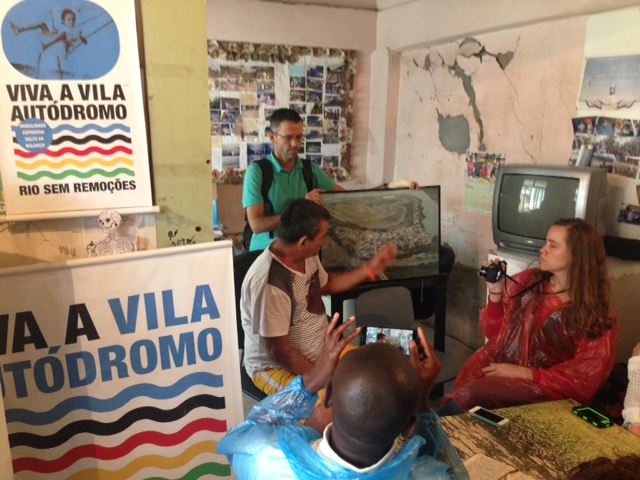
    Vila Autodromo is the most egregious example we’ll see here of the difficulties in the favelas that are directly caused by attempted government intervention. This neighborhood is flat, not hillside, not controlled by gangs or militias, tranquil and peaceful. It has been there for at least 40 years. But since it is very near to the 2016 Olympic site, there have recently been new threats to remove the residents.

    Vila Autodromo is so named because it is located right up against the property of the race track at Jacarepagua that hosted the Formula 1 Brazil Grand Prix in 1978 and 1981-89. The original residents built there because of the access to fishing in the nearby lagoon, and the community grew as the residents found job opportunities building and working at the track, which was opened in 1977. The track is now closed, and the main Olympic stadium and many other venues are being constructed on the site. It is 19 miles from the tourista areas in South Zone, where we are staying, and it took 1 hour and 40 minutes to get there in today’s traffic. Traffic may have been made worse by a bus strike and bad weather, but imagine how long this journey will seem when the Olympics are in town.

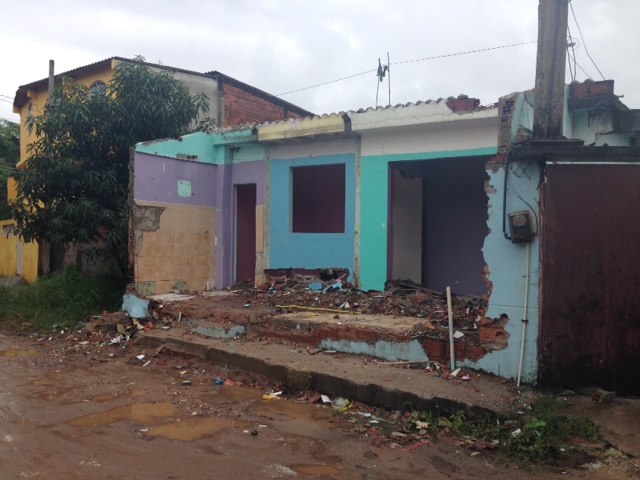
    Despite its peaceful nature, this community has been threatened with destruction many times since the early 1990s. In 1993, and in 1996, the residents successfully fought for and won a 30 year, then a 99 year, lease on the land. So, legally, they cannot be evicted. But the municipal government has gone in and made cash offers plus public housing that are almost too good to be believed. Some homeowners have been offered up to 2 million Reais (about $1 million US), to abandon their legal residences. Families have been offered numerous rent-free apartments in nearby public housing. (By comparison, when some of the South Zone favelas were forcibly removed in the 1980s, they were forced out to the “City of God”, a housing project made famous by the dreary movie of the same name. That means they were forcibly relocated as far as our journey today.) When residents accept these offers, their homes are bulldozed immediately and the lots left vacant – they cannot be built on again as the departing residents have given their rights to the land back to the government. At least so far, the city has removed most of the rubble.

    Demolition
    Demolition
    Demolition
    Demolition

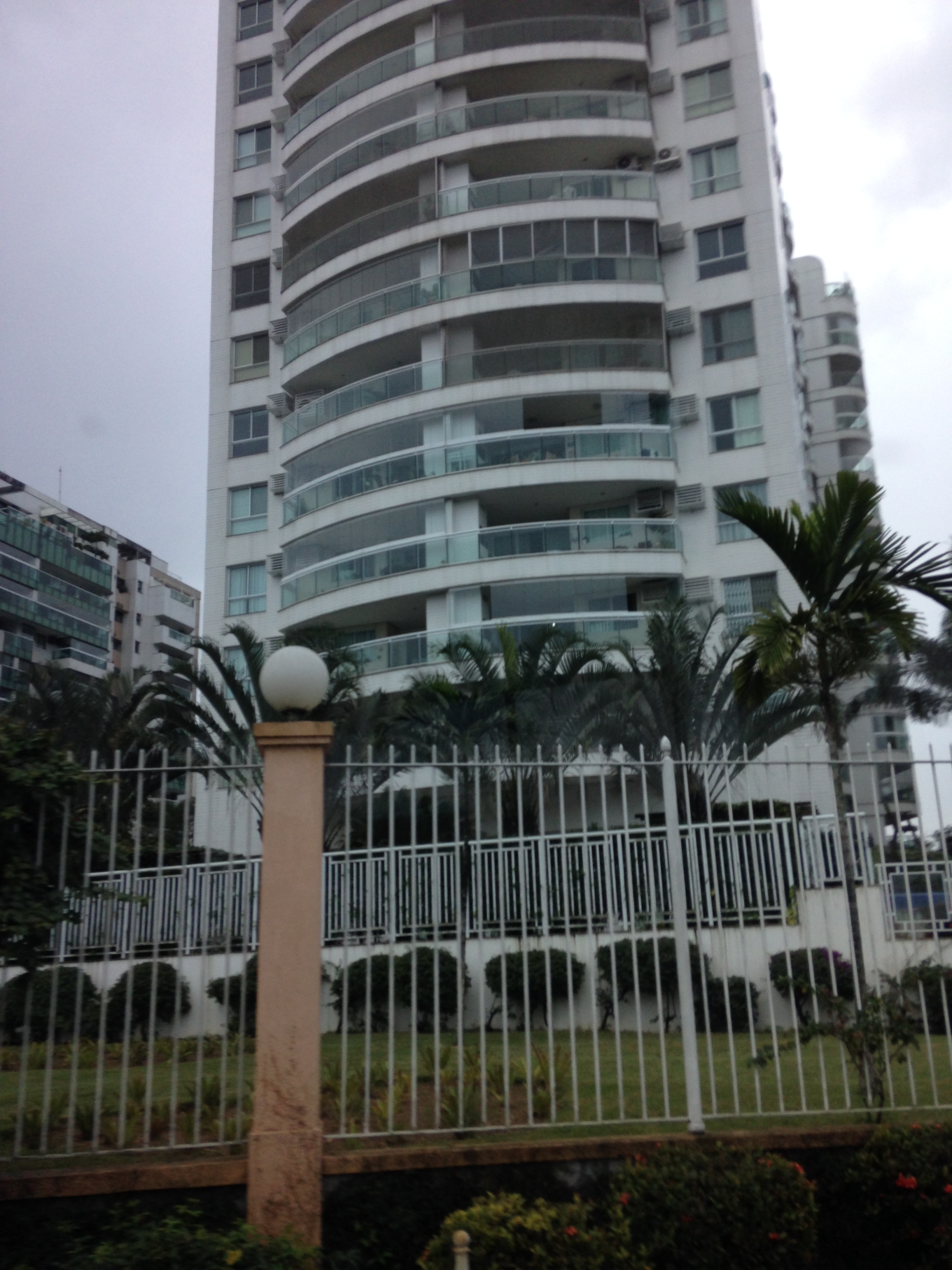
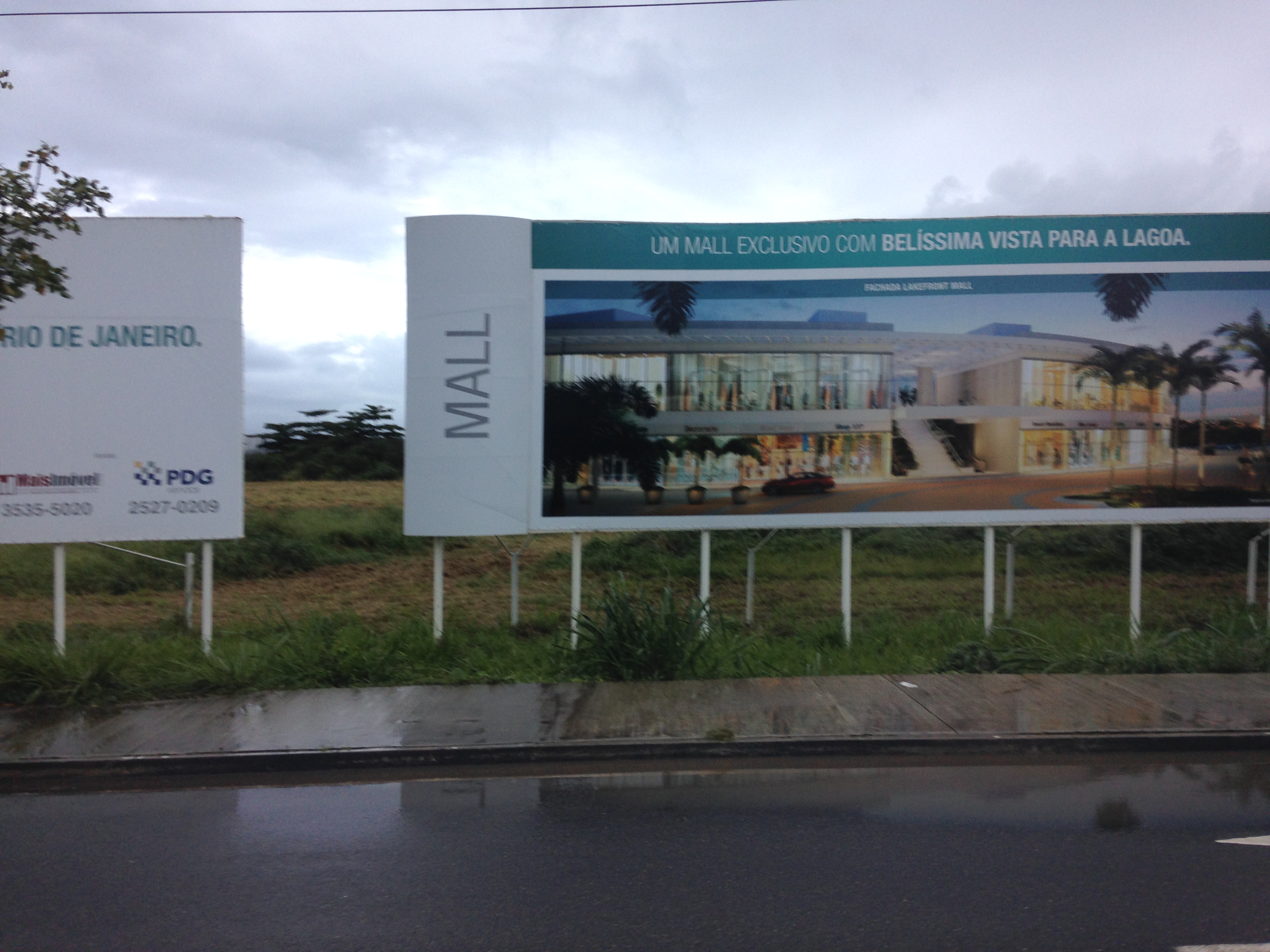
    The motivation is simple; the land will be given to the developers of the Olympic site after the Olympics, and the area has grown up to be an area of expensive, high rise residences with lagoon views. After the Olympics, the site will be re-developed in a similar fashion, only closer to the water.

    New developments
    New developments
    New developments
    New developments

    But developers cannot force the residents off the land they legally reside on; they must coerce the government to try to coerce the people to leave. That’s what bothers me the most about the conflicts between the favelas and the government; one side has all the power and is not hesitant to use it.

    Nevertheless, the residents have done an exemplary job of organizing and resisting. We met today with the president of the residents association. Twice before in his life he has had his home destroyed and been forced to move away from his home. He chose to come to Vila Autodromo because of its tranquil nature; it’s a good place to raise his family. In the photos below, you see our meeting with him in the building of the residents association. The banners they have made read: “Viva a Vila Autodromo – Rio without Removals.

    Residents association
    Residents association

    The most heartbreaking story I heard today was this: he has a 14 year old daughter. Her biological mother accepted an offer to move to the nearby projects. Now that most of her friends have gone there too, she thinks about moving to the projects. Can you imagine any coercion stronger than this?

    Nevertheless, he and the other residents are strong. Most have resisted coercion, and turned down lucrative offers. These are their homes, and they are proud of them; in most cases they have built these dwellings with their own hands. It is a good location, and they are there legally. But the pressure on the residents is growing stronger every day. Matt, our seminar leader, believes they have the strength and solidarity to hold out; I’m not so sure. I put the odds at 50/50. I’ll continue to follow and post the story of the Vila Autodromo on my twitter mini-blog.

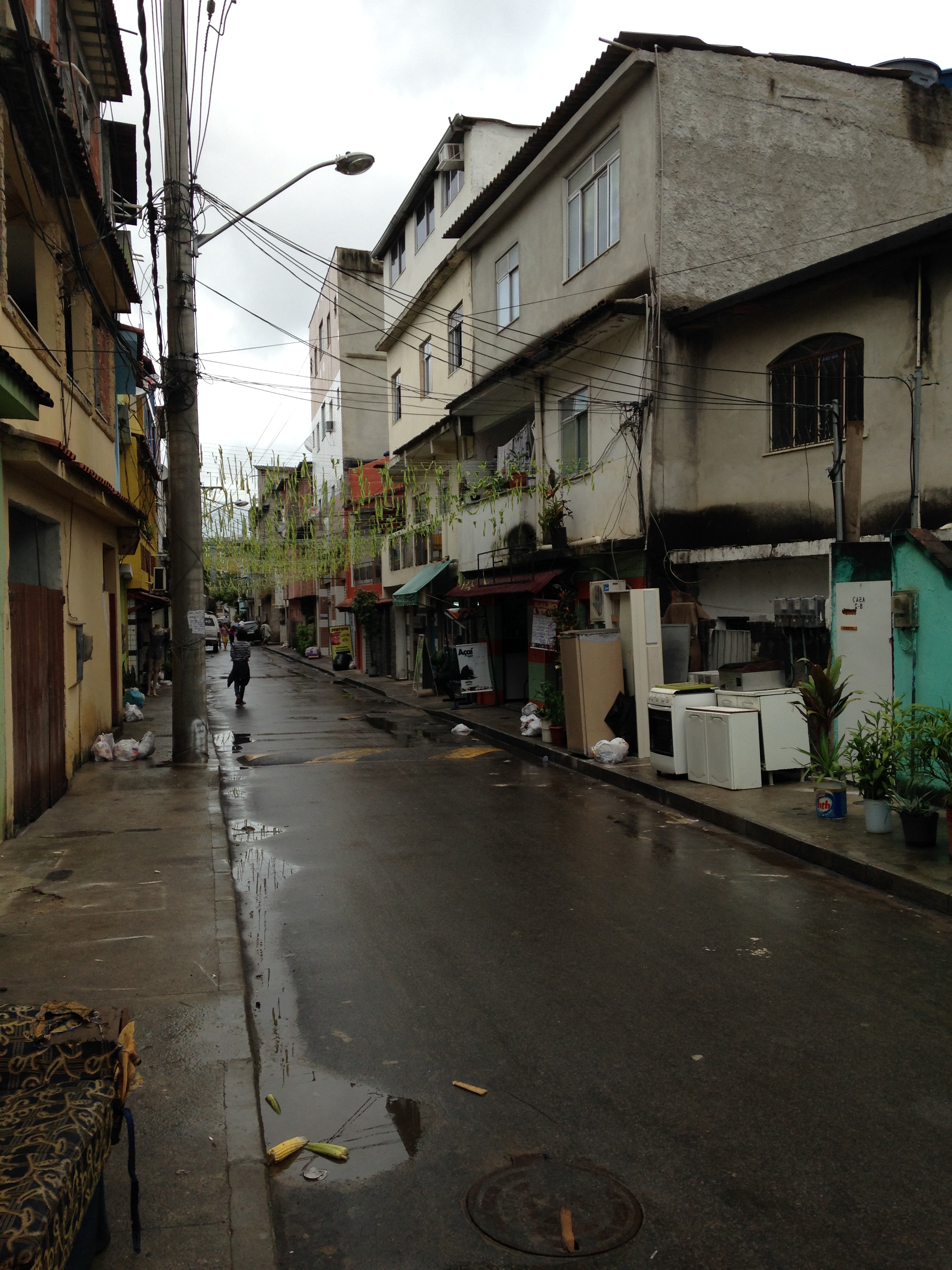
    After this visit, we had lunch in another nearby favela. This one has recently been paved, curbs added, etc. It is so different from Vila a Autodromo, where even though the roads are wide and flat, doesn’t have any paving, any sidewalks or any sewage system.

    Nearby Favela
    Nearby Favela

    Tomorrow we meet with another residents’ association president, and the UPP commander from the Vidigal favela. That’s the one climbing up the hill above Leblon that I’ve shown before in my pictures of Ipanema. Mostly, that will be Q&A; our final classroom experience of the seminar. Afterwards, we’ll try to make up most of the sightseeing that got rained out on Saturday. Sounds like another great day ahead.

    Soli Deo Gloria,

    Marcus

  • Day 8 in Rio

    Mike has told me that views and visitors are both up since I began blogging on his site. I’m so glad that this experience is having a positive impact on others. Tonight, I’m blogging from the lobby of my hotel. Sorting photos, reviewing notes and writing takes at least an hour or two each night, and I disappear from the rest of the group. Perhaps tonight, by working here, I’ll see more of my group. This is a very talented group of faculty from all over the US, many of whom are knowledgeable about Brazil and have visited many times before, and most nights they go out for dinner, music and dancing, sometimes coming in hours after midnight. I am a typical, introverted academic, and so I enjoy this instead.

    I just came back from an excellent meal at the next-door sidewalk café. I knew they wouldn’t speak English there, so I practiced my Portuguese before I went and all went smoothly. The chicken Milanese, with rice and beans and fries, was excellent. Except, when I tried to say the food was “excellent”, my waitress thought I was asking for a condiment, and brought me a bowl of peppers in oil. I tried a little bit, and it was so spicy hot I couldn’t taste my food for the next 5 minutes.

    I’ve decided to share some background to start today’s blog. Brazil is the 5th largest nation in the world, and has the 5th largest population. For comparison, that is larger than the 48 contiguous US states, and the US is 3rd in overall population. More than 50% of Brazil’s 203 million residents live in urban areas. There are 6.3 million living in the city of Rio de Janeiro, Brazil’s second largest city, and more than 10 million in the metro area.

    One of the distinctive features of Rio that has affected its development is the fact that numerous granite mountains rise up right near the coastline (and in the bay), providing a physical separation from the South Zone (Zona Sul – Ipanema and Copacabana) and the downtown (Centro) from the North and West zones, which stretch for many miles. Tunnels and bridges lead to huge traffic jams, and a sense of social disconnection.

    Geography
    Geography

    The World Cup FIFA soccer tournament begins here June 12. It is the second time that Brazil has hosted, and the country is starting to get seriously revved up for the event. Soccer is a unanimous passion among Brazilians, and the excitement is palpable here.

    Today, we had excellent presentations on two topics: the educational system in Brazil, and the urbanization of the country. Both experts gave us a national view, then focused on the situation in Rio, and specifically in the favelas.

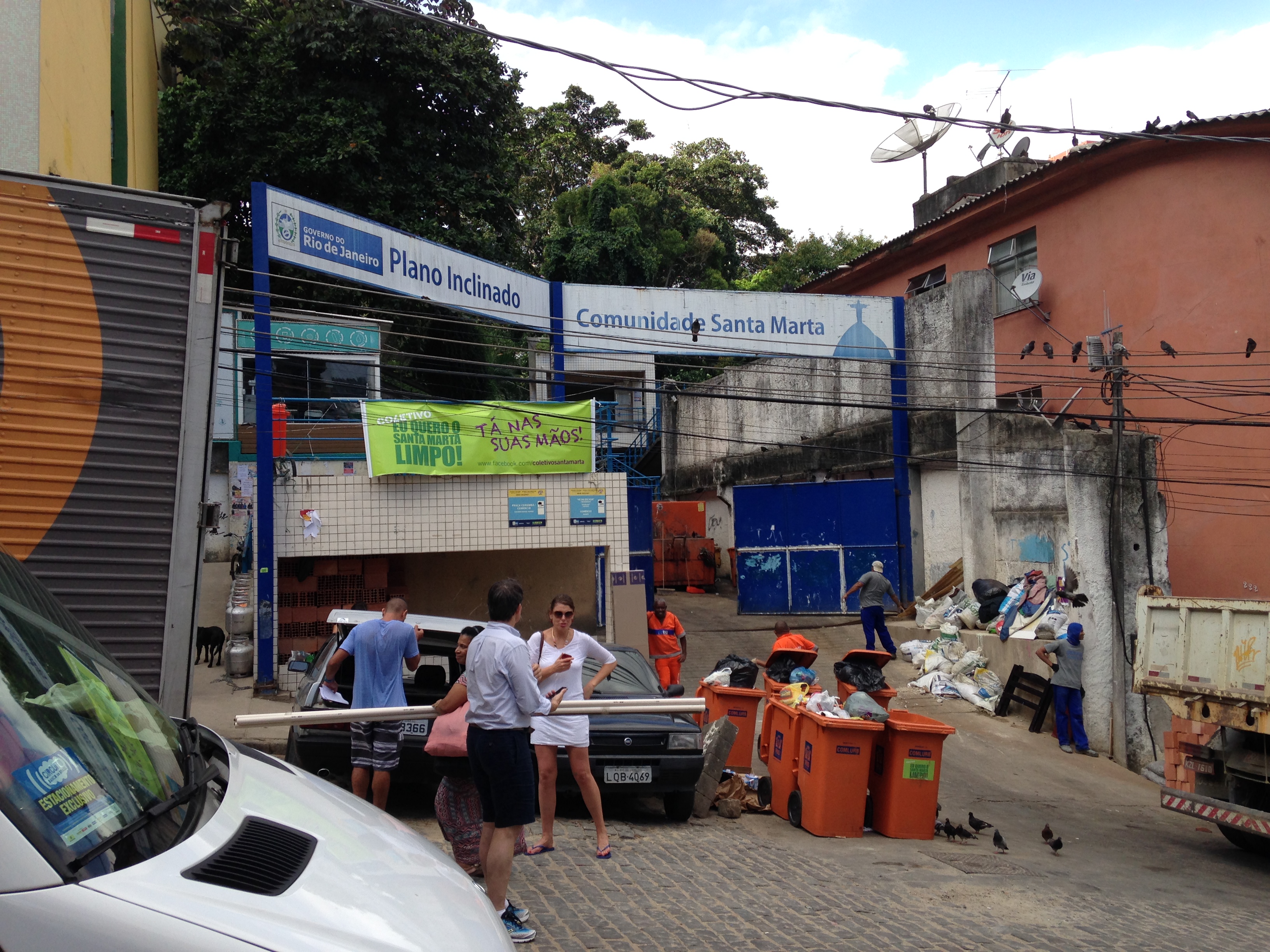
    In the afternoon, we visited Santa Marta, the first favela to be officially ‘pacified’ through the UPP process. That means that there was so much gang activity, the military police went in like an invading army and took over the entire area by force. After driving out the gangs and/or militias, new civil police stations were established and a huge police presence was installed. Once the violence was driven out, improved social services are supposed to come in. That means investments in infrastructure, education, health care and other human services. So far, it’s mostly just infrastructure. For example, Santa Marta got a new incline railway to help residents navigate the extremely steep final 500 or so vertical feet up into the favela. It wasn’t running when we arrived.

    Santa Marta
    Santa Marta

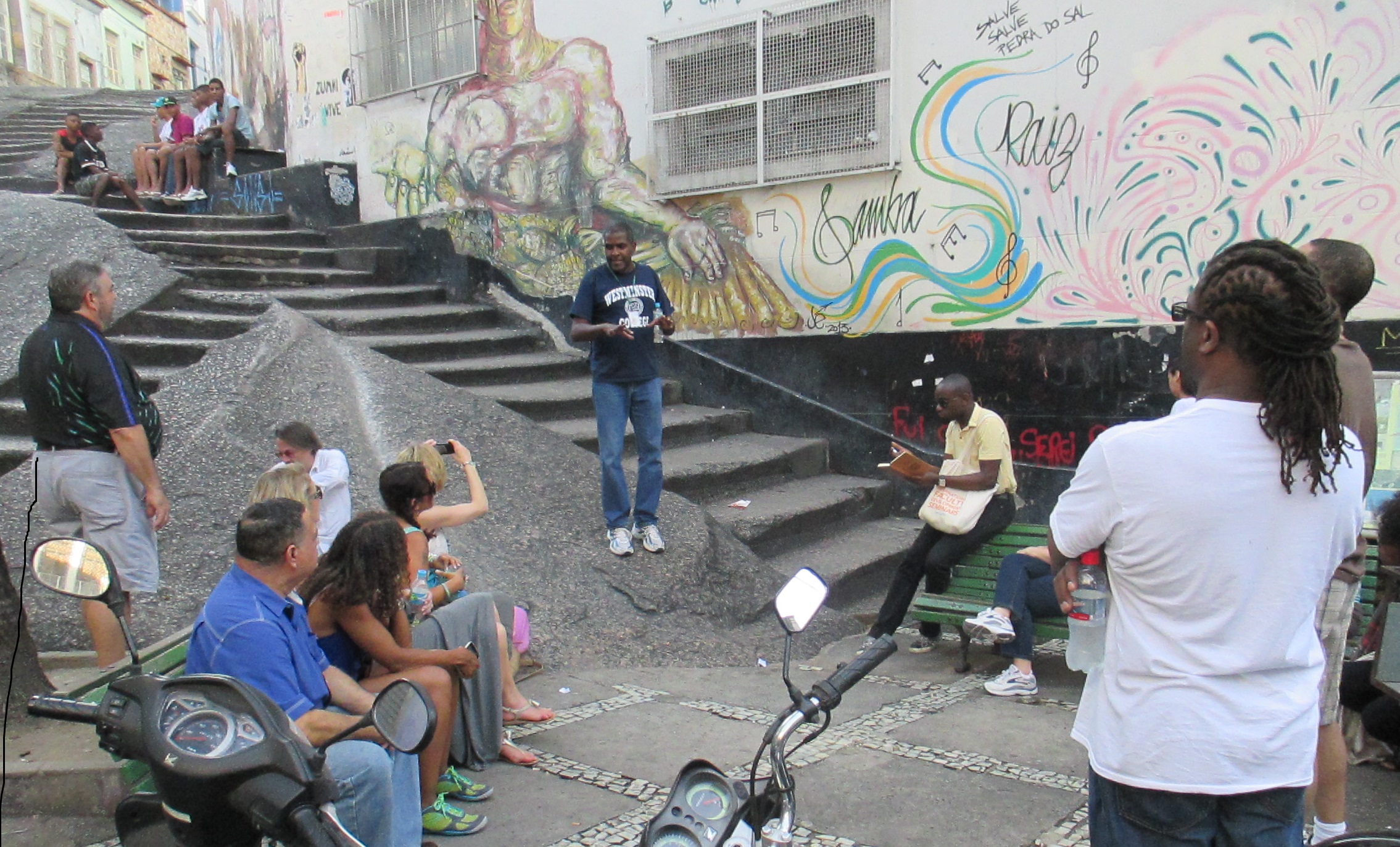
    We went to an NGO called “Altitude Social” for an intense percussion lesson today; it was about 350 vertical feet above the nearest road, where our van dropped us off, and it was stairs straight up all the way. Basically, it was like walking up 30 stories of stairs. Except we went about 5 stories too high when we missed our turn, and had to come back down to Altitude Social. The favelas are like vertical mazes; I could never find my way through them without our guides. Only two of our group got lost, but fortunately we reunited with them just before dark.

    Our destination was Michael Jackson Square. MJ came here in 1995 to record one of two videos for his song “They Don’t Care About Us” Spike Lee directed (the other was shot in a prison). Here’s a link to the video: https://www.youtube.com/watch?v=QNJL6nfu__Q

    View from SM
    View from SM

    I don’t care much for the song or the video, but the shots of MJ on the stairs in the favela are real. At 1:35 and 2:25 you can see the exact location of MJ Square where we had our percussion lesson. There is a life-size bronze statue of MJ there, and a larger-than-life mosaic of his visage. Much of the video appears to be shot on wide, cobblestone streets, which is probably the neighborhood below Santa Marta or Little Africa. The statue of Christ the Redeemer stares straight down into this favela. By the way, if you’re wondering how MJ managed all the climbing…he arrived via helicopter for the shoot.

    MJ Square
    MJ Square
    MJ Square
    MJ Square

    When I travel home Sat/Sun I expect to have more time to write about today’s educational component. It will be a very long travel day, with many hours in airports. BTW: it is “winter” here, but the temps have been up in the 80s most days, except for the rainy ones.

    Peace and blessings from below the equator,

    Marcus

  • Monday May 26 – 7th day in Rio

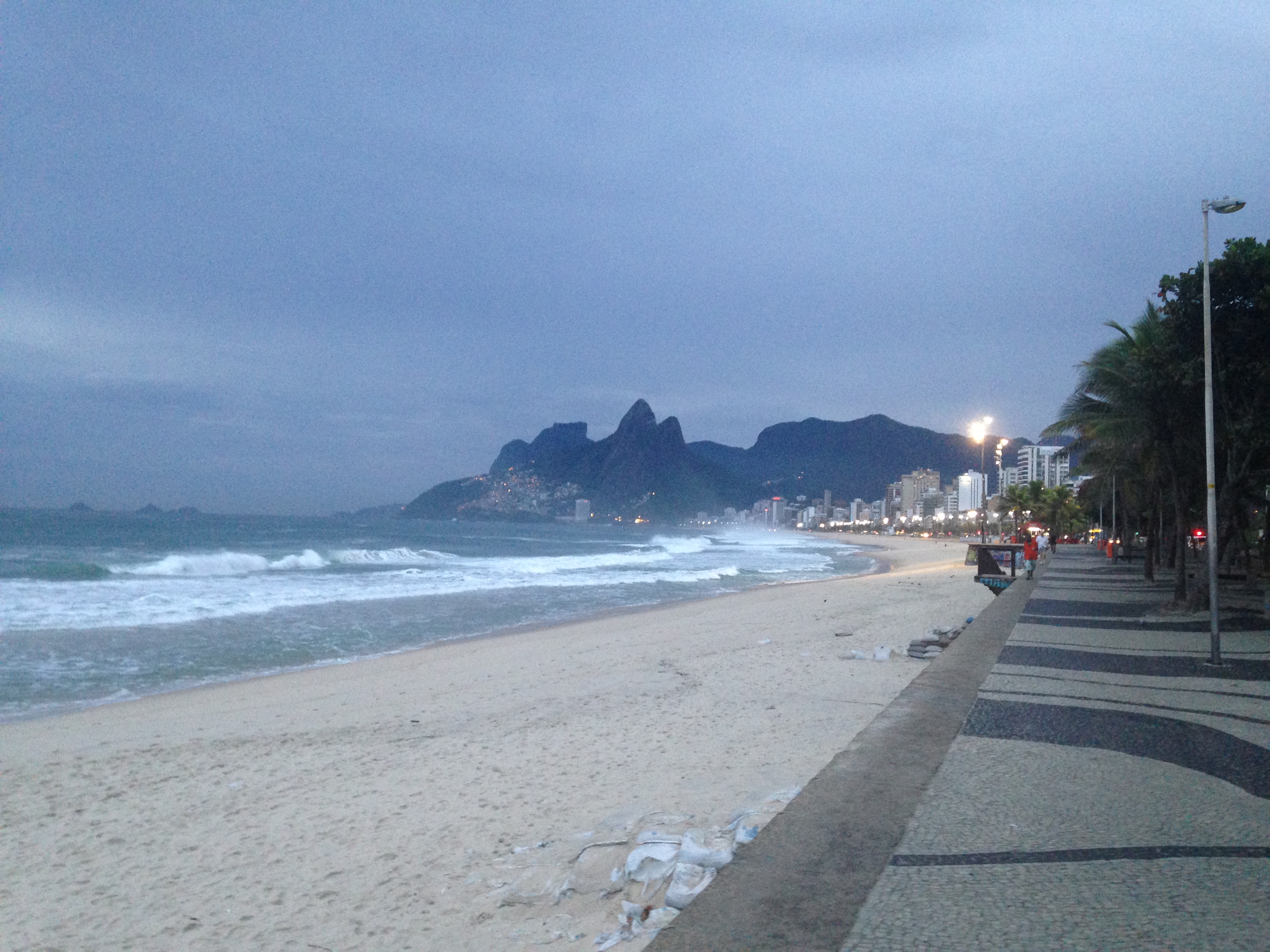
    A long and excellent day. I was out before sunrise and got these photos on Ipanema beach. The lights that you see creeping up the hill in the background are the lights of a favela on the hillside there (a few miles from here). After the storms of the past 2 days, the surf is still up, and the 3rd photo shows some local surfers.

    Ipanema
    Ipanema
    Surfers
    Surfers

    Per the usual CIEE formula, we had experts lecture and Q&A in the morning, and visits to the “real” Rio in the afternoon. Our lectures were at PUC-Rio (pronounced “POO-key Rio”), which is a private, Catholic university in an expensive part of town (Leblon). Our first was about the legal history of the favelas. They have been illegal for most of the time they have existed, but from the late 1800s until the 1930s there was a policy of ‘precarious tolerance’. Our expert, Dr. Goncalves, is a law professor, and he showed us the actual language of civic decisions through the past century. The blatant racism of the city officials is plain in the language of their edicts. In 1925 the law required the favelas to be hidden behind high walls; in 1937 they were made explicitly illegal. Although they were supposed to be destroyed at that time, the policy of active removal was not implemented. In the 1960s and 70s the residents of the favelas organized to demand property rights and non-removal. In 1988 the new federal constitution gave these very rights. However, this policy came to an end in 2009 as the Olympic decision was bring made. Since 2009 about 30,000 residents have been removed, mostly relocated far from the city center in the west part of Rio. The current policy (2011) calls for no new housing units in the favelas, and only such improvements that are necessary for safety, sanitation, livability, etc.

    The second lecture was on the history of organized crime in Brazil, with an emphasis on how the organized crime syndicates here gained control of the prisons, and took over the favelas. We heard an estimate that 80% of all favelas are controlled either by organized crime (drug dealing gangs), or militias (self-appointed, corrupt, well-armed off duty police, firemen, former soldiers, etc.). Only about 20% of the favelas are free of these two violent controlling influences.

    Next we went to the largest complex of favelas in Rio. Fifteen communities on several adjacent hillsides named Complexo do Alemao. This favela went through the pacification process (the residents call it “occupation”) in 2009-2010, and in 2011 they built a modern cable gondola service connecting five of the hilltops to the city below. Next to each station the police have built a modern UPP headquarters (“police pacification unit”). The police presence throughout these neighborhoods is obvious everywhere.

    Telerifica
    Telerifica
    UPP
    UPP

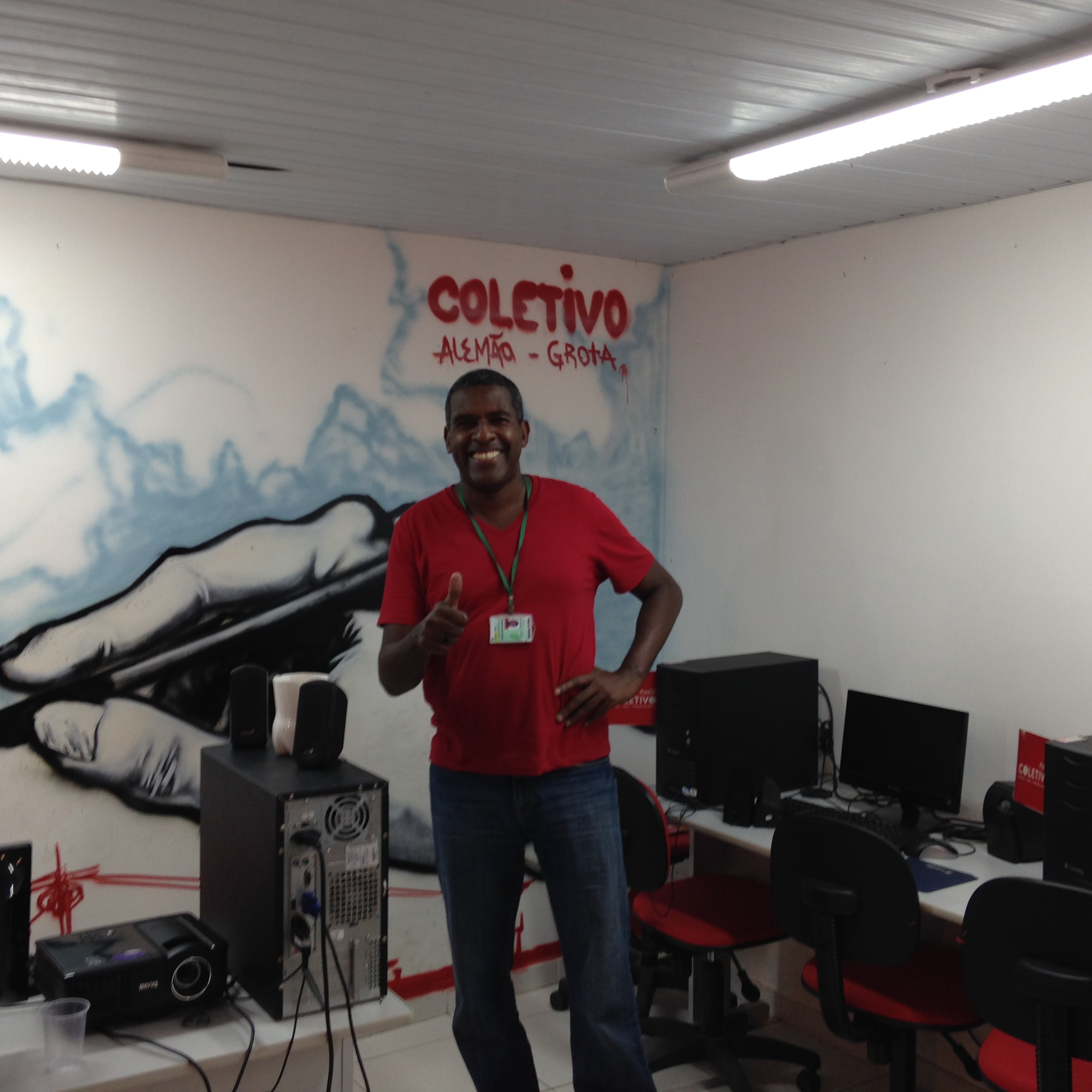
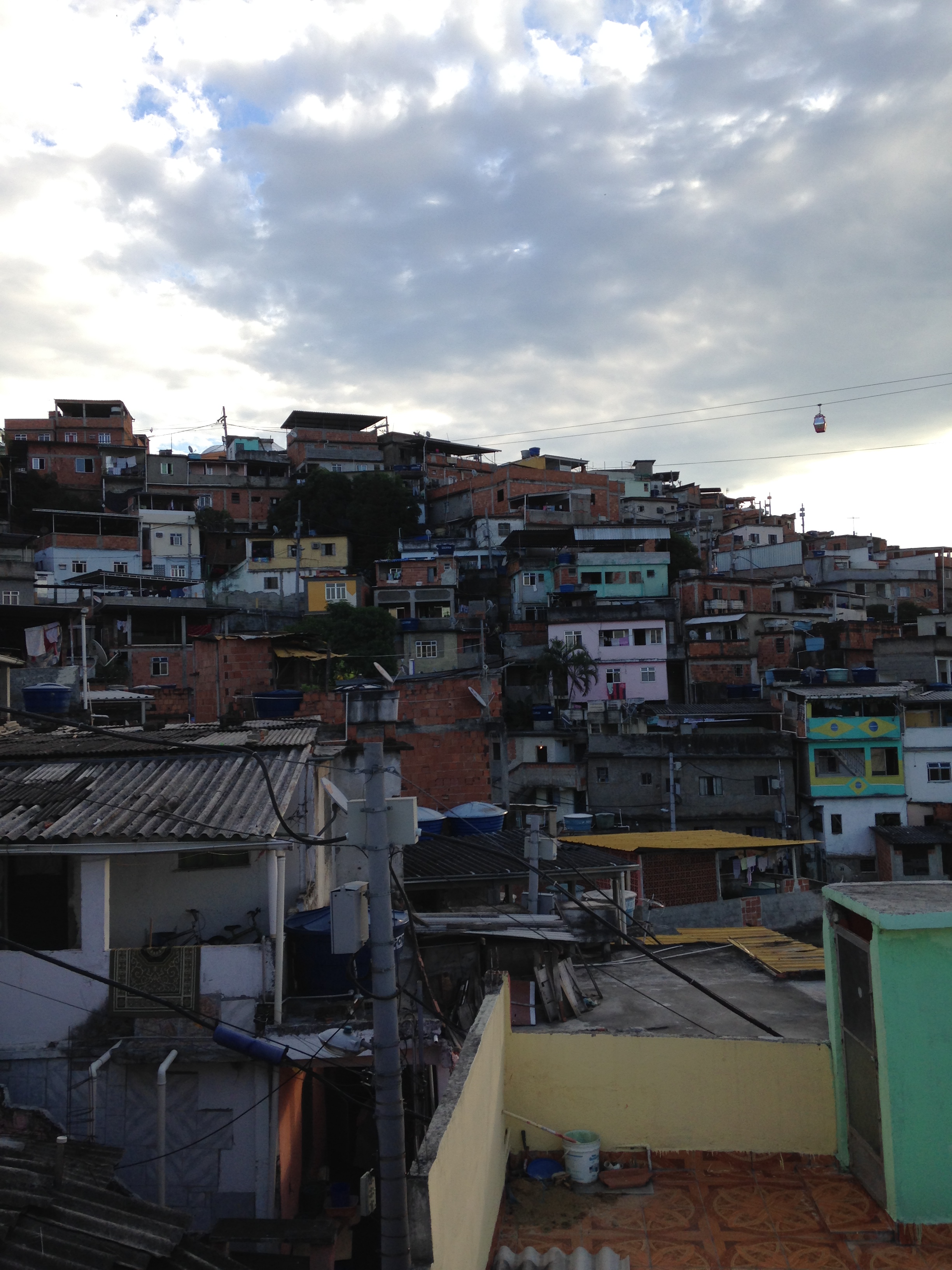
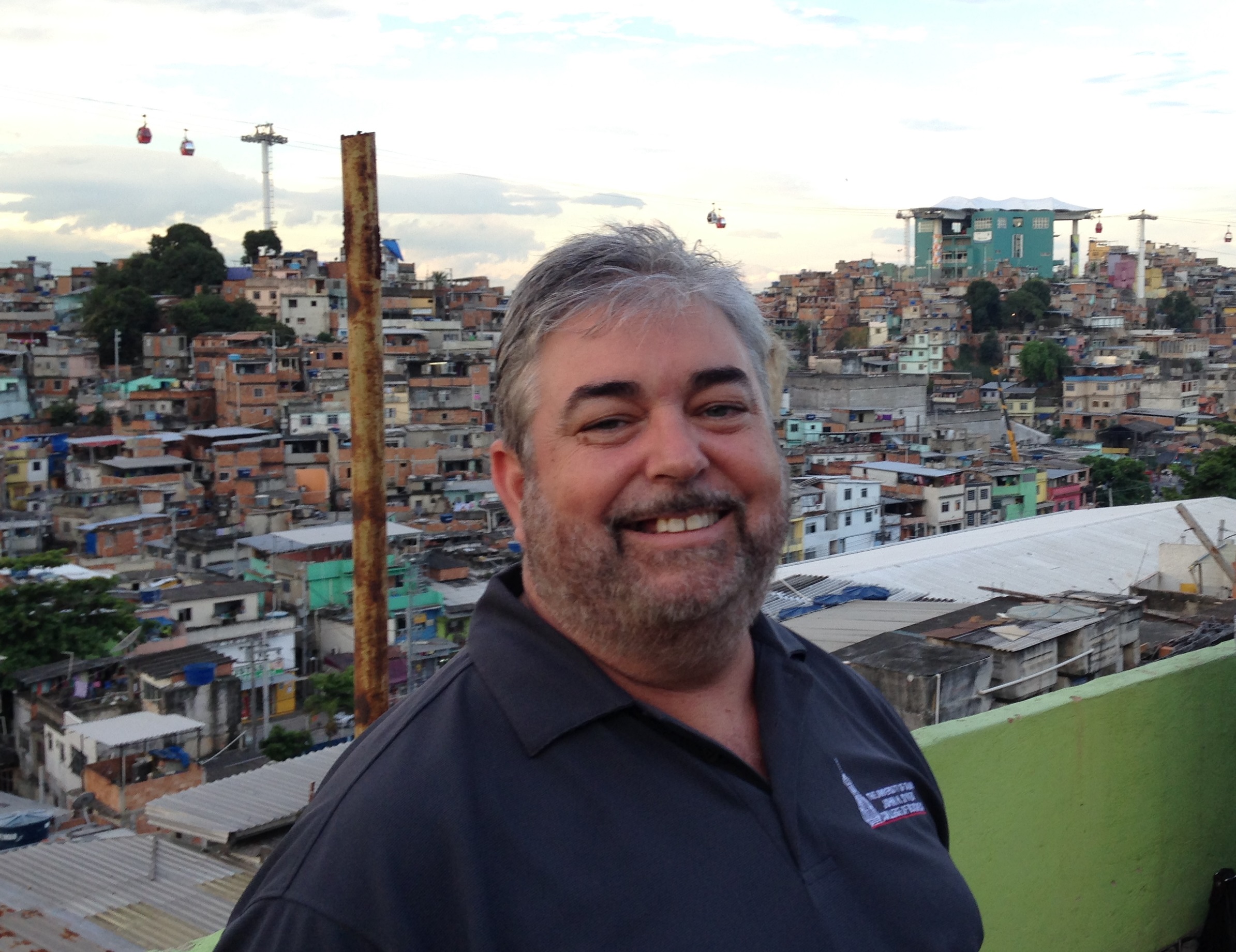
    We visited an NGO named Oca dos Curimins, which is an org focused on providing education and other services to children in the neighborhood. Our local expert has been involved with this effort for 36 years. There are also support systems for adult women/mothers in the neighborhood. Only one of the programs has any outside funding; a job training program sponsored by The Coca-Cola Co. In the photos below, you see our group as we learn about the programs, then a picture of our tour guide Joao Carlos in the computer lab paid for with Coke money (the good kind). From the rooftop we took photos of the gondola system, the favelas, the incredible views all the way to the Atlantic, and each other.

    Oca de Curimins
    Oca de Curimins
    Joao Caflos
    Joao Caflos
    Complexo
    Complexo
    Complexo
    Complexo
    Marcus at Complexo
    Marcus at Complexo

    On our way back to the south district where we are staying, we stopped at the Sambodromo. This is the worlds’ largest linear stadium. Tens of thousands sit here to watch Carnvale each year. Notice the sky boxes. It is an impressive building that runs along the street (both sides) for several blocks, but is only used for a few nights per year.

    Sambodromo
    Sambodromo

    My day started early, and we were moving and/or learning continuously until we returned to the hotel after 630pm. I like this kind of day – full of activities and lots of new information. If you are interested in more details or have any questions, please post them on the blog or on Facebook and I will get back to you tomorrow.

    I feel extremely grateful tonight for the life I have – for my family, my job, and my neighborhood.

    Good night and God bless,

    marcus

  • Sunday Mass – Day 6 in Rio

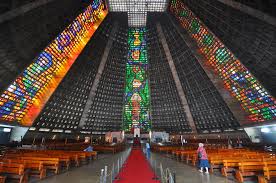
    I’ve made friends here with a professor from another private university in Florida, where he teaches philosophy and religion, and is also an ordained Lutheran priest. He is currently in the process of “crossing the Tiber” – converting to the Roman Catholic church, where he will be ordained again, and will probably be active in parish ministry. He and I have shared some taxi rides and lots of long conversations about faith, denominations, evangelism, etc. He and I visited the Rio cathedral yesterday afternoon. Construction on the “new” cathedral began in the 1960s and it was completed in 1976.

    Inside the Rio Cathedral
    Inside the Rio Cathedral

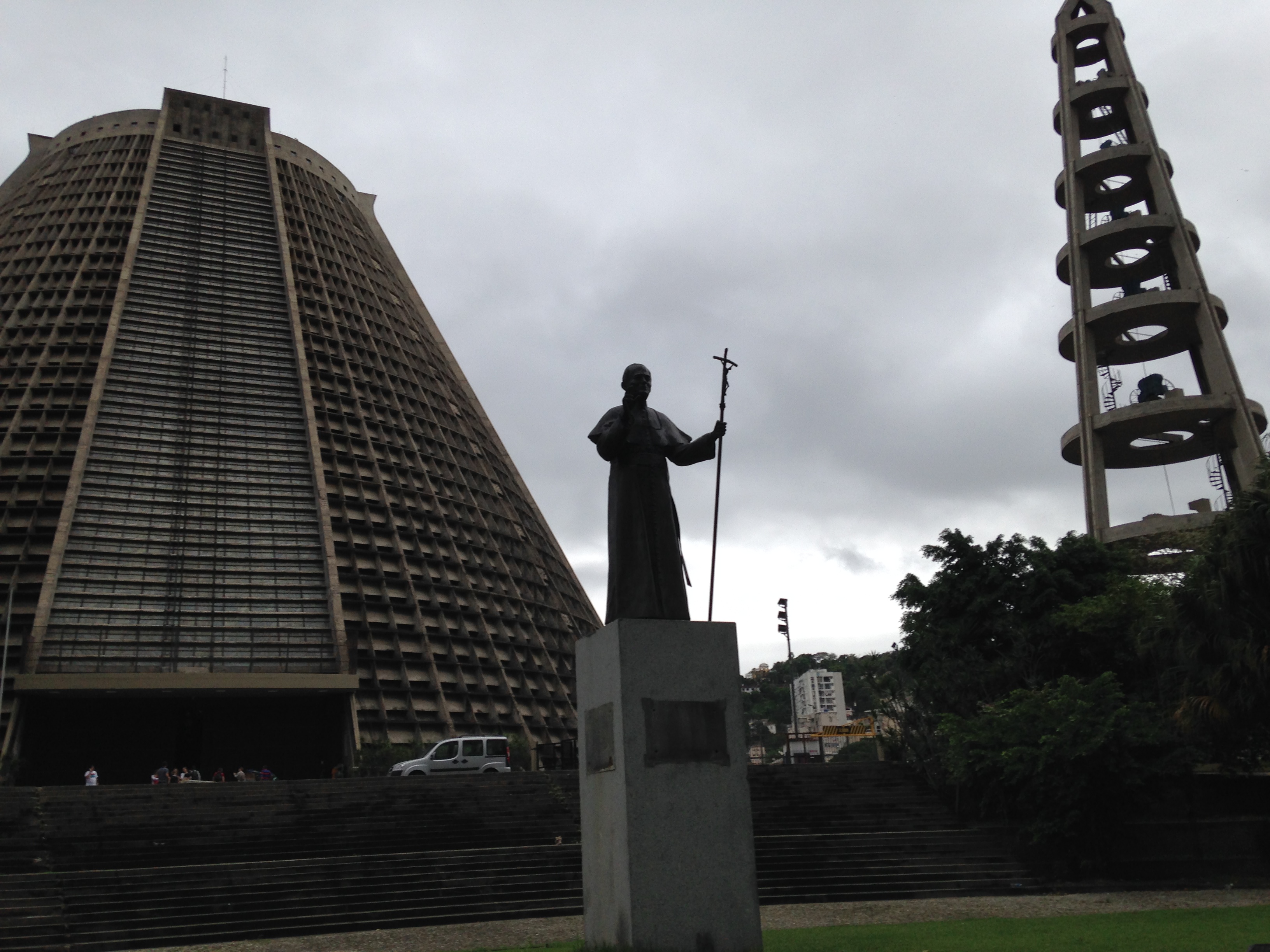
    It was consecrated as a cathedral by Pope John Paul II in 1980, and features a beautiful statue of the newest saint outside. You can see the descriptive plates on the base have been removed, probably so they can be replaced with new ones that celebrate his recent canonization.

    John Paul II and Rio Cathedral
    John Paul II and Rio Cathedral

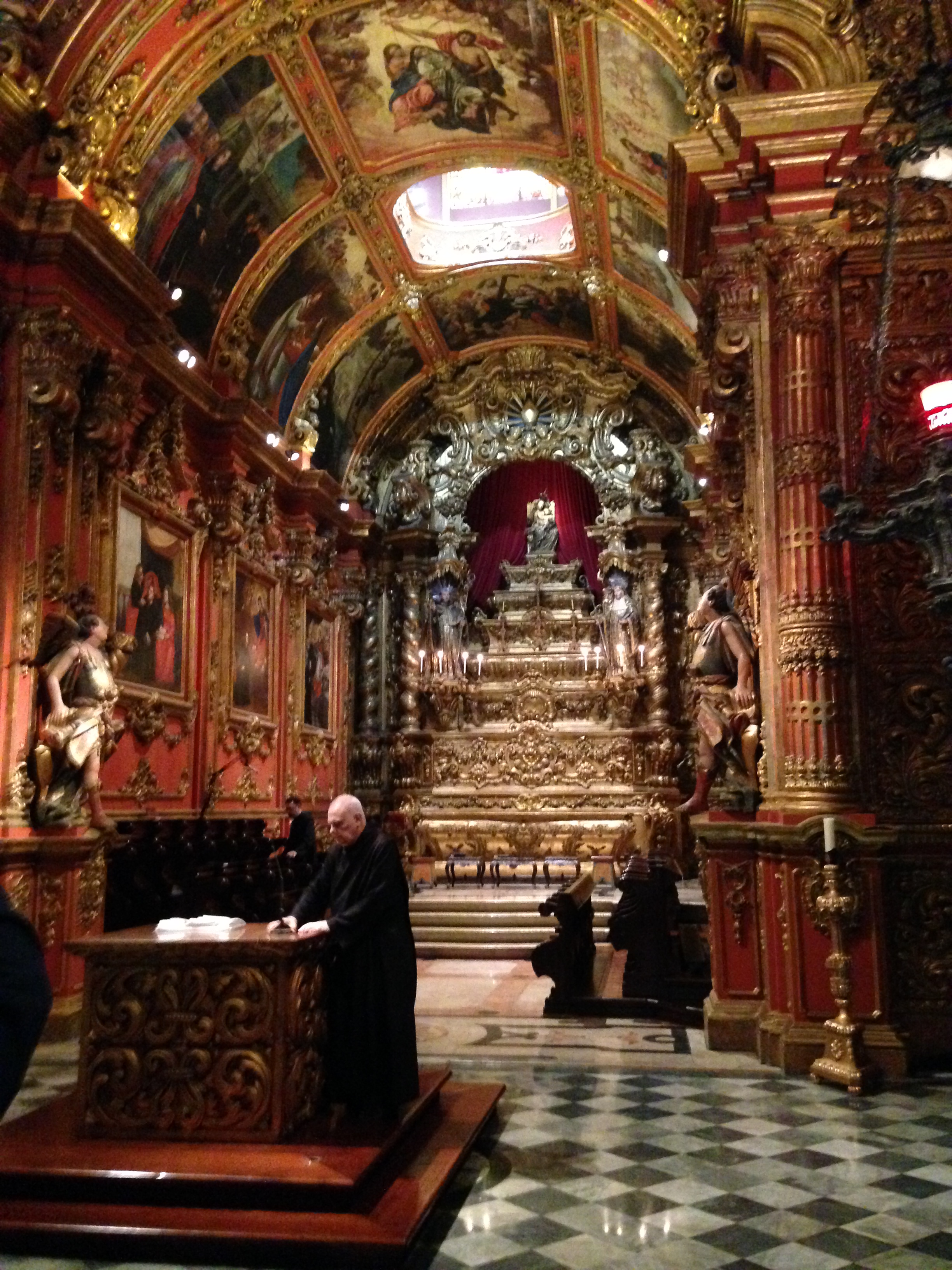
    We were there on Saturday afternoon, but there was no mass. Having seen it up close, this morning, which we had free anyway, Mark and I instead went to the Monastery of Saint Benedict in Centro Rio (Moisterio de San Bento). The monastery was founded by that order in 1590 and has been on the site continuously, and some of the oldest buildings in Rio that are still in use are part of the cloister. The monks chant the Divine Mass in Latin on Sundays in the Gregorian style, and it was a solemn and beautiful service, in a packed house. (The nave appears to seat about 250-300, and many had to stand for the entire 90 minute service). The worship space is beautifully baroque and ornate, more in the tradition of Brazil than in the Benedictine tradition.

    San Bento nave
    San Bento nave
    San Bento nave
    San Bento nave

    This afternoon our group had a unique cultural opportunity, but I didn’t go. We were invited to participate in a Candomble’ religious service. Candomble’ is a syncretic religion, combining parts of many different African traditions with Latin American and even some Catholic concepts. It is poly-theistic, and charismatic. During the ceremonies there is much music and dancing, and usually one or more of the participants will fall into a trance in which they are possessed by one of the lesser gods. At the conclusion there is a feast. They are not always on Sundays, and they often last late into the night. I have tried to be open minded about all the cultural experiences we are having, and I am not making any judgment about Candomble. I simply chose not to participate.

    Staying in this afternoon was refreshing, and that’s good because the next 3 days are the most intensely scheduled days in our entire seminar. I even got to watch the F1 race from Monaco, and the Indy 500. Really a great day.

    Good night, and God bless,

    Marcus

  • Day 5 in Rio

    Today’s activities were washed out. It began raining hard around midnight, and it is expected to continue for days. All our existing plans were cancelled and we met in the lobby this am to discuss what to do. Along with several others, I decided to take the morning off and hit the museums in the afternoon. Another group went shopping. When we arrived in downtown (Centro) Rio, we found out all the museums we planned to visit were closed due to a strike. That means I had a lot of time today to consider what we learned about favelas yesterday. For photos and descriptions of these communities, please see the previous post.

    Today I want to address several questions: What is a ‘favela’? Where did they come from? What has happened in the favelas in the 1990’s and early 2000’s versus what is going on today as the mega-events draw near (World Cup in 2 weeks, Olympics in 2016)? Why does this matter to anyone besides those directly affected? What is happening now and in the near future for these communities?

    Our academic expert yesterday, Theresa Williamson, is on the front lines. She is a dual British-Brazilian citizen, educated through the Ph.D. level in the US. She founded and runs an NGO named Catalytic Communities. This NGO (non-gov’t org) is an advocate for the favela communities. They maintain an enormously important website, RioOnWatch.org, which disseminates critical info in ‘real time’ about the dynamic situation of these many favelas. Her org has been very significant in empowering the residents of these communities through citizen journalism, social media, and non-violent resistance.

    Here are some relevant articles – the first one is written by Dr. Williamson.

    http://www.nytimes.com/roomfordebate/2012/04/02/are-the-olympics-more-trouble-than-theyre-worth/brazil-is-missing-an-opportunity-to-invest-in-the-favelas

    http://www.nytimes.com/2014/04/12/world/americas/clashes-in-rio-de-janeiro-as-police-evict-squatters.html

    http://www.huffingtonpost.com/2013/01/22/brazil-favelas-rio-de-janeiro_n_2528407.html

    http://www.nytimes.com/2012/03/05/world/americas/brazil-faces-obstacles-in-preparations-for-rio-olympics.html?pagewanted=all&_r=0

    http://www.smh.com.au/fifa-world-cup-2014/world-cup-news-2014/a-kick-in-the-wrong-direction-20140521-38otd.html

    WHAT IS A FAVELA? Favelas are illegal communities that have developed to meet critical needs for housing in urban areas. They are usually on public land, but as the 2nd article I posted above makes clear, some are established on private properties. These are communities of homes built by the residents themselves, not according to any code or standards. There are about 700 favelas in Rio, most of which are built on hillsides that are legally public land reserved from development.

    WHERE DID THEY COME FROM? The favelas were begun in the late 19th century by soldiers returning from the successful war in 1897 to put down the Canudos rebellion in the north areas, who were promised land and housing, but never received their promised payment for their service. Many of these were freed slaves and their descendants. Favelas continued to spring up and grow in and around Rio because of restrictive land ownership policies and economic hardships.

    Favelas continued to grow in size and importance throughout the 20th century. At present, our experts estimate that 1.4 million people reside in these communities – about one quarter of Rio’s entire population. (Note: there are many disagreements about statistics regarding the favelas – however, our academic experts have examined all of the relevant data, so I believe the figures I present here are as accurate as any you will find).

    Favelas and the other communities lived mostly in peace beside each other through most of the 20th century, despite nearly constant disruptions in social life created by a succession of military dictatorships and corrupt “republics”. This was a period of benign neglect. After becoming mostly democratized in the 1980s, Brazil adopted a policy of improvements in the favelas in the 1990s and early 2000s. Security, sanitization, and other basic services, including stairs, sidewalks, erosion protection, etc., were provided, and the favelas were considered an integral part of the Rio landscape.

    WHY DOES THIS MATTER? The size of the favela communities in Brazil (millions in Rio alone), and the significant contributions of the favela population in the overall Brazilian economy (esp. labor) and culture (samba, bossa nova, etc.,), make this a critical issue for the future of Brazil. More significantly, every large urban area in the world has issues with substandard housing and economic inequality, so solutions to the problems created by favelas are relevant to every city on earth.

    RECENT DEVELOPMENTS: The policy of neglect was replaced in the late 20th century by progressive policies aimed at improving the life of the residents of favelas. Sewage and basic sanitation was connected to the city system in many favelas. Stairs, sidewalks and retaining walls were built. Power and water was provided. However, with the two mega-events coming this decade (WC ’14 and Olympics ’16), the policies were changed substantially. Favelas had developed a negative perception, esp. among people who had never visited one, and civic leaders decided the favelas needed to be removed or at least hidden. Thus began a violent period of ‘pacification’ and removal (eviction). Brazil was long a military dictatorship, and so the institutional willingness to use military troops against citizens and residents already existed here. With the enormous global media focus on Brazil and Rio, local government officials tried their best to make the favelas unbearable and offered public housing (far from the city center) to try to force out the residents. When only part of a community moved out, the gov’t came and bulldozed the empty housing, but left the rubble as a breeding ground for animal and human vermin.

    The story of the favela called Vila Autodromo is a very poignant and relevant example; it is found in the fourth article above (NYT: Brazil faces obstacles…). This also emphasizes my next point – increased tech savvy and connection by the favela residents has empowered them to be more effective at anticipating and resisting illegal attempts to evict them. (NOTE: in 1988 Brazil adopted a new federal constitution conferring residency rights on anyone who lives more than 5 years on a piece of land not owned by them – this is called an “adverse possession” policy). The Vila Autodromo example also shows how deceptive and even illegal the tactics are that are used by local officials to disrupt and destroy these favelas.

    My friends, this sounds like a sad story. But let me assure you this: my visits to the favelas (so far) and my interaction with their residents and their advocates actually seems to me like a story of human empowerment. The power of cell phones, pocket cameras, facebook and other recent tech advances to connect and empower these people, who are being actively oppressed in many cases, is astonishing. From a human rights perspective, it is difficult for me to see how anyone can disagree that destroying these favelas and removing their residents to far away public housing, separating them from their jobs and their communities, is at best misguided and at worst just evil. Thanks to people like Dr. Williamson, her staff and volunteers, the CIEE, and many other NGOs, there is a real resistance here to push back against this. Please join me in prayer for all of those who work and serve in the favela neighborhoods. Pray that they will have the humility, the courage, and the success of those who, like MLK, Andy Young and John Lewis have persisted to overcome their oppressors.

    Soli Deo Gloria,

    Marcus
  • Day 4 in Rio

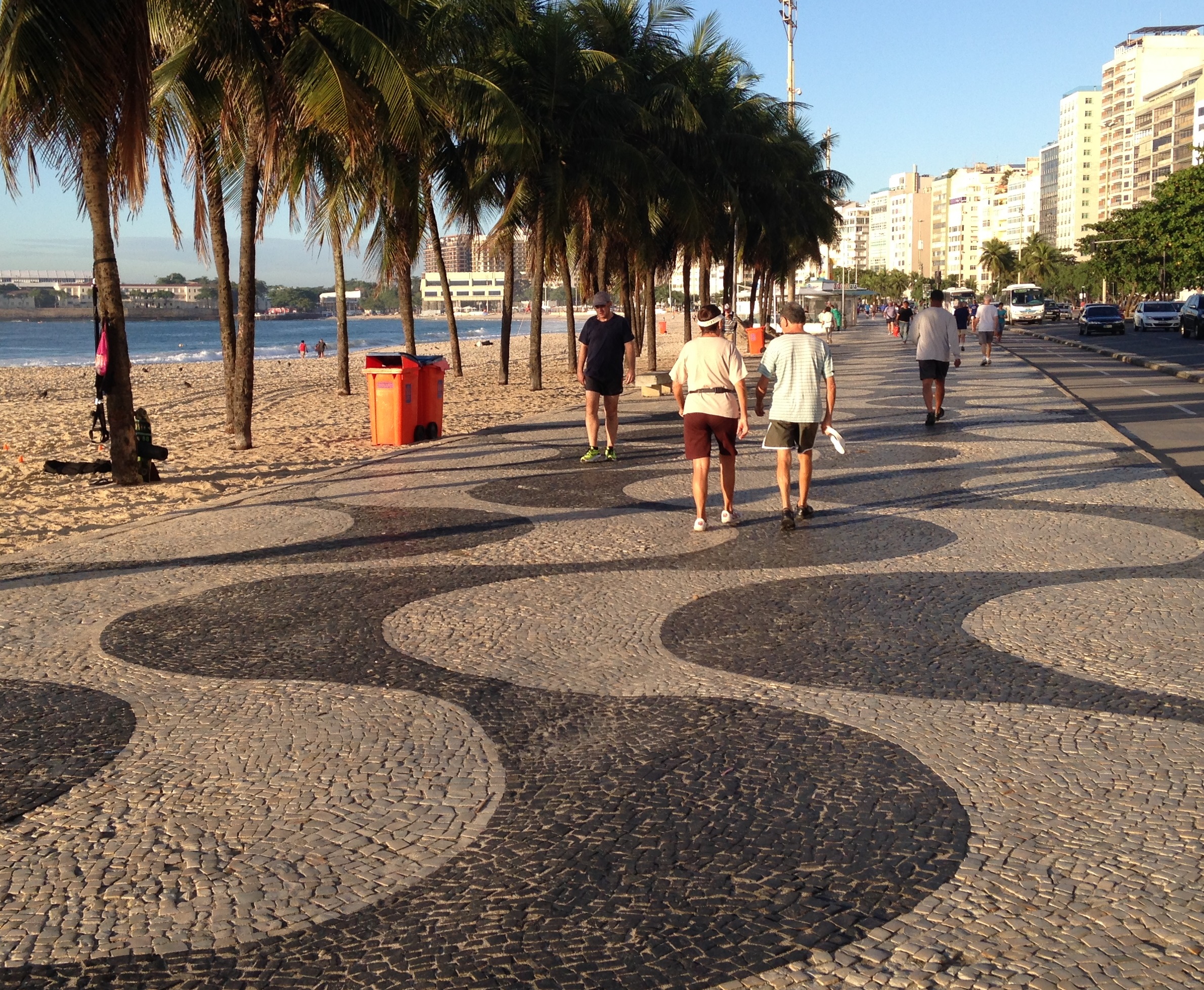
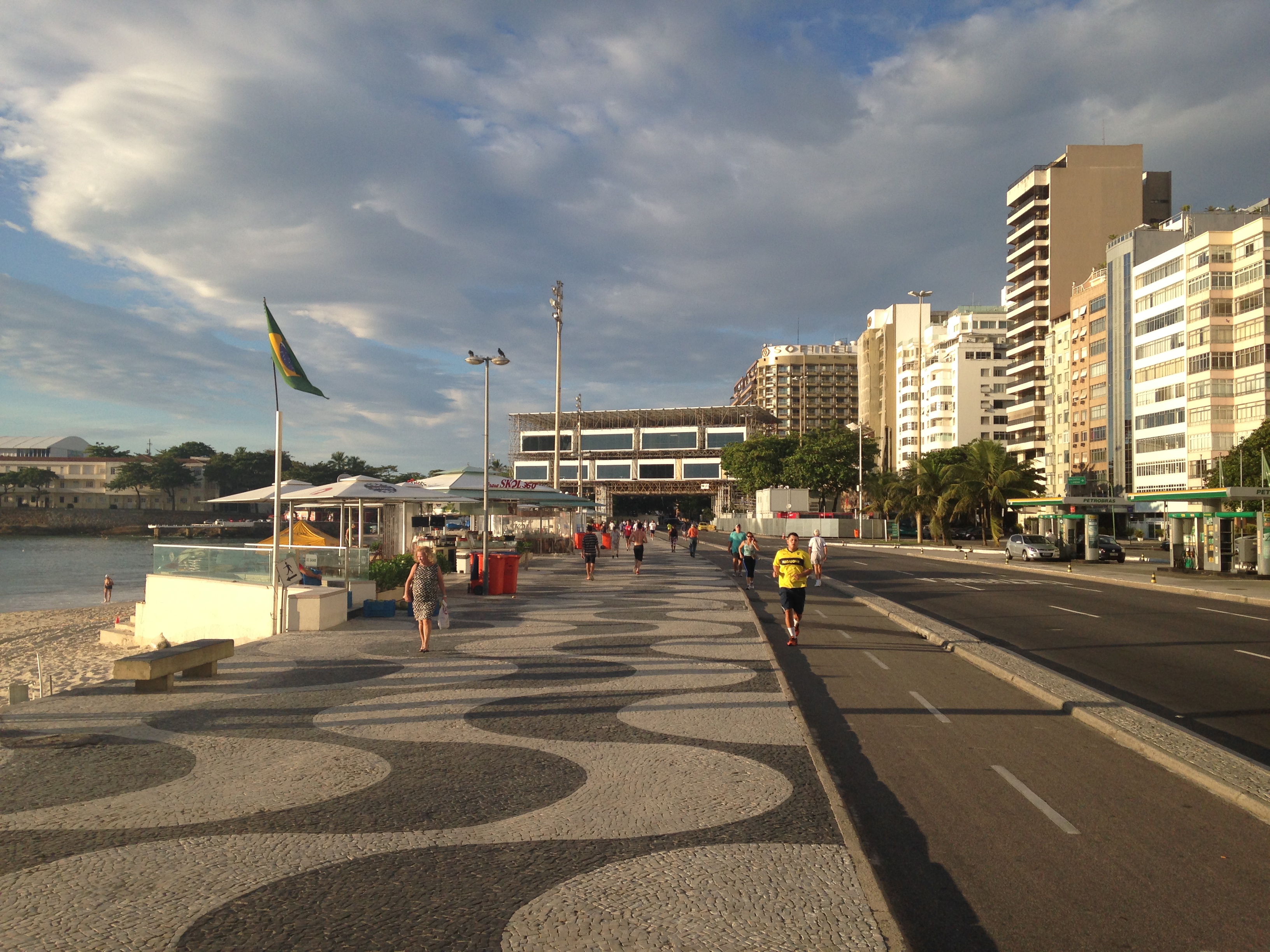
    Today has been a long and exhausting day, so the blog will be short. Sunrise is about 6:20 here, and I was on the sidewalk alongside Copacabana to enjoy it this morning. Here is a photo of one of the sand sculptures you see along the way. Also, the huge, two-level temporary Broadcast Center for the World Cup. It is built right over Atlantic Ave. You are looking at the back of the broadcasters; behind them will be a view of the entire stretch of the Copa.

    Sand Sculpture
    Sand Sculpture
    Broadcast Center
    Broadcast Center

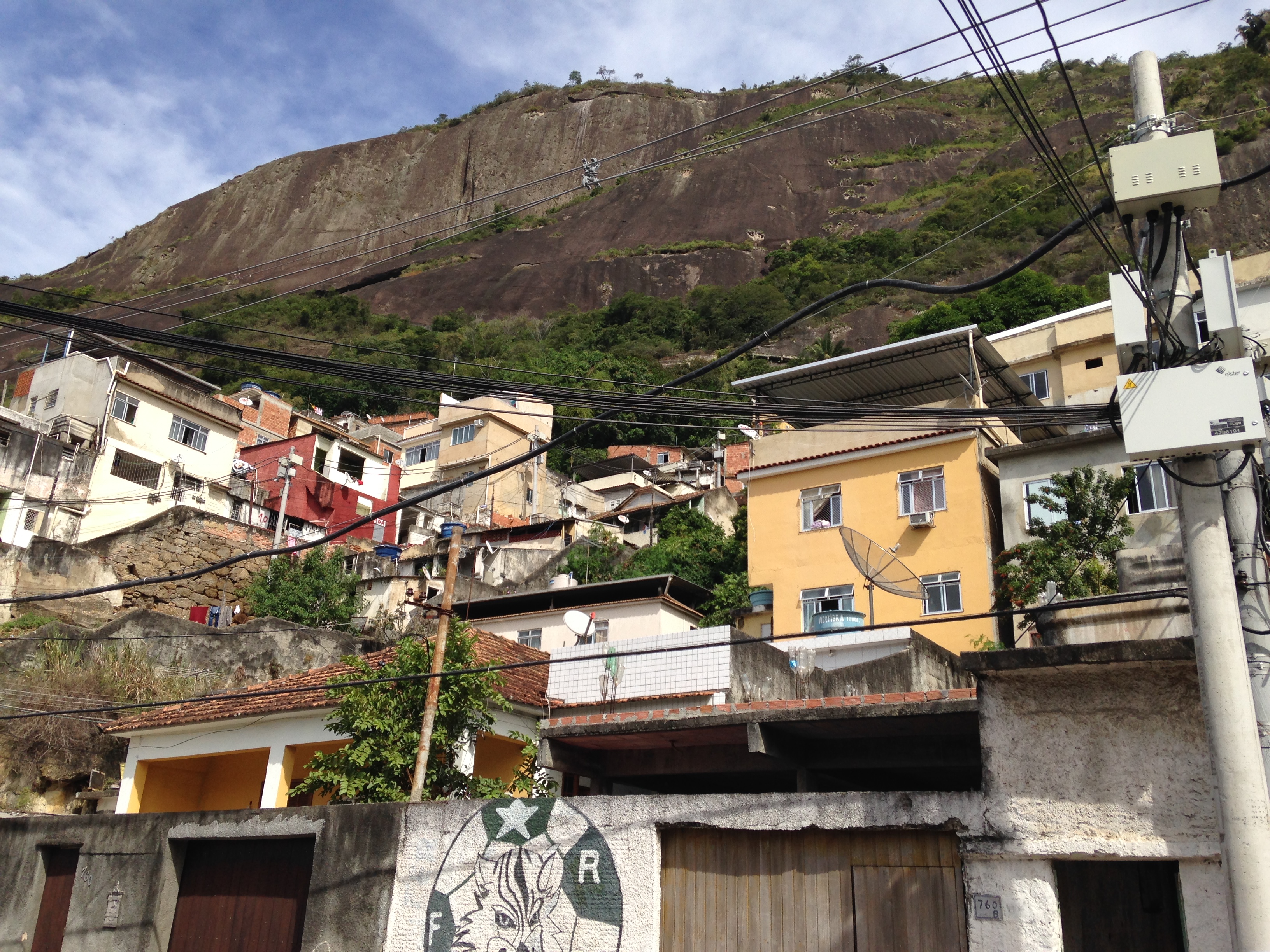
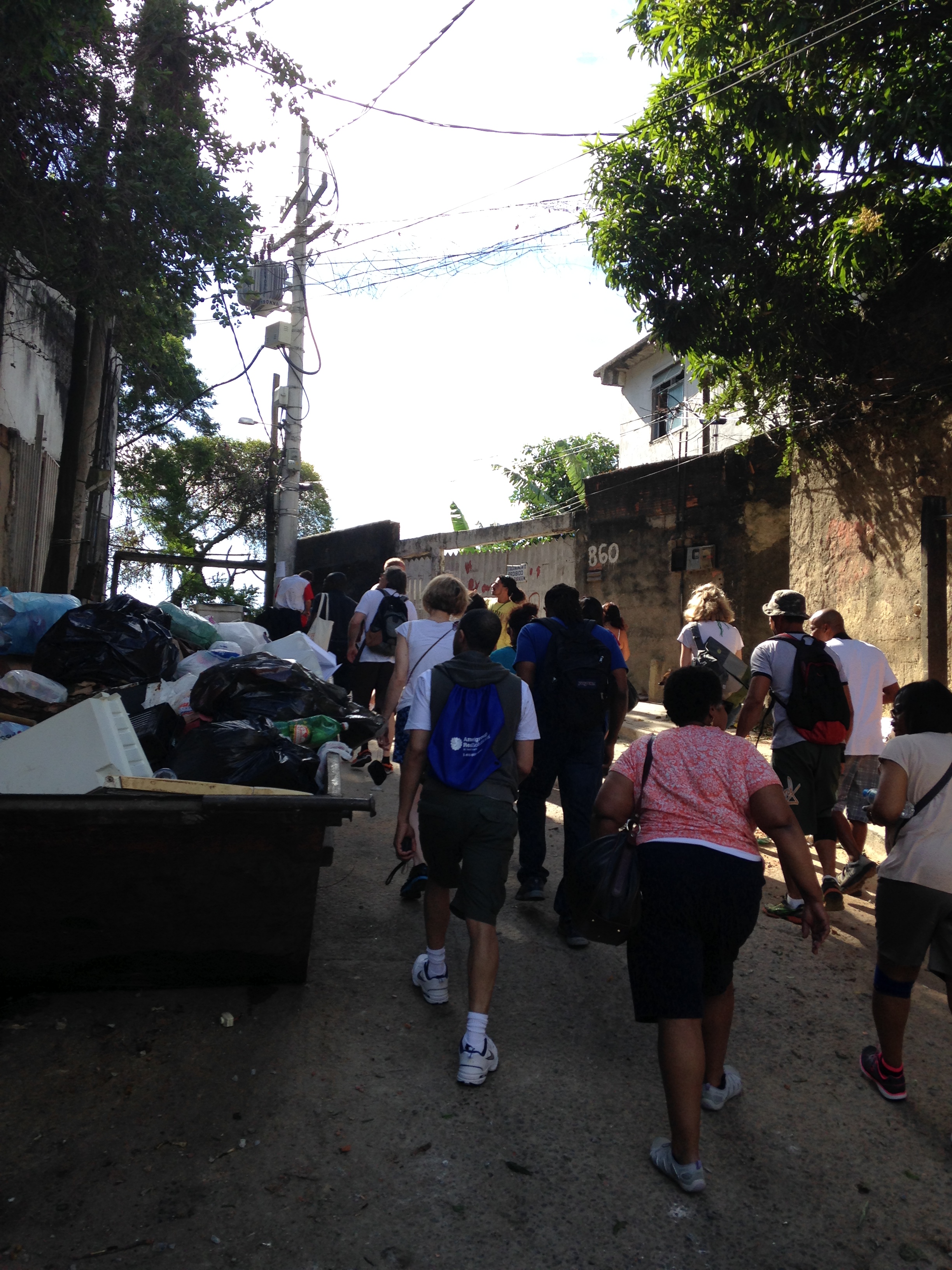
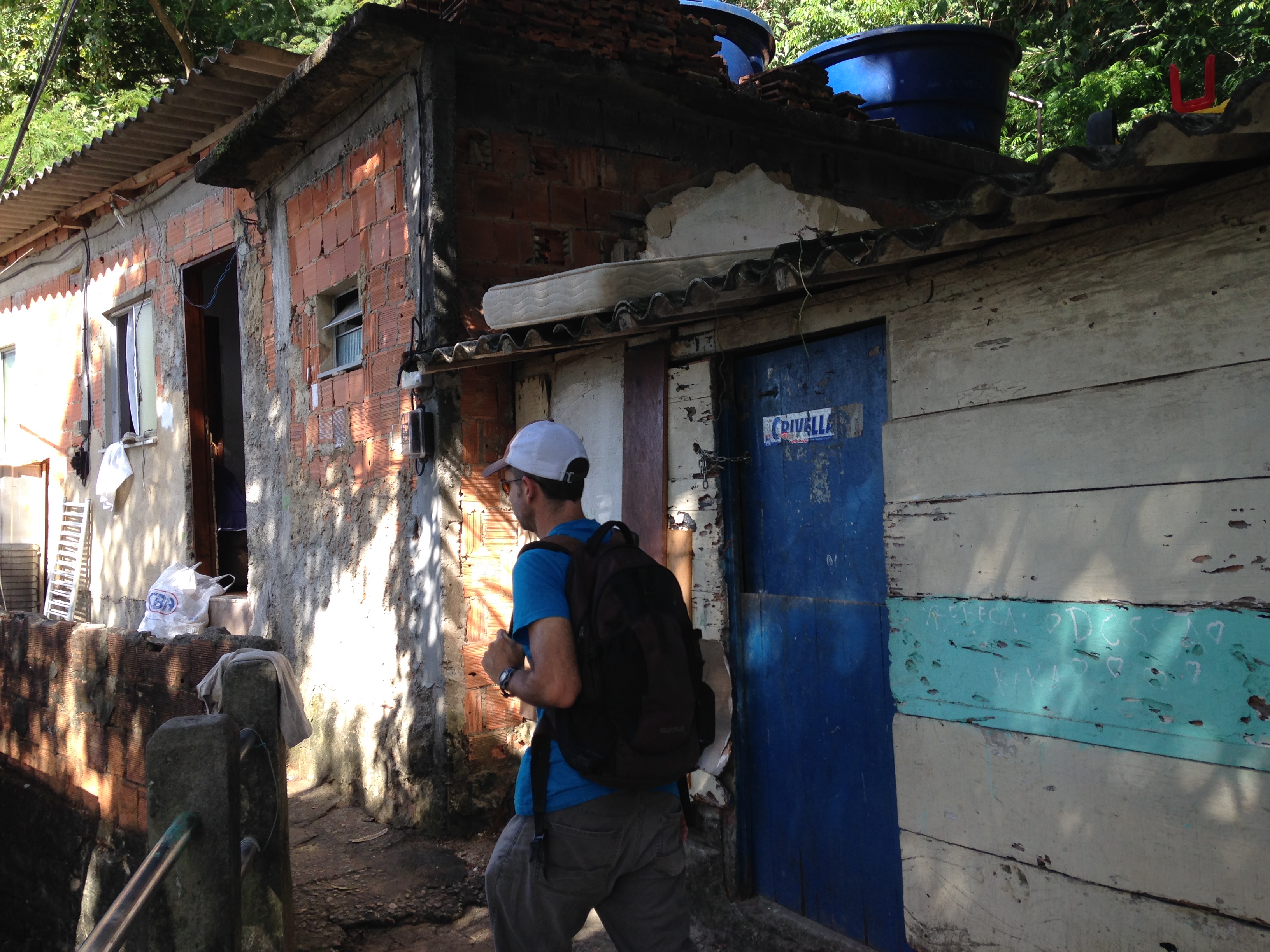
    We went directly to a favela today. This one was ‘pacified’ four years ago, and it is very close to the CIEE study center. I’ll explain more about the pacification process tomorrow. In these two pictures you see the next-door neighborhood, very expensive, and the rear entrance near the top of the favela. When the favela was still violent there was a huge wall separating the two, and the only way to get to this part of the favela was to hike straight up from about 500 vertical feet below the favela, where the nearest other road is. The CIEE staff here has been working for about two years with the resident leaders of the favelas to develop programs that benefit the residents, especially the children, that also provide educational experiences for the faculty and students who travel here for seminars.

    Into the Favela
    Into the Favela

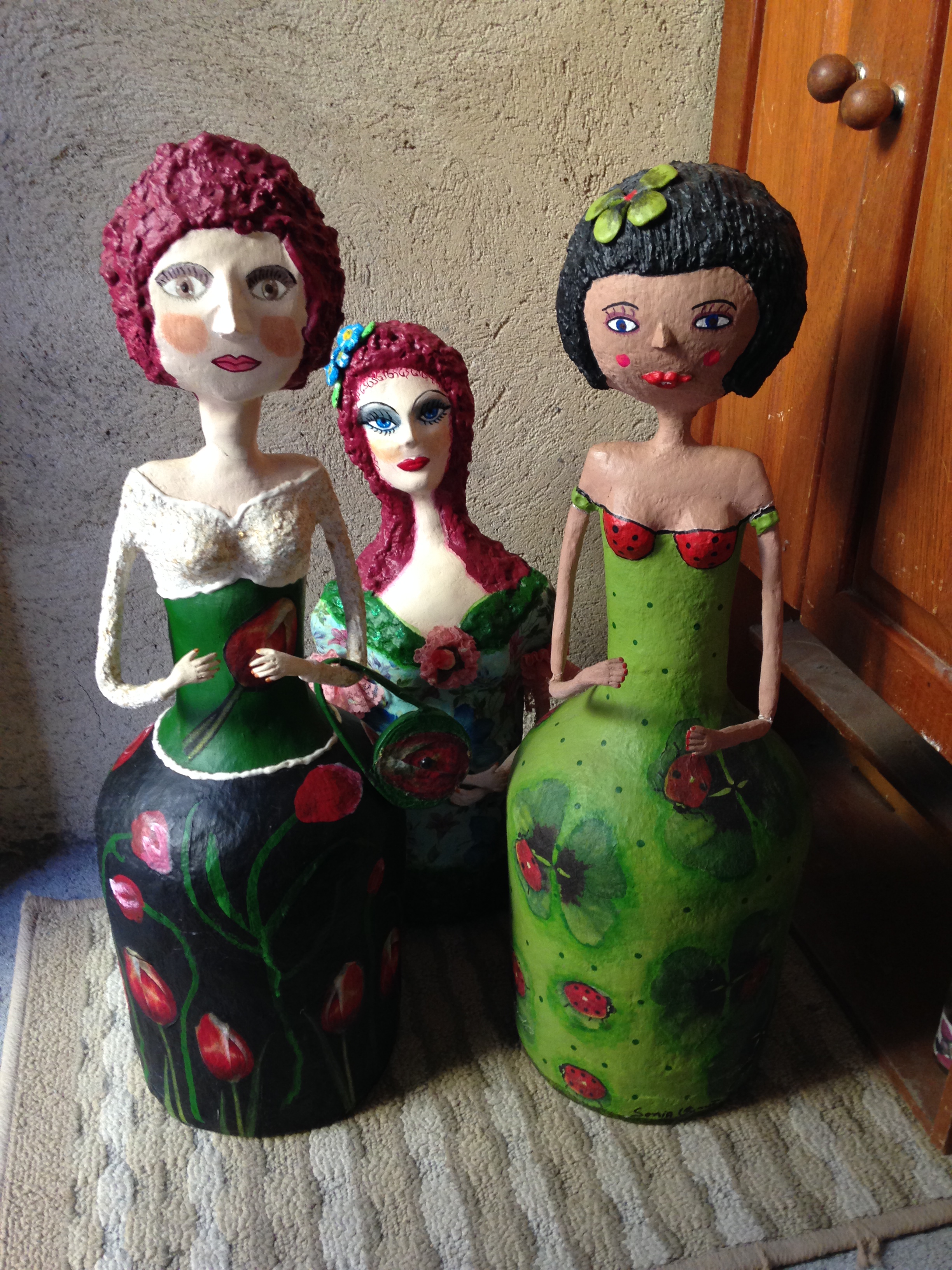
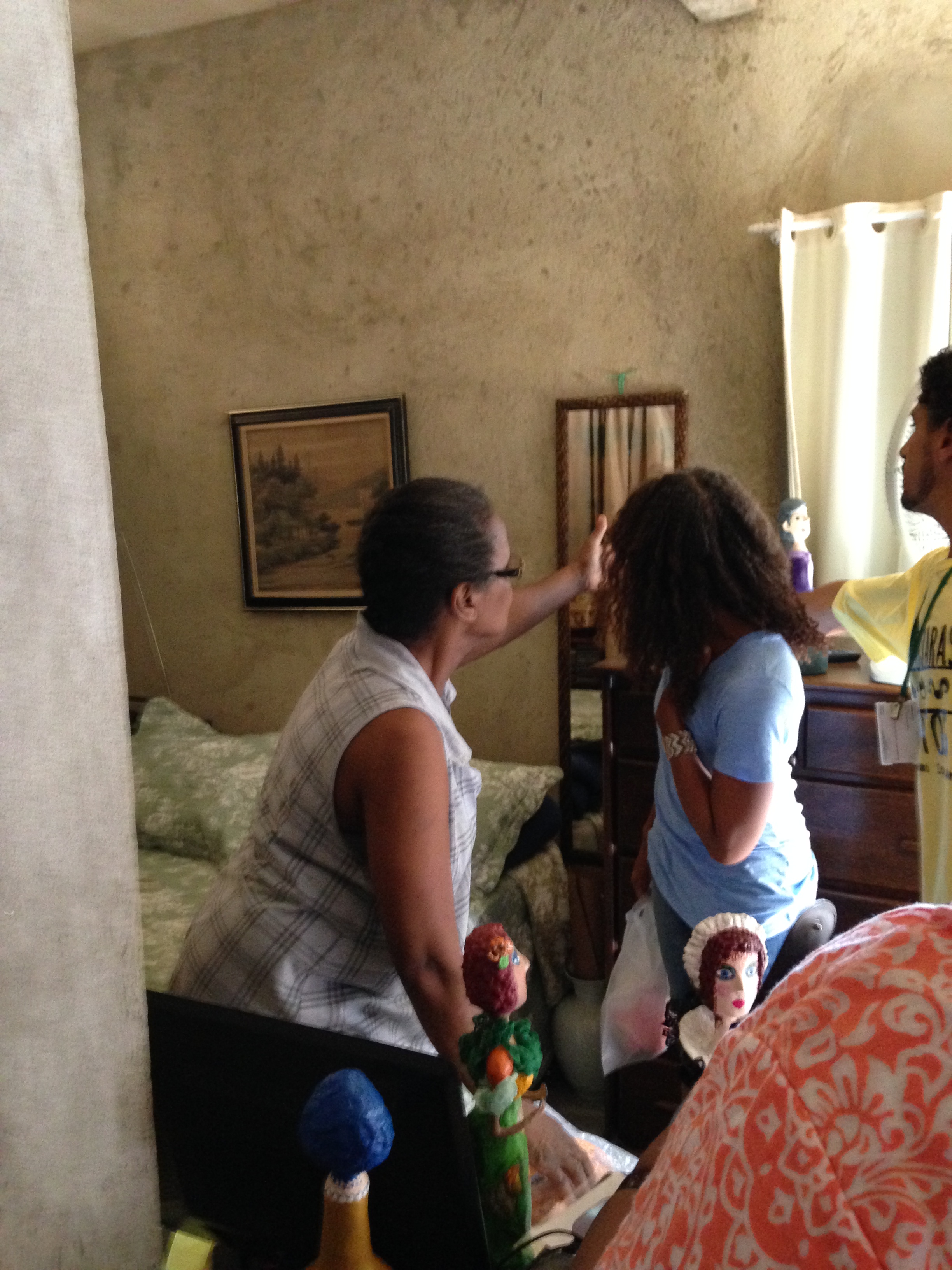
    Next you see my photos from within the favela. We spent hours walking around, meeting residents and asking questions of our guides. We met two very talented artists in the favela, and you see the picture of one of these artists and some of her works. Our group bought many pieces, providing hundreds of Reals of income to this elderly woman. This entrepreneurial success moment was the highlight of my day.

    Folk Artist
    Folk Artist
    Folk Art
    Folk Art

    Her home was the nicest one we saw in this favela – modern doors and windows, power, TV with cable, a refrigerator and other furniture. We also looked in some homes where we weren’t able to take photos, and some of these looked mostly bare, some were small and odd-sized. Most had power and water. Right inside the favela we found a store with cold beverages and basic food stuffs. This is poverty, but not misery.

    Up at the Favela
    Up at the Favela
    Top of Favela
    Top of Favela
    In the Favelas
    In the Favelas

    We had some downtime this afternoon, then back to the study center for a lecture on the history of the favelas. We didn’t finish there until almost 10pm. There was lots and lots of info about the dynamics of the relationships between the favelas, the city, the government, and all of the changes brought by the World Cup (2 weeks away) and the 2016 Olympics. I’ll need some time to think it all through before deciding what to write about it.

    Tomorrow we go on a tour of the typical tourist attractions, including the statue of Christ the Redeemer on Corcovado. I’m sure we’ll all talk about what we heard tonight, and I’ll write about it tomorrow.

    Good night, and God bless,

    Marcus
  • Day 2 in Rio

    [Editor’s note:  Second in a series of posts from my brother Marcus as he visits Rio de Janeiro — Mike]
    Greetings from Marcus in Rio!
    Tonight is the last major soccer match before the World Cup begins in 3 weeks. We had an opportunity to go to the game at the huge modern soccer stadium here, but only 2 of our 14 chose to go. Most of us arrived this morning after at least 10, and in some cases 20, hours of travel, so we mostly wanted to get finished with the day and get back to our hotel.
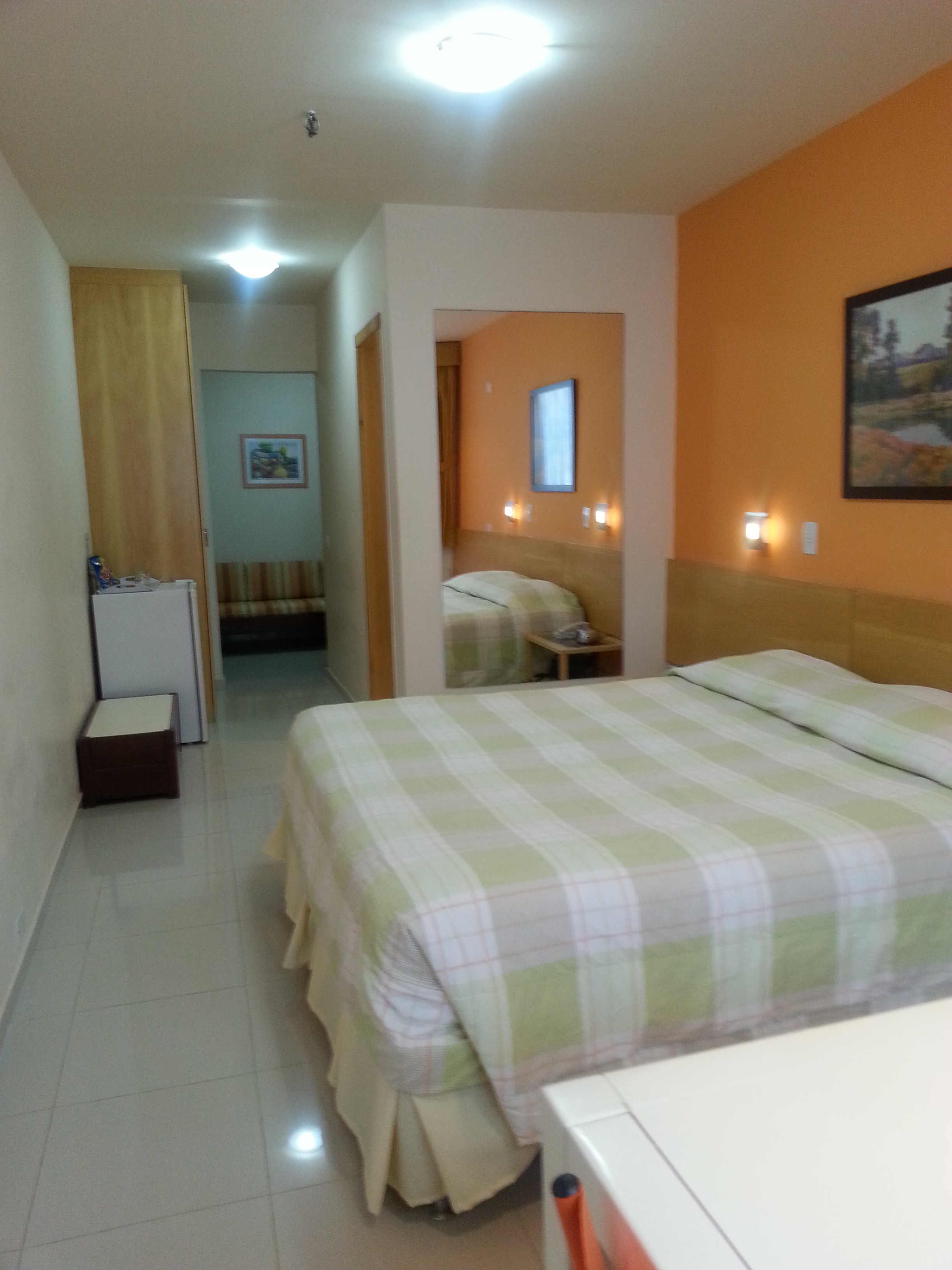
    Hotel Room
    Hotel Room

    Besides me, one other participant arrived yesterday, and she called my room this morning to see if I wanted to meet. We walked 3.5 miles along Copacabana beach, stopping half-way to grab a cold beverage and shade. By the time we returned 2 hours had passed and the rest of our group was here.


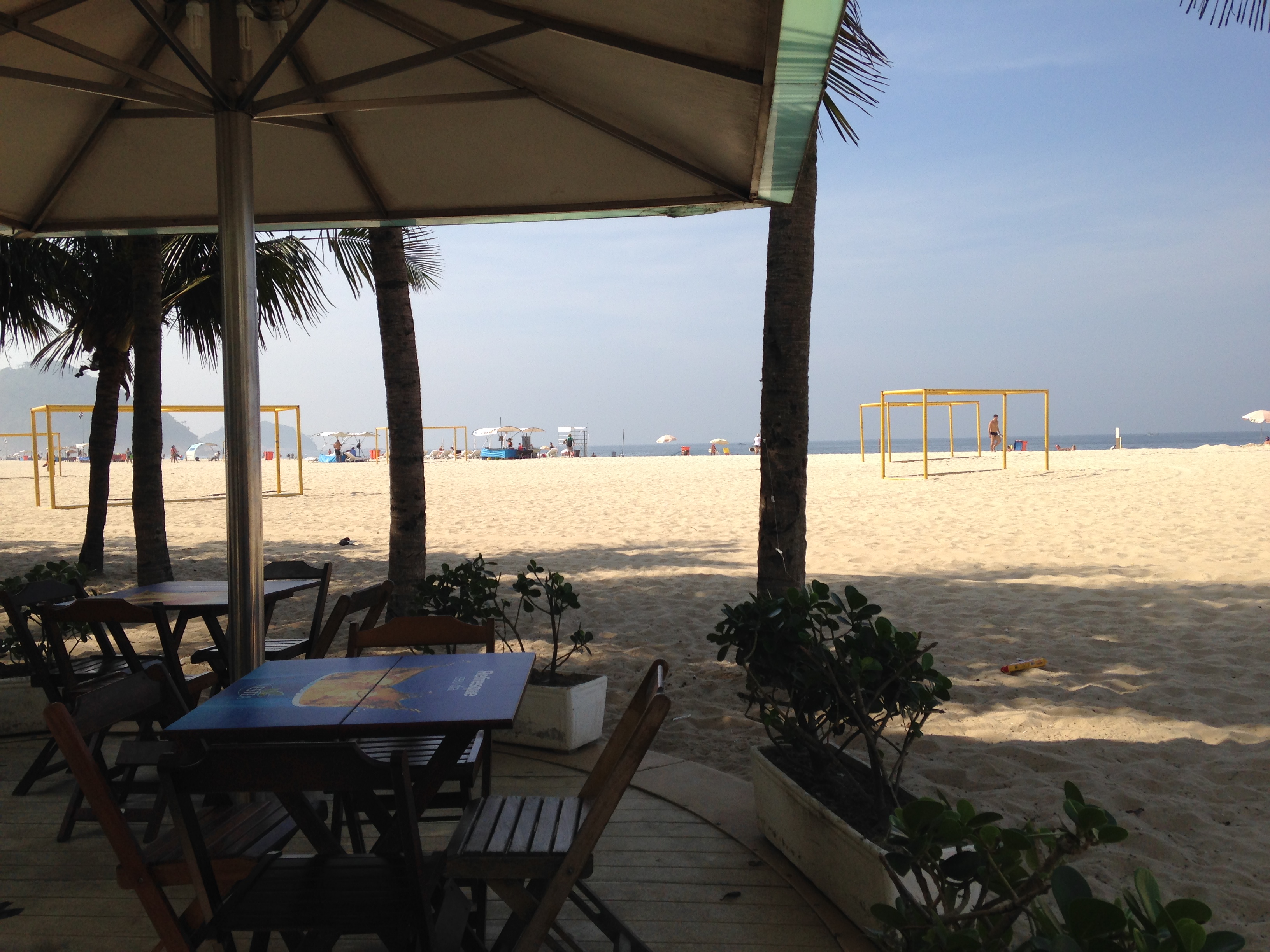
    Views of Copacabana where we stopped for a beverage
    Views of Copacabana where we stopped for a beverage
    Cobacabana
    Cobacabana

    We had lunch at a “kilo” restaurant, part of a popular chain. You go in, grab a plate, and move down a very complete buffet line. At the end, your plate is weighed, and you pay by the kg. Our hosts picked up everyone’s tab, so I don’t know how much my plate cost or weighed, but I left a lot behind. Not recognizing the dishes, and unable to understand the signage, I grabbed a lot of different things, but many of them tasted odd to my palate. Plus, we have a very substantial “Continental plus” breakfast here at the hotel every morning. Also, they are very generous with food here, but very stingy with beverages, and ice is more precious than silver. I was much more thirsty than hungry, and this afternoon I went to the mercado (market) and loaded up on bottled water. I think I may still have been dehydrated after yesterday’s travel and all the walking in the heat. I also bought an ice tray to make ice in the little freezer in my mini-fridge. I think that will be the best $2 I spend all week!

    We had our orientation session this afternoon, met our group leaders and went over the week’s agenda. I was very interested to hear a little about Rio’s history – it got it’s start as the largest South American port for the African slave trade in the 18th century. In 1900, a majority of Rio’s population was black African, and the favelas we will visit this week were established by freed slaves. Also, it turns out that much of what we think of as authentic Brazilian culture, samba dancing and bossa nova music, for example, started in the favelas.

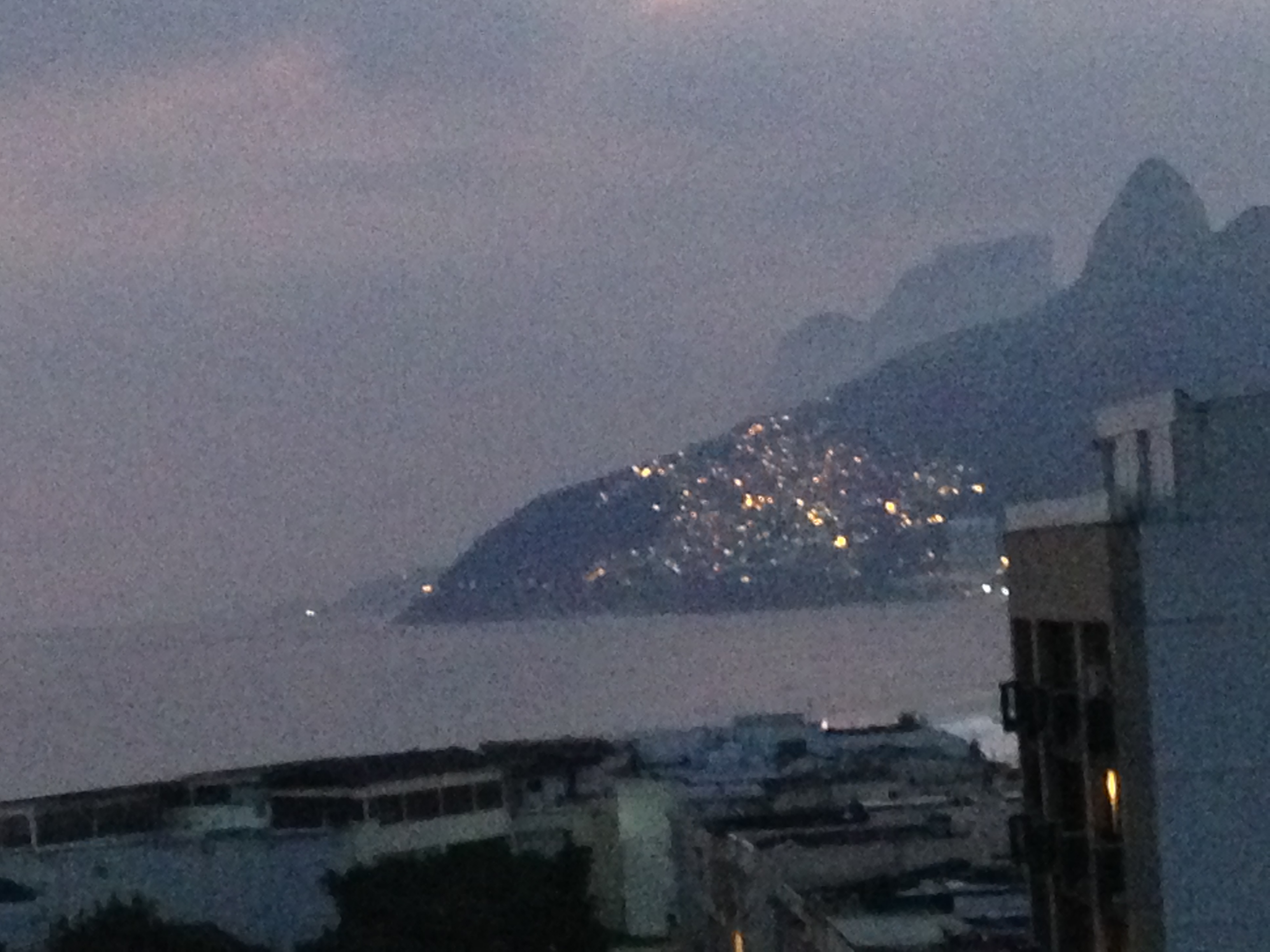
    A favela seen at nightfall; this one is right by the beach at Ipanema
    A favela seen at nightfall; this one is right by the beach at Ipanema

    Tonight we went to a churrasco-style restaurant. This food tasted great to me! We had an incredible buffet with every kind of salad, vegetable, seafood, and even sushi. Then, once you are nearly full, they come to your table with at least a dozen different types and cuts of meats (beef, chicken, pork, unknown), and slice your choices onto your plate. This goes on with more trips for side dishes, and more spits of meat, until finally you flip over this marker at your place from green to red to indicate you surrender. Then they come around with the dessert tray. Then the after-dinner drinks. I think if we’d stayed there would have been more courses, but we gave up and left then.

    Tomorrow we learn a little Portuguese, we get some history lessons on Brazil and Rio, and then we tour downtown and “little Africa”. We’ll view sunset from the Sugarloaf mountain nearby. Hopefully, I’ll post some great pictures tomorrow.

    marcus